Clear Sky Science · en
Probing the zooarchaeological record across time and space for ancient pathogen DNA
Why old animal bones matter for our health
Most of today’s dangerous infectious diseases either came from animals or still circulate between animals and people. Yet our picture of how these diseases emerged in the deep past is remarkably hazy. This study turns to an unusual archive—thousands of years’ worth of animal bones and teeth—to ask which germs infected ancient livestock and wild animals, how widely they spread, and what that might reveal about the long roots of modern zoonotic diseases that jump between animals and humans.
Hunting for clues in buried bones
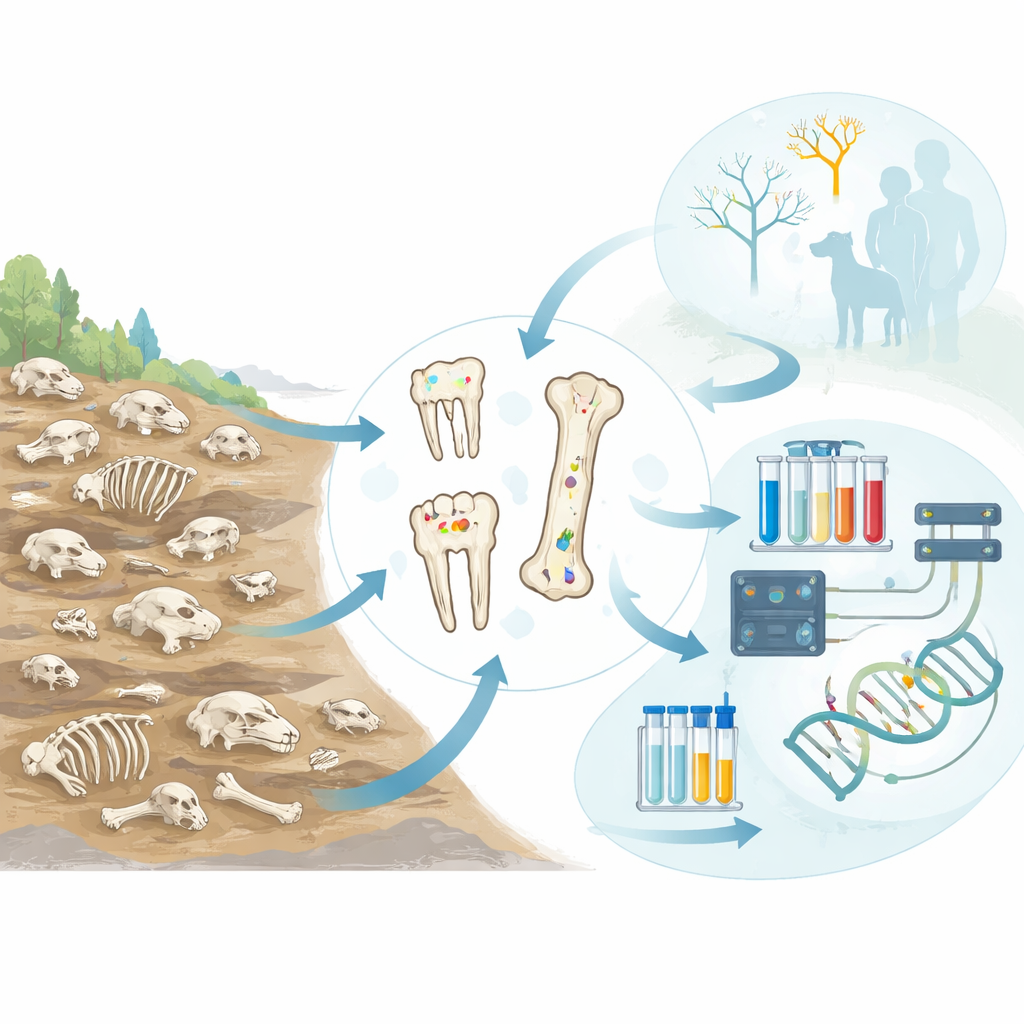
The researchers assembled 346 bones and teeth from at least 328 individual animals, recovered at 34 archaeological sites stretching from Europe to Central Asia and spanning roughly the last 5800 years, from the Neolithic through the Medieval period. Most specimens came from domesticated animals such as cattle, sheep, pigs, goats, and dogs, but some wild species were included when they played a major role in past economies. Rather than sampling randomly, the team focused on bones that showed visible signs of disease—such as abnormal new bone growth, pitting, or lesions—as well as on teeth, which can sometimes trap traces of blood-borne infections.
Reading the hidden DNA fingerprints
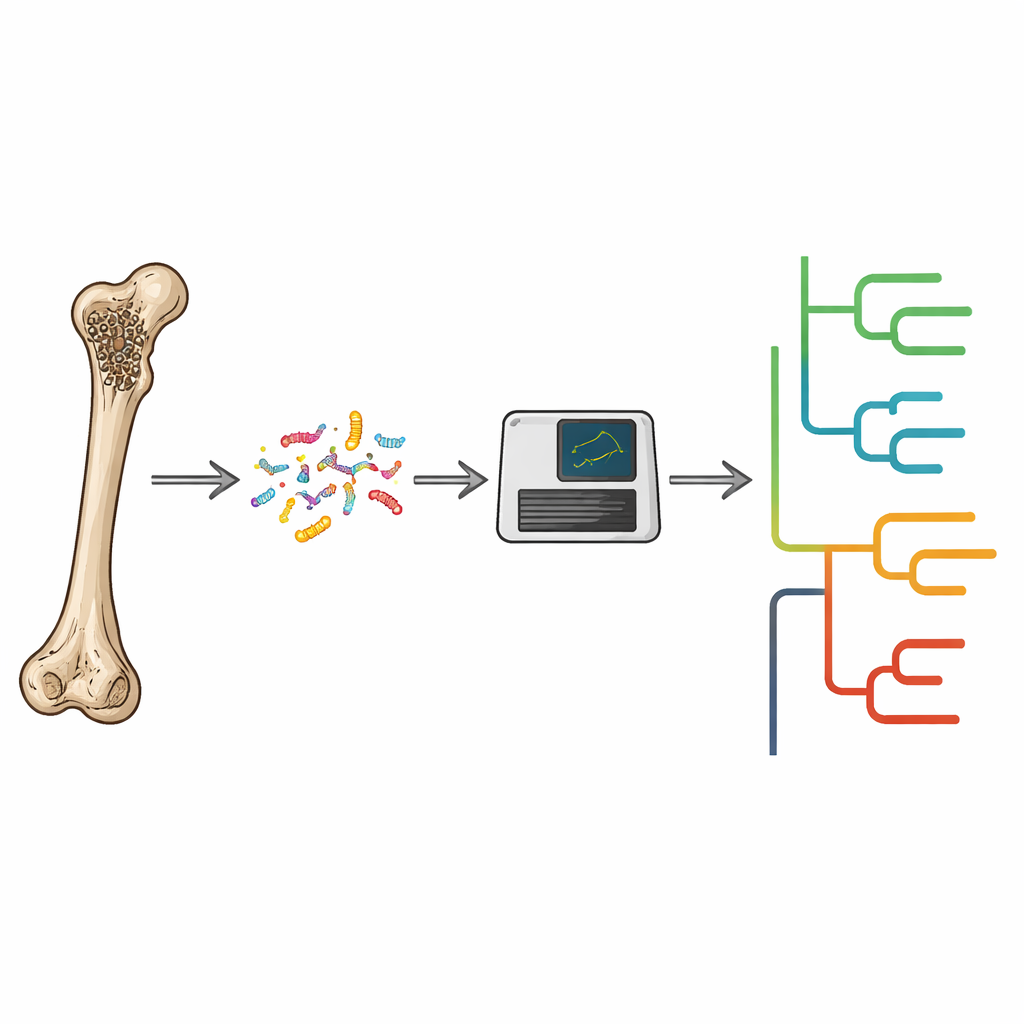
In specialized clean laboratories, the team drilled tiny amounts of powder from each bone or tooth and extracted whatever DNA remained. They then used high-throughput sequencing to capture millions of short DNA fragments from each specimen. Human DNA was filtered out, and the remaining genetic snippets were compared against a large reference database of bacteria and other microbes. A strict set of criteria—such as characteristic ancient DNA damage patterns and broad coverage across a microbe’s genome—helped distinguish genuine ancient infections from modern contamination.
Ancient germs from livestock and their neighbors
Out of the 346 specimens, 55 yielded robust genetic evidence for at least one pathogenic or opportunistic bacterial species, resulting in 116 distinct pathogen “hits” representing 29 types of microbes. These ranged from well-known disease-causing bacteria, like Salmonella enterica, to microbes that normally live harmlessly in the mouth or gut but can cause illness under the right conditions. Importantly, bones that showed visible lesions were far more likely to contain pathogen DNA than apparently healthy bones, demonstrating that careful palaeopathological inspection is a powerful way to choose promising samples. The site of Tilla Bulak in present-day Uzbekistan stood out: although it provided less than a third of all specimens, it accounted for more than half of the successful pathogen detections, hinting that both local burial conditions and past disease pressure influence what survives in the record.
Tracing ancient relatives of modern pathogens
For two livestock-associated bacteria—Erysipelothrix rhusiopathiae, which infects pigs, cattle, and sometimes humans, and Streptococcus lutetiensis, a cause of mastitis in dairy animals—the researchers recovered enough DNA to place the ancient strains on evolutionary family trees alongside modern genomes. A roughly 4000-year-old cattle tooth from Russia carried an E. rhusiopathiae strain that falls on a deep branch of the species’ tree, clustering with, yet distinct from, modern diversity. Similarly, three Bronze Age sheep and goat specimens from Tilla Bulak yielded S. lutetiensis genomes that form a tight, ancient cluster positioned at the base of today’s lineages. These placements support the authenticity of the ancient DNA and show that these pathogens were already widespread and genetically diverse in prehistoric herds long before they were recognized in modern veterinary medicine.
A new window into the deep history of disease
By combining animal bone pathology, archaeology, and ancient DNA, this study shows that the zooarchaeological record can reveal much more than diet and domestication: it can also map the early history of infections that still affect humans and animals today. The work confirms that visibly diseased bones are especially rich targets for pathogen DNA and demonstrates how even fragmentary, low-coverage genomes can be placed in the broader evolutionary landscape. In doing so, it opens a path toward a “One Health” perspective extended back through millennia, where the long-term interplay between people, their animals, and their shared microbes can be traced across time and space.
Citation: W. Runge, A.K., Light-Maka, I., Massy, K. et al. Probing the zooarchaeological record across time and space for ancient pathogen DNA. Nat Commun 17, 3469 (2026). https://doi.org/10.1038/s41467-026-71543-4
Keywords: ancient DNA, zooarchaeology, zoonotic diseases, livestock pathogens, One Health