Clear Sky Science · en
Social reward outcompetes drug seeking dopaminergic ensembles to prevent relapse
Why Choosing People Over Drugs Matters
Most of us know that spending time with friends and family can feel deeply rewarding, while addictive drugs can take over people’s lives. This study asks a simple but powerful question: can positive social experiences actually help the brain push back against drug craving and relapse? Working with rats, the researchers uncover how warm social contact and addictive drugs compete inside a key reward region of the brain, and show that under the right conditions, social reward can win.
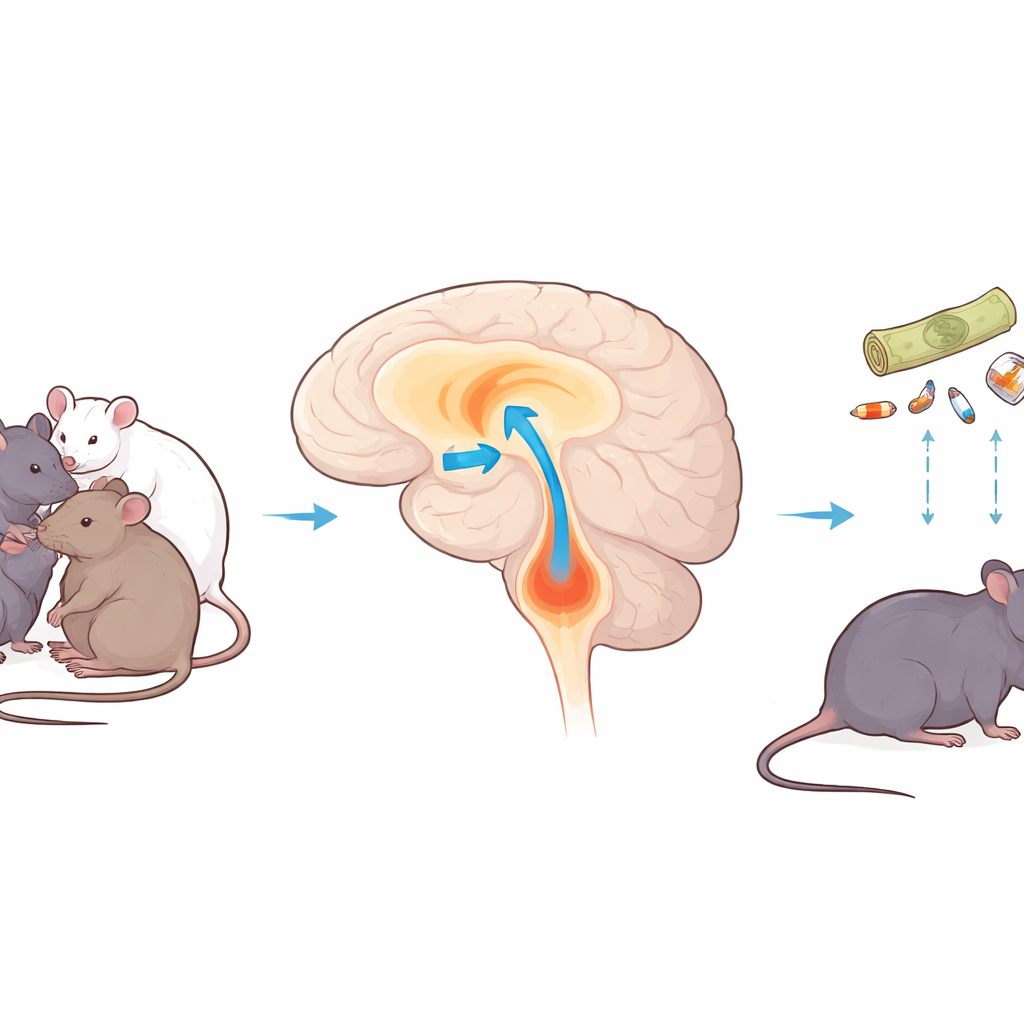
A Tug-of-War Inside the Brain’s Reward Center
Addictive drugs such as cocaine and heroin act on a deep brain region called the ventral tegmental area, or VTA, which sends dopamine signals that normally make food, play, and social contact feel rewarding. People with substance use disorder tend to relapse even after long periods without drugs, suggesting that drug-related signals have come to dominate this system. At the same time, clinical and animal studies hint that natural rewards, especially friendly social interaction, can reduce drug seeking. The core mystery this paper tackles is whether the same dopamine cells in the VTA handle both social pleasure and drug craving, or whether there are specialized groups that can compete with one another.
Two Separate Teams of Reward Neurons
To answer this, the scientists trained rats to press a nose-poke to receive cocaine or heroin, then went through extinction, where the drug was no longer delivered, and finally a relapse test triggered by cues that had been paired with the drug. Before this relapse test, some rats enjoyed 30 minutes of free interaction with two younger rats, a strong social reward, while others sat alone. The socially rewarded rats showed far fewer drug-seeking nose-pokes, and control conditions such as toys or anesthetized rats did not produce this effect. Using advanced calcium imaging and cell-tagging tools, the team found that one set of dopamine neurons fired reliably during social interaction, while a largely separate set fired during drug seeking. Only a small fraction responded to both, showing that social reward and drug craving are represented by distinct “ensembles” of neurons within the same region.
How Social Reward Neurons Shut Down Drug Craving
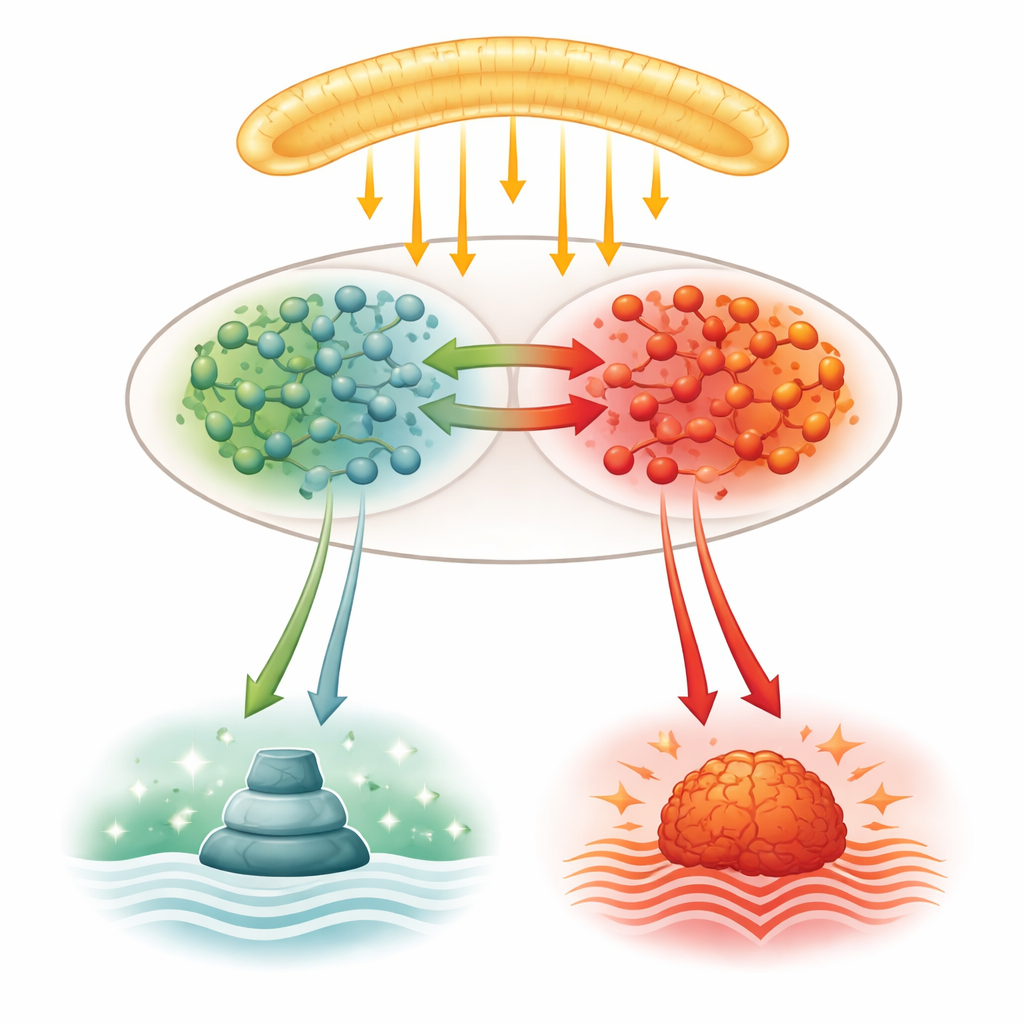
The researchers then examined how these two ensembles interact. By selectively lighting up the social-reward ensemble with optogenetics and recording from the drug-seeking ensemble, they found that activating social neurons caused a strong inhibitory signal in the drug-seeking neurons. This inhibition was carried by GABA, a chemical that typically quiets neural activity, which in this case was co-released from dopamine cells. The reverse was also true: activating drug-seeking neurons suppressed the social-reward neurons. In living, freely moving rats, a period of social interaction made the drug-seeking ensemble much less responsive during the next relapse test, while leaving the social-reward ensemble intact. Directly reactivating social-reward neurons with chemogenetic tools mimicked the protective effect of real social contact, and silencing them during social interaction largely erased that protection.
A Special Social Pathway Into the Reward System
Next the team asked where the social-reward ensemble gets its instructions from elsewhere in the brain. Using a tracing virus that jumps backward across one synapse, they mapped the sources of input to each ensemble. The social-reward neurons received especially strong input from the dorsal raphe nucleus, a brainstem region rich in serotonin cells involved in mood and social behavior, as well as from certain front-of-brain reward regions. In contrast, the drug-seeking ensemble received more input from areas like the central amygdala and dorsal striatum, which are linked to stress, habits, and negative emotions. When the researchers specifically activated VTA dopamine neurons that were wired to the dorsal raphe, rats showed reduced cocaine and heroin seeking during relapse tests. Silencing this pathway during social interaction made social reward much less effective at curbing drug seeking.
What This Means for Fighting Addiction
Put simply, this work shows that social experiences and drugs are not processed by a single, shared reward signal but by two competing groups of dopamine neurons. Positive social interaction activates a circuit from the dorsal raphe into a “social” ensemble in the VTA, which in turn uses inhibitory signals to quiet the “drug” ensemble and reduce relapse-like behavior. Although the experiments were done in rats, the logic is highly relevant for humans: building and protecting positive social connections may not just feel good, but may tap into specific brain circuits that help keep drug craving in check. Understanding these circuits could guide new therapies that reinforce natural rewards so they can outcompete drugs within the brain’s own wiring.
Citation: Zheng, W., Liu, X., Lu, T. et al. Social reward outcompetes drug seeking dopaminergic ensembles to prevent relapse. Nat Commun 17, 3462 (2026). https://doi.org/10.1038/s41467-026-71357-4
Keywords: social reward, dopamine, addiction relapse, ventral tegmental area, dorsal raphe