Clear Sky Science · en
NK cells promote cardiac cell death and regulate myelopoiesis in myocardial infarction
Why heart attacks are not just about blocked arteries
Most people think a heart attack is simply a plumbing problem: a blocked artery that starves the heart of blood. But what happens in the days that follow is just as important. The body launches an immune response meant to clean up the damage, and this new research reveals that one group of immune cells called natural killer cells can actually make things worse by killing heart cells and driving harmful scarring.
The body’s clean up crew can turn destructive
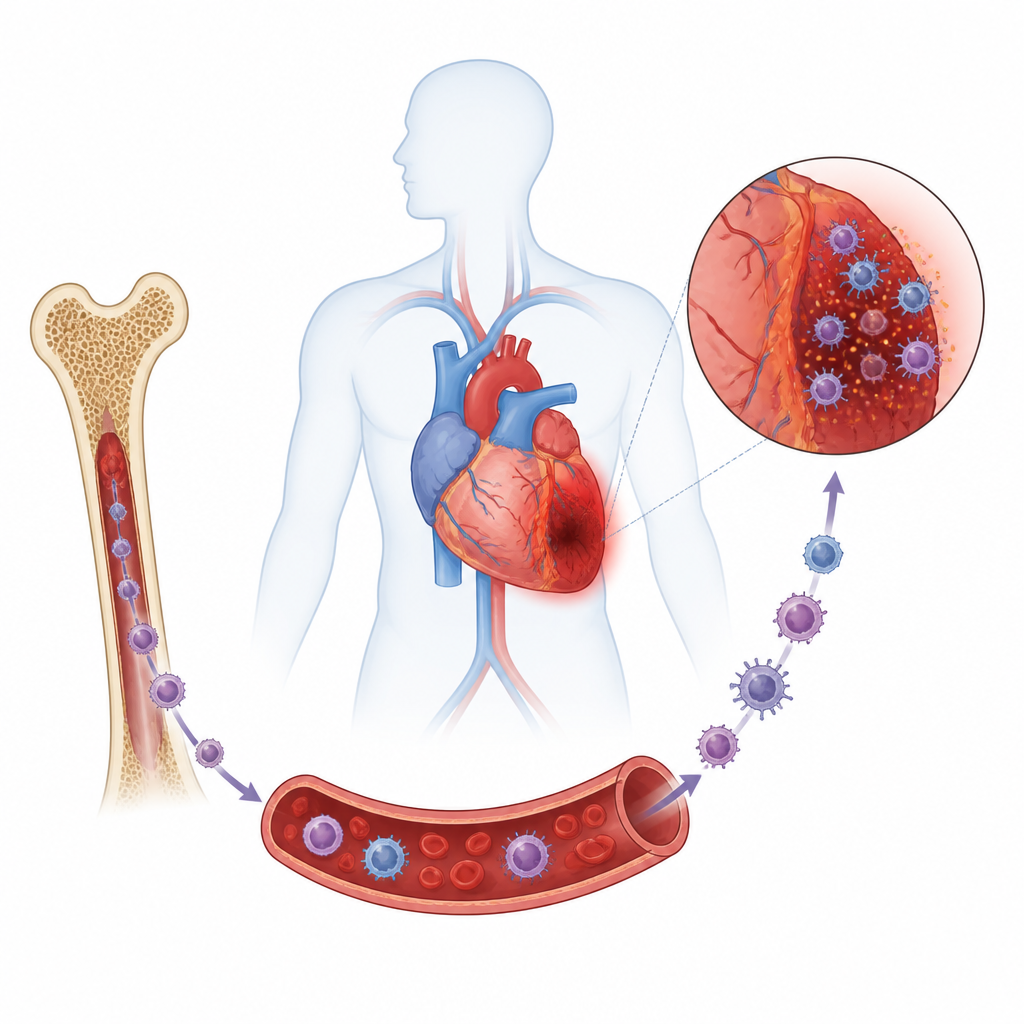
After a heart attack, the immune system rushes into the injured heart to clear dead cells and begin repair. Earlier work showed that some white blood cells, such as certain T cells, can add to the damage. In this study, scientists focused on natural killer cells, a powerful type of immune cell best known for fighting viruses and cancer. In mice, they found that these cells are drawn into the damaged heart within a few days of a heart attack, arriving in larger numbers than some T cell populations and carrying a strong arsenal of cell killing molecules.
Natural killer cells kill heart muscle and weaken the pump
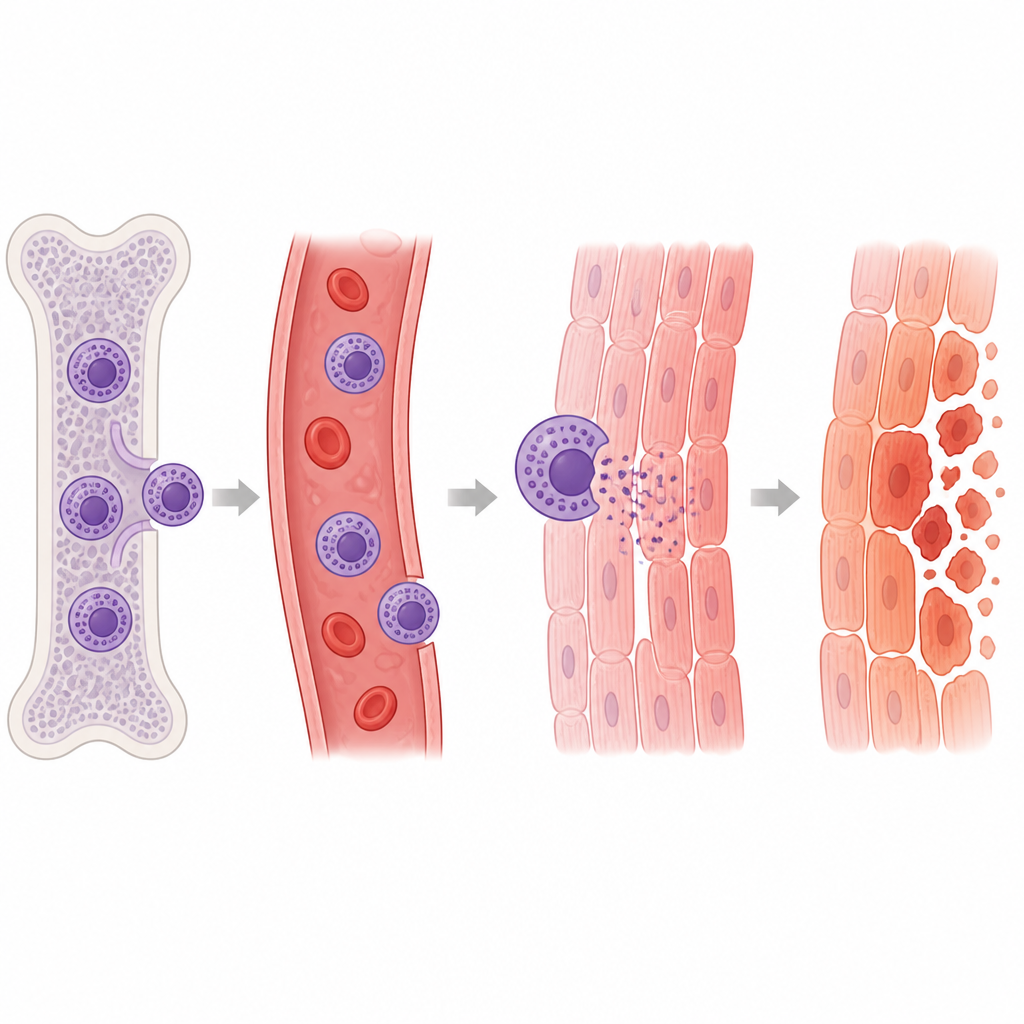
The team discovered that once natural killer cells enter the injured heart, they become highly active and release a toxic protein called granzyme B directly onto heart muscle cells. This triggers these cells to die, enlarges the injured area, and worsens the heart’s ability to pump. When the researchers removed natural killer cells in mice, or prevented them from making granzyme B, fewer heart cells died, the damaged region was smaller, and heart function measured by ultrasound was better. In contrast, when they boosted natural killer cell activity with an experimental antibody, heart damage and scarring grew and the pumping function declined further, even when certain T cells were absent.
How bone marrow and inflammation are pulled into the fight
Harm from natural killer cells was not limited to the heart itself. The study showed that these cells also change how the bone marrow, the body’s blood cell factory, responds to a heart attack. Activated natural killer cells in the bone marrow released a growth factor that stimulates the production of new white blood cells that can fuel inflammation. This extra supply of inflammatory cells then streamed into the heart, where they produced more inflammatory signals and enzymes that remodel tissue. When natural killer cells or just their production of this growth factor were blocked, the bone marrow produced fewer of these cells, fewer inflammatory cells entered the heart, and heart function improved.
Evidence that the same pattern appears in people
To see whether these mouse findings might matter in humans, the researchers examined small samples of heart tissue from patients who had suffered a heart attack. Using gene activity panels and single cell analysis, they detected a clear signature of natural killer cells in recently injured human hearts, including genes linked to their cell killing and inflammatory functions. Microscopy showed these cells sitting in and around the damaged heart muscle. Over time, the pattern shifted, with different flavors of natural killer cells appearing in early and later phases, suggesting that these cells may play several roles across the course of heart healing.
What this means for future heart attack care
Overall, the work paints natural killer cells as double edged swords in the setting of a heart attack. Rather than helping the heart heal, highly activated natural killer cells can kill surviving heart muscle cells, encourage overactive inflammation, and promote stiff scar formation, all of which weaken the heart as a pump. By carefully dampening these cells or their toxic tools at the right time, future treatments might limit long term heart failure after a heart attack. The findings also raise caution for experimental cancer drugs that boost natural killer cell activity, suggesting doctors may need to consider heart risks when using such therapies.
Citation: Cohen, R., Duval, V., Al-Rifai, R. et al. NK cells promote cardiac cell death and regulate myelopoiesis in myocardial infarction. Nat Commun 17, 4699 (2026). https://doi.org/10.1038/s41467-026-71334-x
Keywords: myocardial infarction, natural killer cells, heart failure, cardiac inflammation, granzyme B