Clear Sky Science · en
Loss of luminal lineage drives resistance to next-generation ERα antagonists in pretreated ER+ HER2− locally-advanced or metastatic breast cancer
Why some breast cancers stop listening to hormone drugs
For many people with advanced breast cancer, modern hormone-blocking pills can keep the disease in check for months or years. Yet others see their tumors grow again soon after starting treatment. This study asks a basic question with very real consequences: why do some estrogen-sensitive breast cancers stay controlled by new hormone drugs, while others quickly find ways to grow without them?
The usual hormone target and a new class of drugs
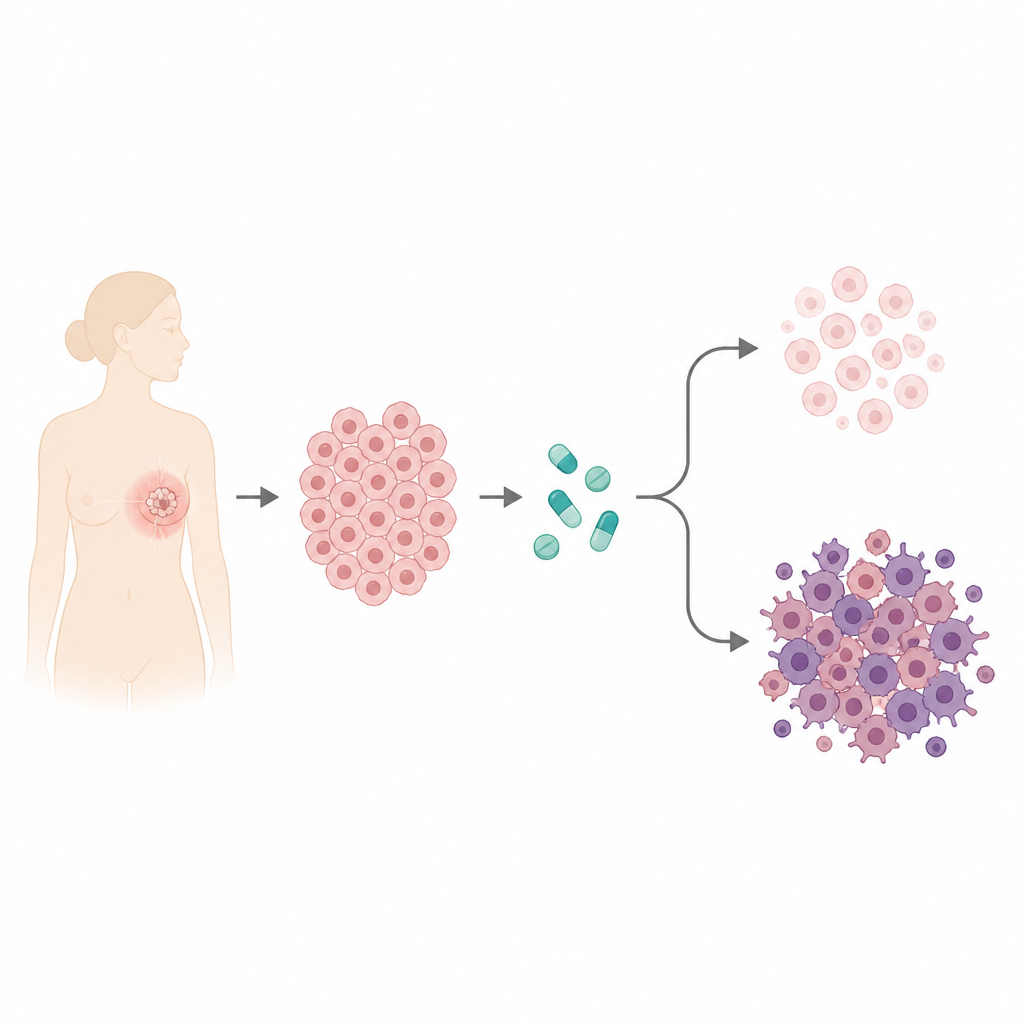
Roughly seven in ten breast cancers carry a protein called the estrogen receptor, which helps tumor cells grow when it senses the hormone estrogen. Standard treatments try to shut down this signal, either by lowering estrogen levels or blocking the receptor itself. A newer group of medicines, called oral estrogen receptor blockers and degraders, was designed to work better than older drugs, especially in tumors that have picked up changes in the estrogen receptor gene after years of treatment. In recent trials, some patients did very well on these drugs, but up to half saw their cancer worsen at the first scan, hinting that very different biology hides behind the same diagnosis.
Comparing long-lasting responders and early non-responders
The researchers focused on people with advanced estrogen receptor positive, HER2 negative breast cancer who received an oral drug called giredestrant, either alone or with a cell-cycle blocker. They grouped patients whose cancer stayed controlled for at least two months as responders and those who progressed before that as non-responders. By examining tumor samples taken before and shortly after treatment, they found that responding tumors showed strong estrogen receptor activity and a clear "luminal" identity, a pattern of gene use typical of milk-producing breast cells. When giredestrant was given, these tumors sharply dialed down genes linked to cell division, showing that they still relied on estrogen signals that the drug could shut off.
When tumors shed their original identity
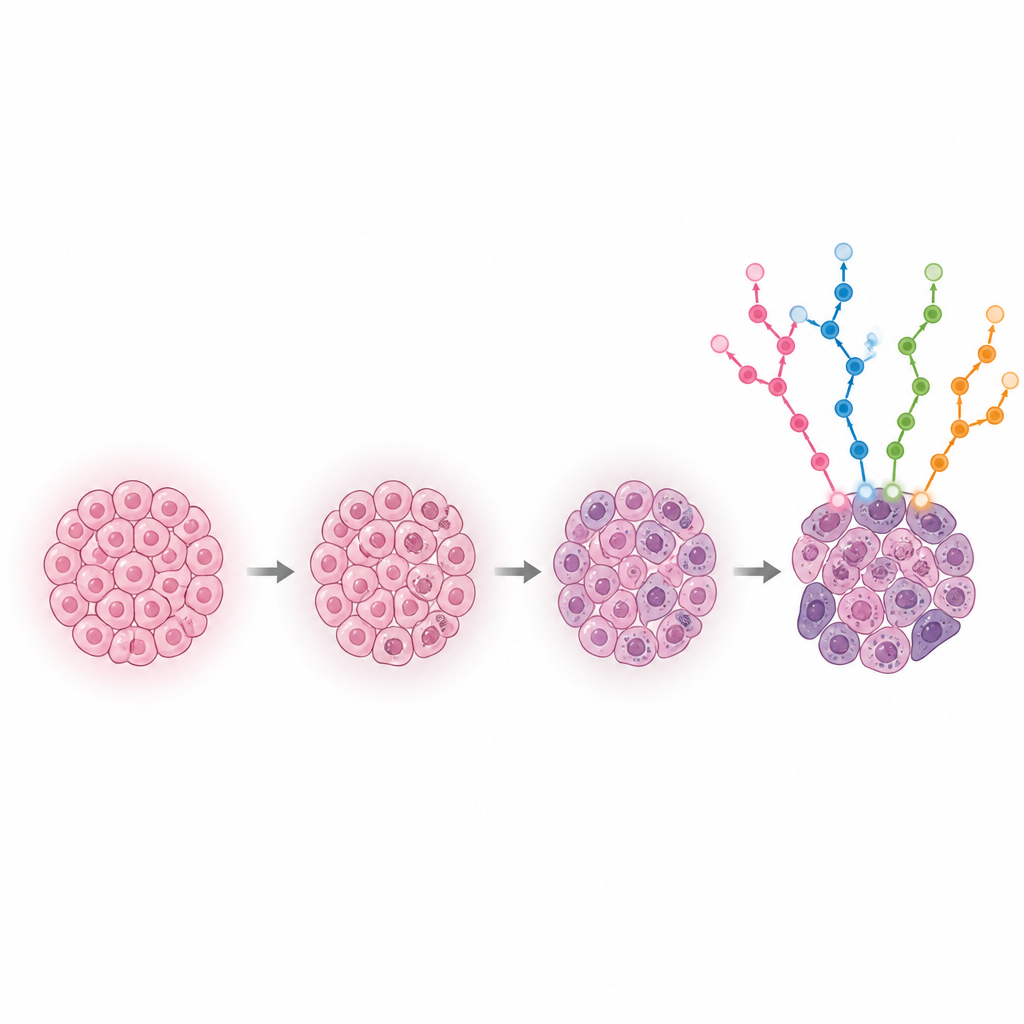
Non-responding tumors looked very different. Even though they still tested positive for estrogen receptor by standard lab staining, their genes showed much weaker estrogen driven activity and a loss of luminal traits. Instead, they turned up a mix of other growth programs, including those driven by cell-surface growth switches such as EGFR, as well as MAPK and Hippo/TEAD pathways that help cells multiply and survive. Importantly, these shifts did not usually come from new DNA mutations, but from changes in which genes were turned on or off. Patients whose tumors kept a strong luminal profile had much longer periods before the cancer worsened than those whose tumors had drifted away from this state.
Laboratory models reveal how resistance takes shape
To see how this switch happens, the team grew common estrogen-sensitive breast cancer cell lines for months in giredestrant or a related drug until the cells no longer slowed down. These resistant cells produced far less estrogen receptor, no longer responded to various hormone drugs, and showed broad rewiring of their DNA packaging, opening and closing large stretches of the genome. Two guiding proteins, FOXA1 and FOXM1, moved onto new DNA sites not shared with the estrogen receptor and helped turn on the same alternate growth routes seen in patients. In several resistant cell models, blocking key nodes of these routes, such as the MAPK and TEAD pathways, made the cells vulnerable again, suggesting possible combination strategies.
What this means for future breast cancer care
Taken together, the work shows that next-generation estrogen receptor drugs tend to help when tumors still behave like classic luminal, hormone-dependent breast cancers. When tumors gradually lose this identity and start using other growth circuits, they can ignore hormone drugs regardless of estrogen receptor mutations. Recognizing this shift early, possibly through advanced blood tests that read tumor gene activity, could help match patients to therapies that either restore hormone sensitivity or target the new growth pathways their cancers have learned to use.
Citation: Liang, J., Ong, C., Heslop, K. et al. Loss of luminal lineage drives resistance to next-generation ERα antagonists in pretreated ER+ HER2− locally-advanced or metastatic breast cancer. Nat Commun 17, 4675 (2026). https://doi.org/10.1038/s41467-026-71233-1
Keywords: estrogen receptor positive breast cancer, endocrine resistance, selective estrogen receptor degrader, lineage plasticity, MAPK TEAD signaling