Clear Sky Science · en
Quantifying yield losses from Bt resilience among maize cultivars in South Africa
Why maize harvests rise and fall
Maize is a staple food in South Africa, especially white maize for human consumption. Genetically modified varieties that resist insects and tolerate herbicides were expected to secure reliable harvests for farmers and food for consumers. This study asks a simple but vital question: did those benefits last, or did they fade as insects adapted, and can new seed technologies restore what was lost?
Maize, insects and helpful bacteria
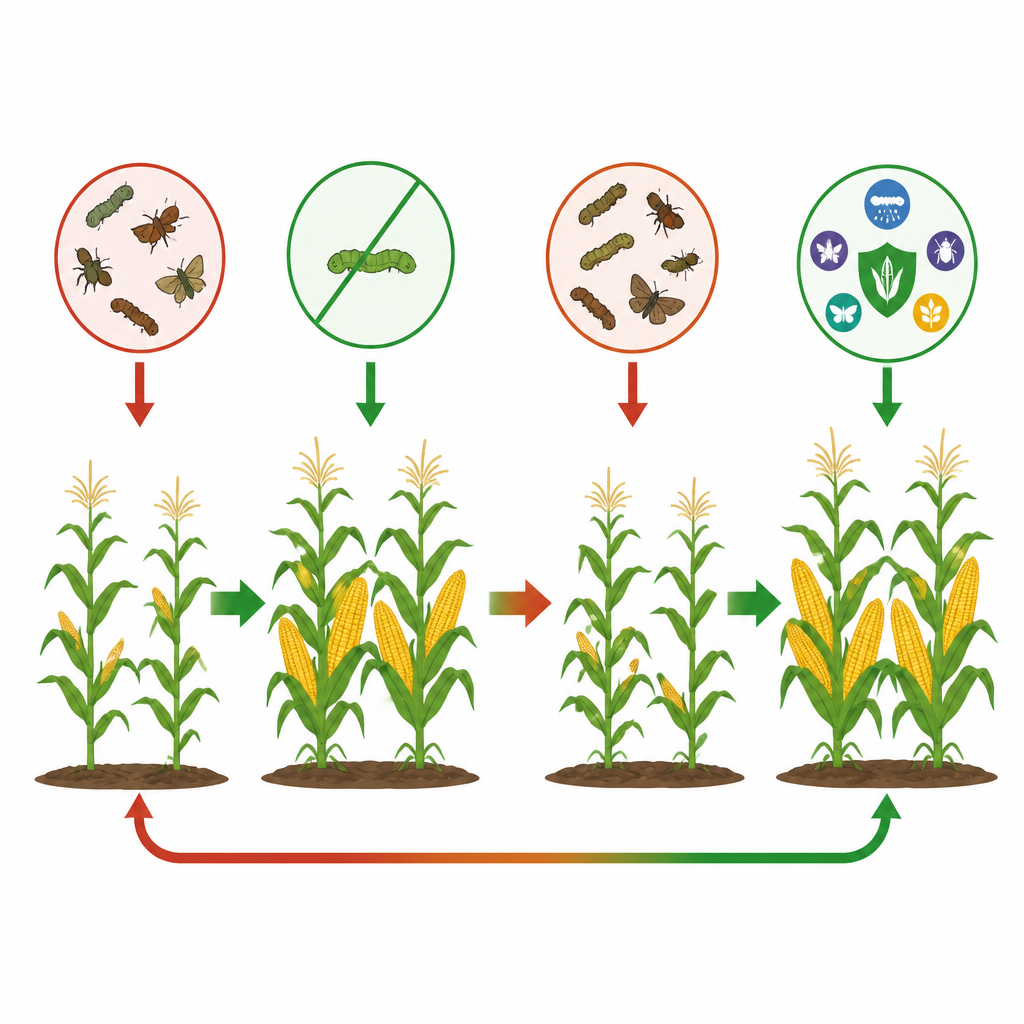
Many modern maize plants carry genes from a soil bacterium called Bacillus thuringiensis, or Bt. These genes help the plant produce proteins that are toxic to certain insect pests but safe for people. Bt maize has been widely praised for cutting crop losses, reducing insecticide use and even lowering contamination from harmful fungi that grow on damaged grain. In South Africa, where maize is central to diets and livelihoods, farmers adopted Bt and herbicide tolerant maize on a large scale, making the country one of the world’s biggest users of this technology.
A long record of maize trials
The researchers drew on an unusually rich dataset: more than 85,000 maize trial plots grown between 1980 and 2018 across over 100 locations in five major South African provinces. These trials compared conventional maize with several genetically modified types: Bt alone, herbicide tolerant alone and stacked cultivars that combined both traits. Because each trial grew many varieties side by side under the same local conditions, the team could separate the effect of the seed traits from differences in soil, climate, farming practices and weather from year to year.
When gains appear, vanish and return
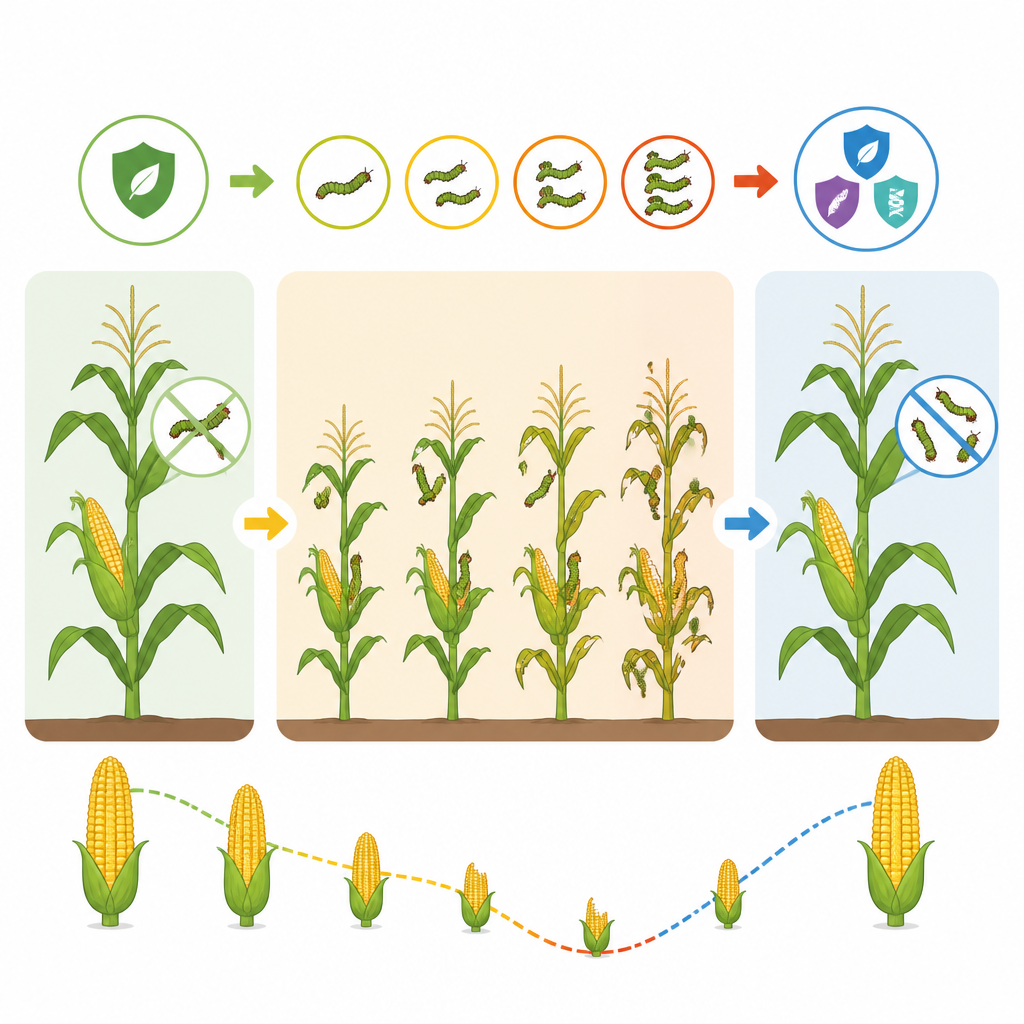
By tracking the year when each maize cultivar was first released to farmers, the authors reconstructed how yield advantages changed over time. Early Bt cultivars introduced around 2000 delivered solid gains compared with conventional maize, peaking at roughly half a metric tonne more grain per hectare by the mid 2000s. Soon after farmers and scientists began reporting insects that could survive on Bt plants, these benefits weakened. For single Bt cultivars, the yield edge shrank steadily until it was essentially gone by the late 2010s. Stacked cultivars that combined Bt with herbicide tolerance initially followed a similar downward path, but after new Bt combinations were introduced, their yield advantage rebounded strongly, surpassing earlier highs.
Local differences and food on the table
The pattern of early gains, mid period erosion and recent recovery in stacked cultivars appeared across most provinces studied, though the exact size of the changes varied by region. To translate these shifts into everyday terms, the researchers estimated how much white maize for people was effectively lost because Bt yields slipped relative to what they once provided. Between 2005 and 2018, they calculate that more than 35 million annual maize rations were lost in total, not because Bt maize underperformed conventional varieties, but because its former premium shrank as insects became harder to control.
Why resistance management matters
The study shows that genetically modified maize can deliver sizeable yield premiums at a national scale, but also that these gains are fragile when insect resistance is allowed to build. New stacked traits can help recover lost ground, yet they take many years and considerable investment to develop. Meanwhile, insects often adapt in less time. The authors argue that sound management practices, such as planting non Bt refuges to slow resistance, are essential if societies are to keep the economic, social and environmental benefits of Bt crops from slipping away.
Citation: Tack, J., Cooper, C.F., Nalley, L.L. et al. Quantifying yield losses from Bt resilience among maize cultivars in South Africa. Nat Commun 17, 4704 (2026). https://doi.org/10.1038/s41467-026-71156-x
Keywords: Bt maize, genetically modified crops, insect resistance, South Africa agriculture, maize yields