Clear Sky Science · en
Hemoadsorption combined with hemodialysis versus hemodialysis alone on mortality in end-stage kidney disease: a randomized, open-label, multicenter trial
Why this matters to patients and families
People living with complete kidney failure often depend on regular blood-cleansing treatments just to stay alive. Even with modern care, many still face frequent hospital visits, heart problems, and early death. This study asks a simple but important question: can adding an extra “filter” step to standard dialysis safely help people live longer and lower their risk of heart trouble?
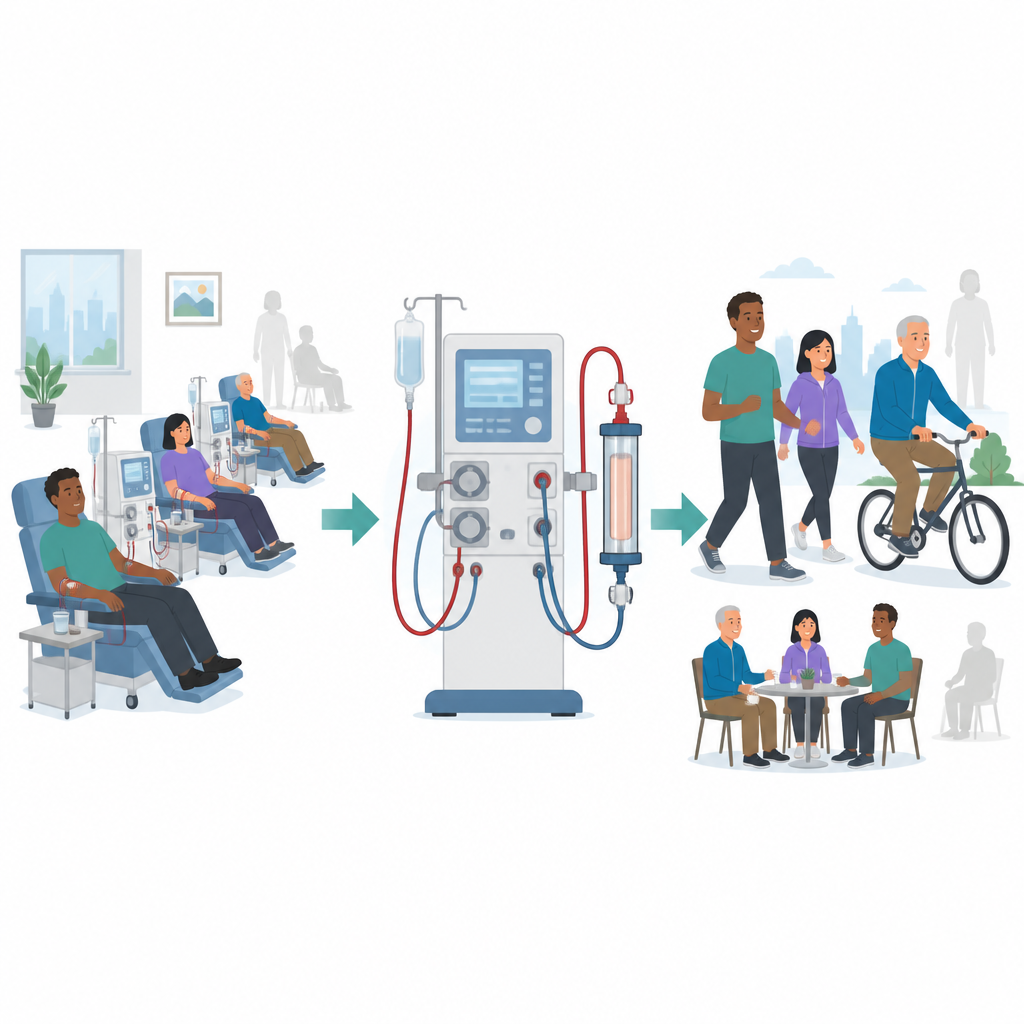
A closer look at kidney failure and dialysis
End-stage kidney disease means the kidneys can no longer remove waste and extra fluid from the blood. In this situation, most patients rely on hemodialysis, a treatment that pumps blood through a machine to clean it. Standard dialysis works well for small waste molecules but is less effective at removing medium and larger toxins or those that cling to blood proteins. These leftover wastes are linked to ongoing inflammation, anemia, bone and joint problems, and especially heart and blood vessel disease. As a result, people who depend on dialysis have a high risk of hospitalization and death, even when clinics follow current best practices.
Adding an extra cleaning cartridge
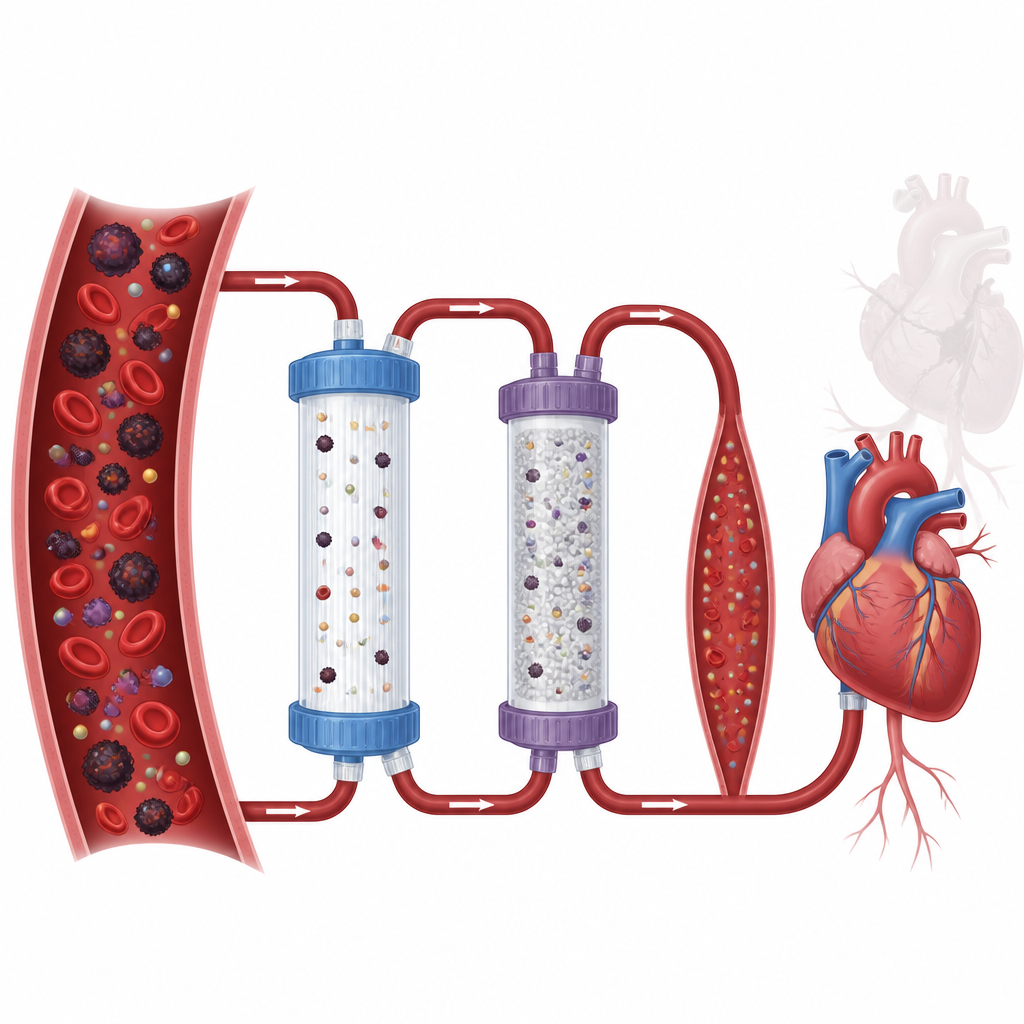
To improve blood cleaning, doctors have turned to an approach called hemoadsorption. In simple terms, this places a cartridge filled with special beads into the blood circuit. As blood passes through, the beads soak up certain harmful substances that standard filters do not remove well. When this cartridge is combined with regular hemodialysis, the approach is called hemoadsorption plus hemodialysis. Earlier small studies hinted that this extra step could ease symptoms such as persistent itching and sleep problems, and might even lower death rates. But those studies were done in single hospitals with relatively few patients, so it was unclear whether the benefits would hold up in a larger, more diverse group.
How the trial was carried out
Researchers in Shanghai ran a large, randomized trial across 11 dialysis centers. They enrolled 1362 adults on long-term dialysis and assigned them by chance to one of two groups. One group continued with standard dialysis, mostly low-flux treatments sometimes combined with hemodiafiltration. The other group received the same kind of dialysis but with a hemoadsorption cartridge added at least once every two weeks for the first two hours of a session. The groups were similar at the start in age, sex, other illnesses, and dialysis schedules. Participants were followed for a median of about three and a half years, and the main outcome the team tracked was death from any cause. They also recorded deaths from heart or blood vessel problems, major heart and stroke events, lab test changes, and side effects.
What the study found
Over the follow-up period, fewer people died in the group that received the extra cartridge. About 17 percent of those in the combined treatment group died, compared with 21 percent in the standard dialysis group. Deaths related to heart and blood vessel disease were also lower, as were major events such as heart attacks, serious rhythm problems, worsening heart failure, or strokes. The benefit was especially marked in patients who had been on dialysis for three years or longer or who had high levels of a waste protein called beta-2 microglobulin, a sign of built-up toxins. Lab tests showed that the combined treatment group had lower build-up of beta-2 microglobulin and homocysteine and more favorable changes in markers of inflammation and heart strain. Importantly, serious side effects such as infections, bleeding, or blood pressure problems were similar in both groups.
What this could mean for care
The findings suggest that adding a hemoadsorption cartridge to regular dialysis, at least every couple of weeks, can modestly lower the risk of death and serious heart problems without clear extra harm. This may be particularly useful in places where more advanced dialysis methods are hard to provide because of cost or technical demands. The study does have limits: it was open-label, used typical Chinese treatment patterns rather than high-intensity dialysis common in some Western centers, and some health and quality-of-life measures could not be fully collected during the COVID-19 pandemic. Even so, the results support hemoadsorption as a practical way to better remove stubborn toxins and improve outcomes, especially for higher-risk patients with long dialysis histories and heavy toxin loads.
Citation: Lu, W., Zhang, X., Guo, Z. et al. Hemoadsorption combined with hemodialysis versus hemodialysis alone on mortality in end-stage kidney disease: a randomized, open-label, multicenter trial. Nat Commun 17, 4537 (2026). https://doi.org/10.1038/s41467-026-71079-7
Keywords: end-stage kidney disease, hemodialysis, hemoadsorption, cardiovascular risk, uremic toxins