Clear Sky Science · en
SpiR is a gut microbial enzyme that drives cholesterol conversion
Why Gut Germs and Cholesterol Matter
High cholesterol is a familiar concern, tied to heart attacks and strokes. Most of the focus falls on diet and genetics, but this study reveals a surprising ally in cholesterol control: our gut microbes. The researchers uncover a key bacterial enzyme, called SpiR, that helps turn cholesterol into a waste product the body can no longer absorb. Understanding this microscopic machinery may one day open new ways to lower cholesterol by working with, rather than against, our gut ecosystem.
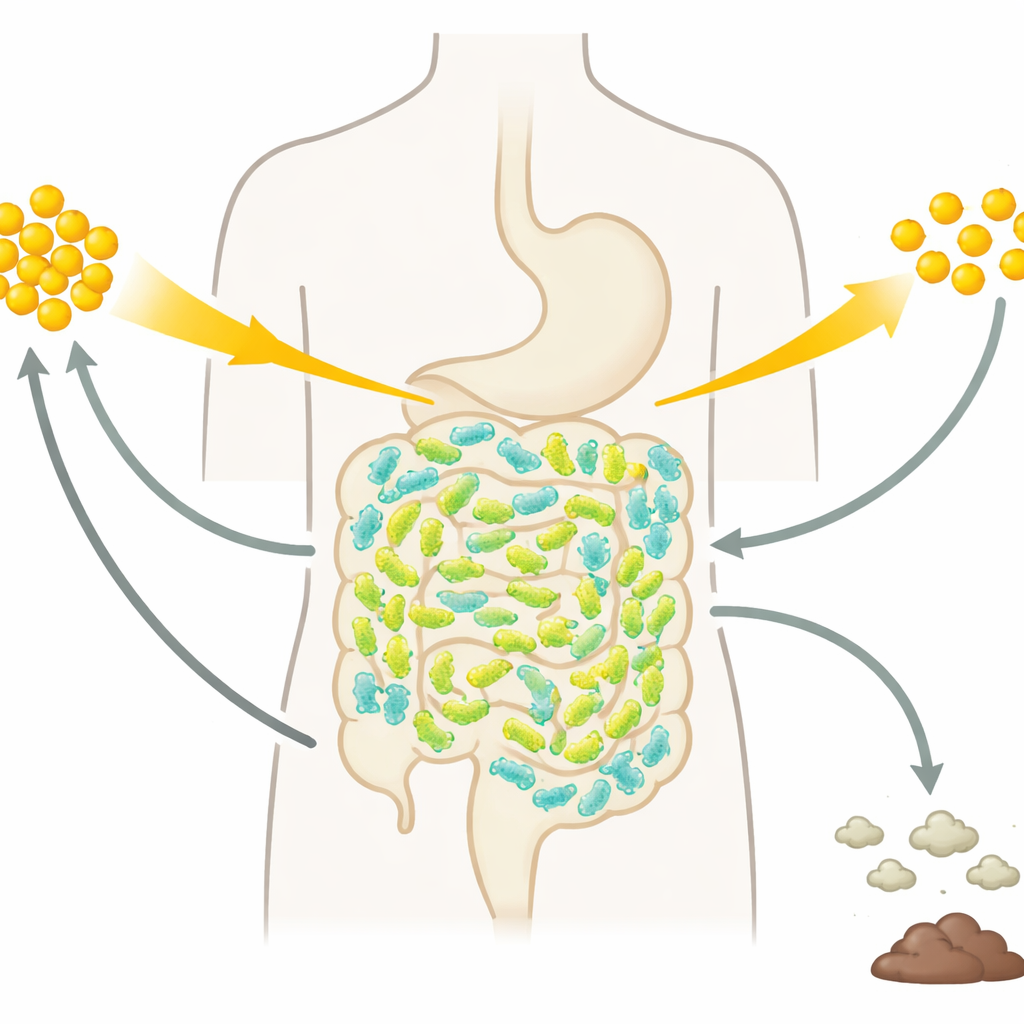
A Hidden Cholesterol Drain in the Intestine
Every day, about a gram of cholesterol flows into our intestines from food, bile, and the lining of the gut itself. Roughly half of it is reabsorbed, but some is altered by resident bacteria into a form called coprostanol, which passes out in feces instead of returning to the bloodstream. People whose microbes are good at this cholesterol-to-coprostanol conversion tend to have lower blood cholesterol, and animals raised without microbes barely perform the conversion at all. For decades, scientists knew this bacterial service existed but lacked a clear picture of the enzymes doing the work.
Finding the Microbial Workhorse
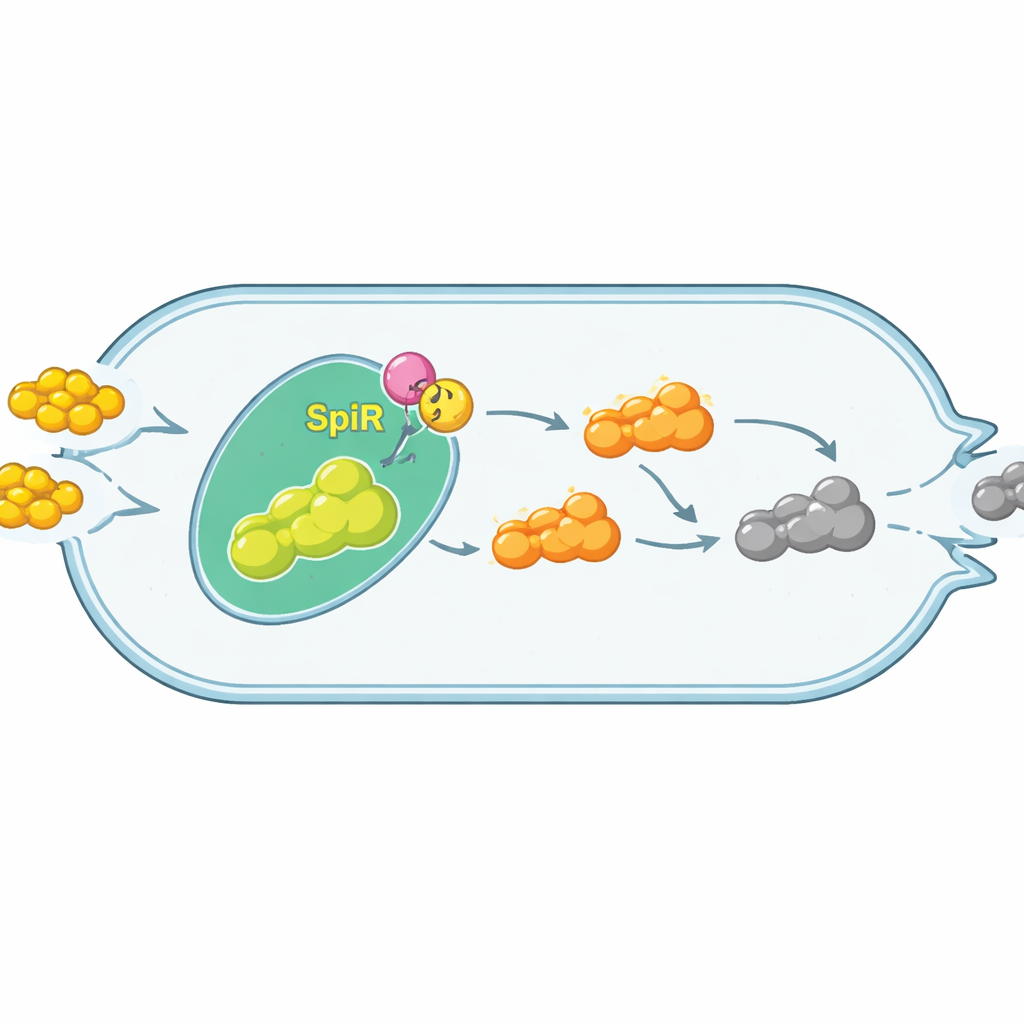
The team focused on Eubacterium coprostanoligenes, a gut bacterium long known to reduce cholesterol, and searched its genome for candidates that resemble steroid-processing enzymes from other organisms. They homed in on SpiR, a member of a large enzyme family that commonly moves and adds hydrogen atoms on ring-shaped molecules like hormones. Laboratory tests using engineered E. coli bacteria showed that SpiR converts cholesterol into cholestenone, the first and required step toward coprostanol. SpiR also transformed another steroid, pregnenolone, into progesterone and carried out a precise set of reductions that establish its role as a versatile, but highly selective, steroid-processing enzyme.
How SpiR Handles Cholesterol
Biophysical measurements revealed that SpiR binds cholesterol and its downstream product, coprostanone, more tightly than related steroids, indicating a strong preference for cholesterol-like compounds with a full side chain. SpiR works as a paired unit, or homodimer, and uses common cellular cofactors (NADH and NAD⁺) to shuttle electrons during the reaction. Structural modeling placed SpiR alongside other cholesterol-acting enzymes from bacteria and humans and highlighted a conserved trio of amino acids that likely carry out the core chemistry. Intriguingly, SpiR also appears to carry an unusual metal center, hinting at a previously unrecognized twist within this enzyme family.
Who Carries SpiR in the Gut
To see where SpiR lives in nature, the researchers scanned thousands of microbial genomes and found spiR-like genes almost exclusively in one family of gut bacteria, Acutalibacteraceae, many of which have never been grown in the lab. Two cholesterol-reducing isolates—from a human and a rat—both carried spiR, supporting the idea that this family specializes in using cholesterol as an energy sink in the oxygen-poor gut. When the scientists examined three large human cohorts with paired DNA and stool chemistry data, individuals whose stool showed strong cholesterol conversion almost always harbored spiR-carrying microbes, even when another previously suspected gene, ismA, was absent.
SpiR as a Stronger Cholesterol Signal
Across hundreds of people, the presence of spiR genes in gut metagenomes correlated tightly with higher levels of intermediate products of cholesterol breakdown (cholestenone and coprostanone) and with lower stool cholesterol. Statistical models showed that simply knowing whether spiR was present was remarkably accurate at predicting whether a person’s microbes were actively converting cholesterol, outperforming predictions based on ismA or on which bacterial species were present. This means spiR is not just another enzyme in the mix: it is a powerful marker of a microbiome that is actively pulling cholesterol out of circulation.
What This Means for Future Therapies
In plain terms, this work shows that a specific bacterial enzyme, SpiR, helps kick-start the conversion of cholesterol into a harmless waste product that the body excretes. While many other factors control blood cholesterol—diet, liver function, bile acids, and genes—SpiR pinpoints a concrete way gut microbes can contribute. The findings do not yet prove that boosting SpiR will lower cholesterol in patients, but they provide a roadmap: identify, nurture, or one day supplement spiR-carrying bacteria to enhance this natural drainage route. With more research in animal models and carefully designed human studies, SpiR and its microbial partners could eventually become targets for next-generation probiotics or dietary strategies aimed at supporting heart health from the inside out.
Citation: Arp, G., Levy, S., Jiang, A.K. et al. SpiR is a gut microbial enzyme that drives cholesterol conversion. Nat Commun 17, 3495 (2026). https://doi.org/10.1038/s41467-026-70820-6
Keywords: gut microbiome, cholesterol metabolism, bacterial enzymes, coprostanol, cardiovascular health