Clear Sky Science · en
Recycling fossil infrastructure for cleaner energy transitions
Turning Old Fossil Sites into New Energy Foundations
As the world races to build more wind farms and solar parks, we face a surprising bottleneck: not a shortage of sunlight or wind, but of metals like steel and copper. Mining and refining these materials is energy-hungry and environmentally damaging. This study asks a simple but powerful question: instead of digging new holes in the ground, could we mine the metal already sitting in aging coal plants, oil rigs, pipelines, and other fossil fuel infrastructure—and use it to build the clean energy systems that will replace them?
The Hidden Metal Treasure in Fossil Infrastructure
The authors first map how much material is locked up in today’s global fossil fuel infrastructure. Looking at 22 different materials, they use detailed databases of coal mines, power plants, oil and gas rigs, and pipelines, combined with engineering data on how much of each material goes into these facilities. They estimate that 6.39 billion tons of materials could become available as this infrastructure is retired. Concrete is the largest share, but it is hard to recycle into high-quality new products. Steel and copper, by contrast, stand out as both abundant and highly recyclable, making them prime candidates for a “fossil-to-renewable” material pipeline.
Steel and Copper: Enough to Power the Transition
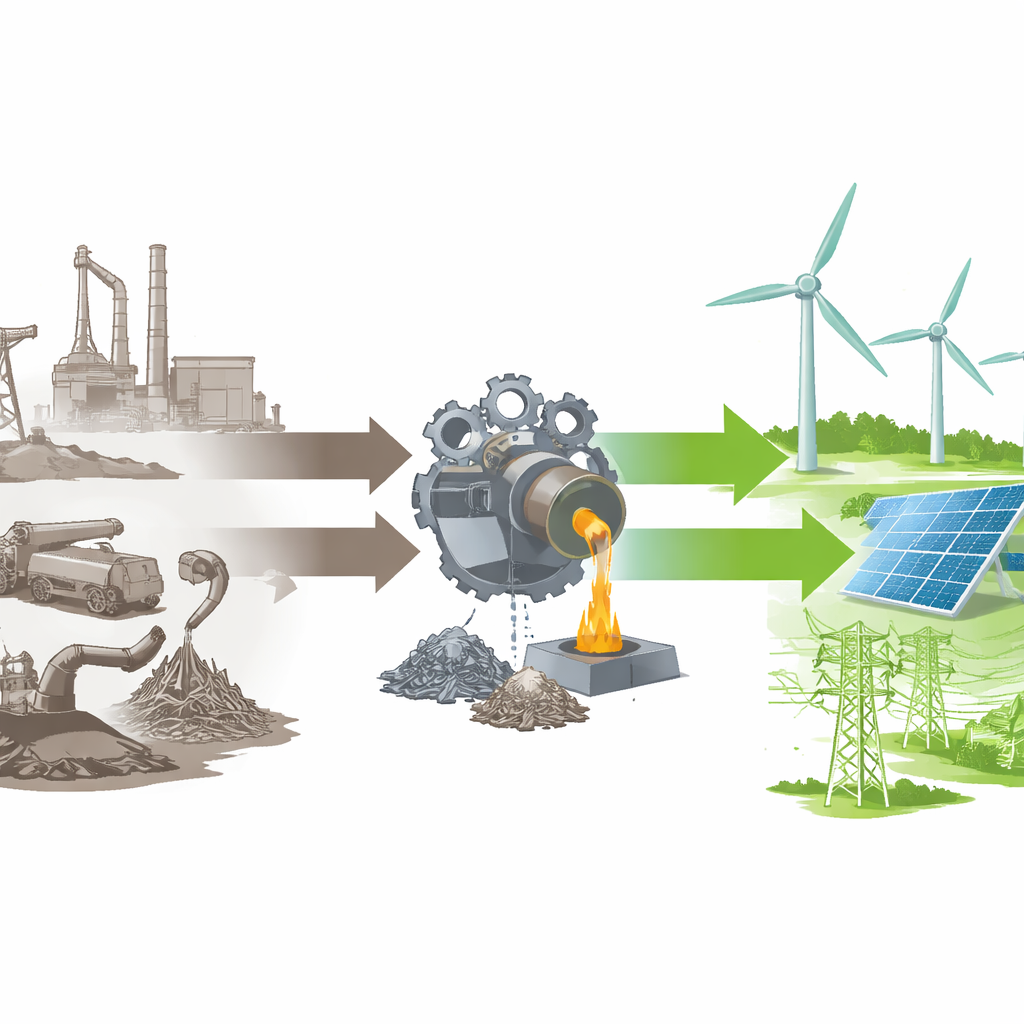
Steel is the star of the analysis. The study finds about 1.34 billion tons of steel in existing fossil infrastructure—roughly one and a half times the median amount of steel that global energy transition scenarios say we will need for new power plants and grids between 2020 and 2050. Copper is present in smaller quantities (10 million tons), but even this could cover about one-third of the expected copper demand for clean power systems over the same period. In other words, the metal already sitting in idle or soon-to-be-obsolete fossil assets could supply a very large chunk of what is needed to build the next generation of power systems, from wind turbines to solar farms and transmission lines.
Environmental Gains Without Overloading Recycling Systems
A key concern is whether recycling plants can actually handle this influx of scrap. The authors examine global recycling capacity and find that existing and planned electric furnaces for steel and copper have more than enough idle capacity to process the extra material, even if it is steadily released between 2025 and 2050. Using prospective life-cycle assessment, they then compare the environmental impacts of making steel and copper from ore versus from scrap, across twenty impact categories. Recycling steel cuts climate impacts by roughly two-thirds and sharply reduces metal depletion, pollution, and particulate emissions, with modest trade-offs in water use and nuclear-related impacts that could be managed through cleaner power mixes. Copper recycling delivers even stronger benefits, slashing climate impact, resource use, and toxicity by more than 90 percent in many cases.
Huge Savings in Hidden Costs and Cleaner Wind and Solar
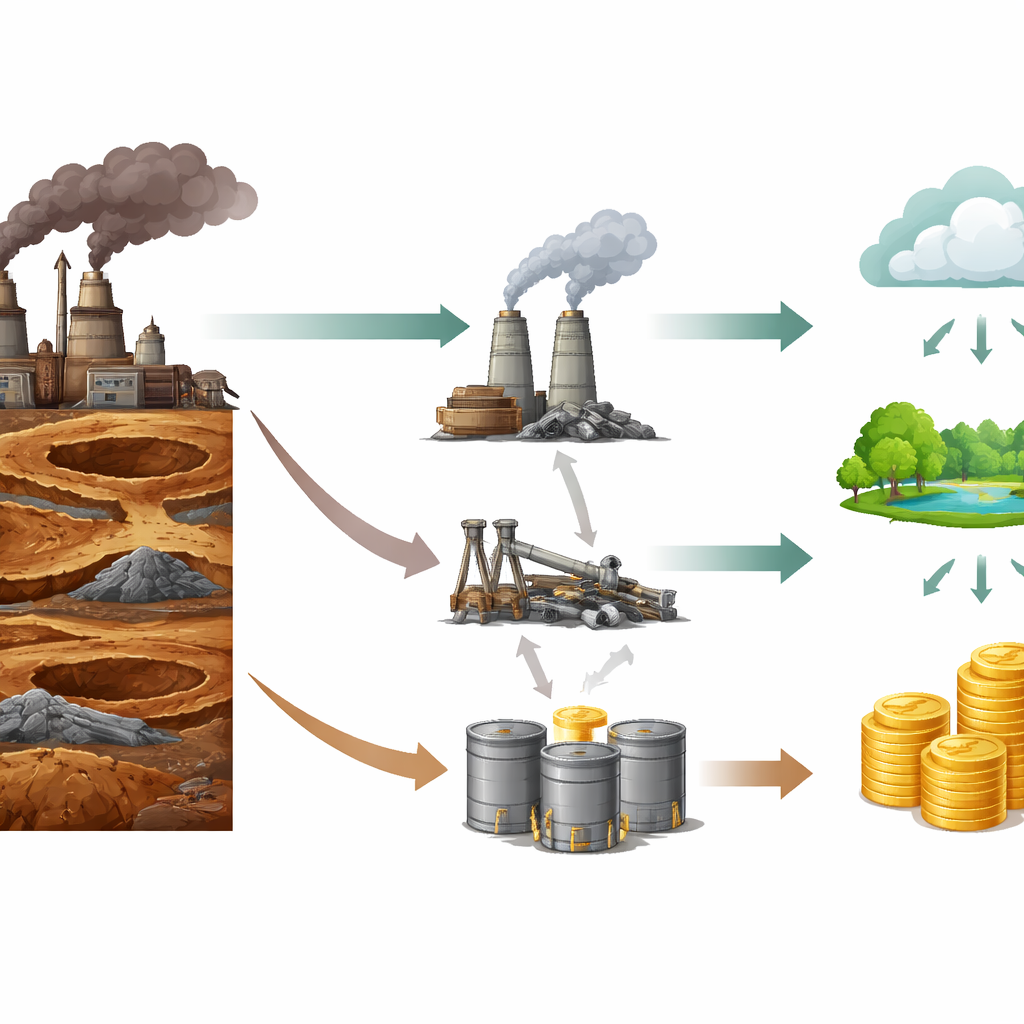
Translating these avoided impacts into money, the researchers estimate that recycling steel and copper from fossil infrastructure could prevent between about 4 and 12 trillion US dollars in “externality” costs—healthcare expenses, lost ecosystem services, and climate damages that usually do not appear on company balance sheets. For producers, recycling is also financially attractive: recycled steel can be cost-competitive with conventional steel, and recycled copper from cables is much cheaper than copper from ore. When these recycled metals are used directly in wind turbines and solar arrays, the carbon footprint of building those systems falls by roughly one-third, and their hidden environmental costs drop by about half or more. In fact, the stock of steel alone could be enough to build several times the wind and solar capacity foreseen in many climate scenarios.
Policy Choices for a Faster, Fairer Transition
The study concludes that dismantling and recycling fossil fuel infrastructure is not just a waste management problem—it is a strategic opportunity. Redirecting its steel and copper into clean energy projects could accelerate the transition, reduce pressure on new mines, and cut pollution and health damage worldwide, all while being economically sound. Realizing this potential will require policies and incentives to retire assets early, especially for profitable oil and gas facilities, and to ensure that the value of recovered materials benefits society. In simple terms, deconstructing yesterday’s fossil energy system could provide much of the raw material for tomorrow’s cleaner, cheaper, and healthier power grid.
Citation: Schlesier, H., Guillén-Gosálbez, G. & Desing, H. Recycling fossil infrastructure for cleaner energy transitions. Nat Commun 17, 4003 (2026). https://doi.org/10.1038/s41467-026-70777-6
Keywords: energy transition, metal recycling, fossil infrastructure, steel and copper, renewable energy