Clear Sky Science · en
Pyruvate metabolism enzyme Dlat induces mitochondria protein hyperacetylation to limit fatty acid oxidation in the HFpEF heart
Why this heart study matters
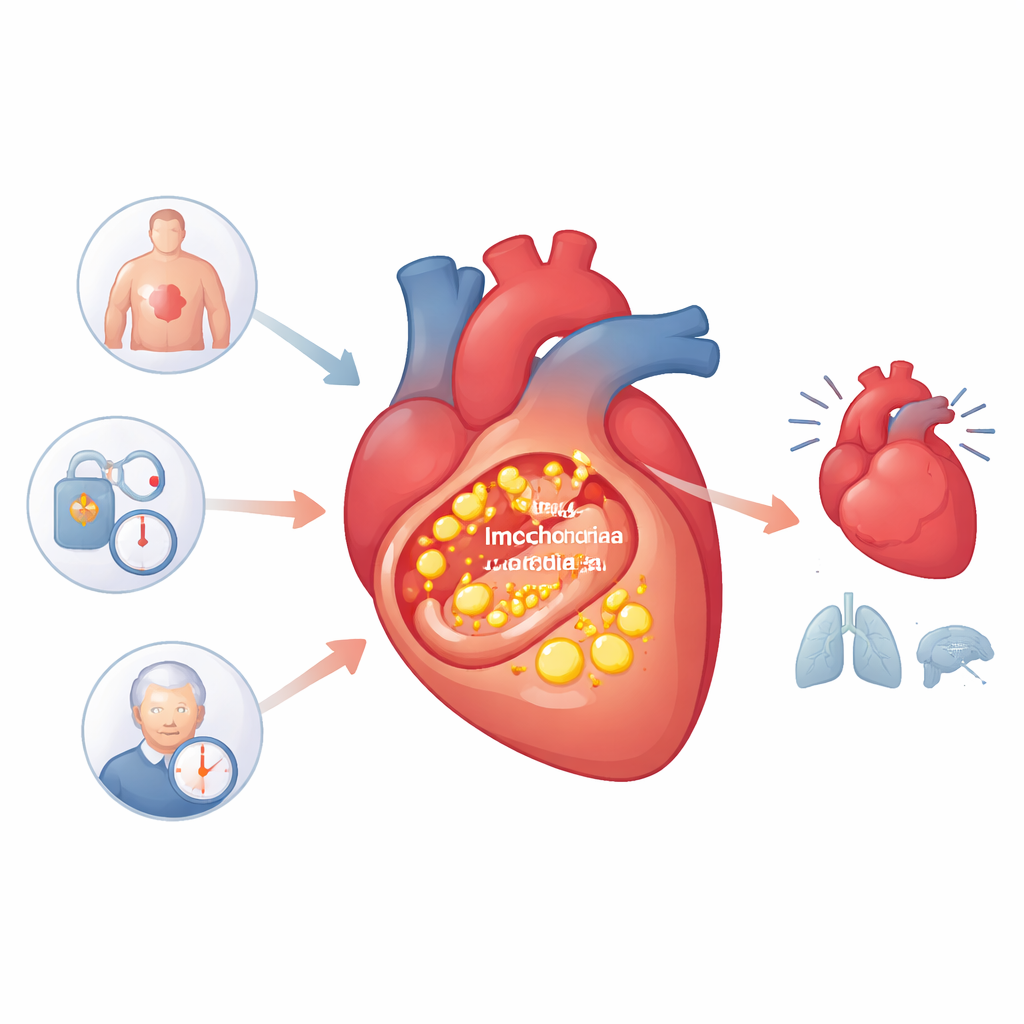
Heart failure is often pictured as a weak pump, but in about half of patients the heart still squeezes normally. Instead, it becomes stiff and struggles to relax between beats, a condition called heart failure with preserved ejection fraction (HFpEF). People with HFpEF are frequently older and living with obesity, high blood pressure, or diabetes. This study asks a simple but crucial question: what is going wrong with the heart’s energy factories in HFpEF, and can we flip a molecular switch to help those factories burn fat more cleanly again?
When the heart’s fuel use goes off balance
Healthy hearts are voracious and flexible engines, drawing most of their energy from burning fatty acids but ready to switch fuels as needed. In HFpEF, that flexibility is lost. Using a mouse model that combines a high‑fat diet with a drug that raises blood pressure, the researchers recreated the key features of HFpEF: stiff hearts, shortness of breath, poor exercise capacity, and thickened, scarred heart muscle. Even though these hearts were taking up plenty of fat, detailed measurements showed they were not burning it efficiently. Instead, fat droplets piled up inside heart cells, hinting at a traffic jam in the fat‑burning machinery deep within their mitochondria, the cell’s power plants.
A chemical “tag” that clogs the heart’s power plants
The team focused on a subtle chemical mark called acetylation, in which a small acetyl group is attached to proteins, often altering how they work. By mapping thousands of these marks, they discovered that HFpEF hearts were riddled with hyperacetylation, especially inside mitochondria and particularly on proteins that run the fatty‑acid oxidation (FAO) pathway. This suggested that the fat‑burning enzymes themselves were being chemically “gummed up.” When the researchers boosted natural deacetylating enzymes by giving mice nicotinamide riboside, a vitamin‑like precursor of NAD+, mitochondrial acetylation dropped. As a result, fatty‑acid burning improved, fat deposits shrank, and heart stiffness, lung congestion, and exercise intolerance all eased.
The unexpected role of a pyruvate enzyme
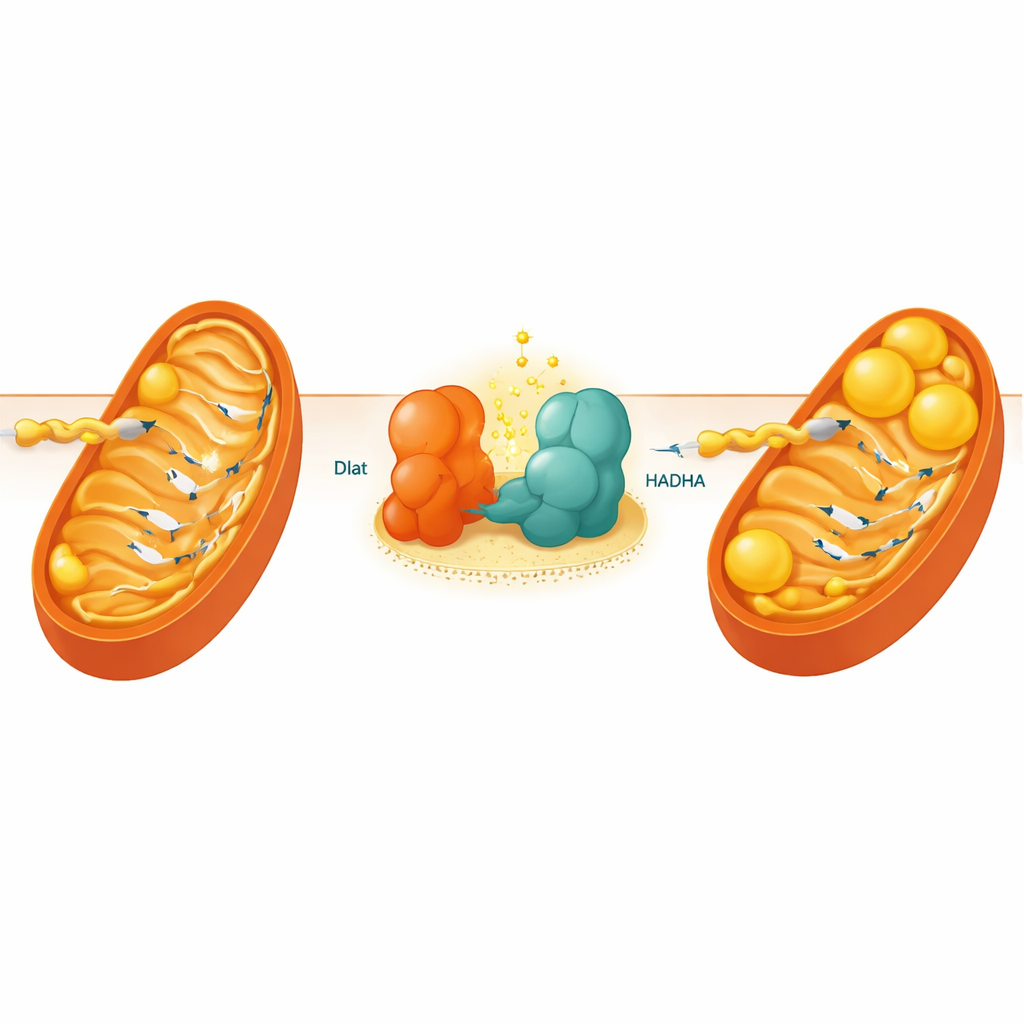
Digging deeper, the scientists asked what was driving this mitochondrial hyperacetylation. Proteomics of purified mitochondria pointed to one standout candidate: Dlat, a component of the pyruvate dehydrogenase complex that normally helps convert sugar‑derived fuel into usable energy. In HFpEF hearts, Dlat levels climbed steadily as disease worsened. When Dlat was artificially increased only in heart muscle cells, mitochondrial proteins—including key FAO enzymes—became heavily acetylated, fat burning faltered, and lipid droplets and toxic fat byproducts accumulated. Mice engineered to overproduce Dlat in the heart alone developed diastolic dysfunction, enlarged and stiff hearts, and fat‑laden heart cells, closely mimicking HFpEF even without systemic metabolic disease.
A fat‑burning enzyme switched off at one critical point
The study then pinpointed one of Dlat’s most important targets: HADHA, a core component of the mitochondrial trifunctional protein that performs several final steps in breaking down long‑chain fatty acids. Using biochemical pull‑down experiments and purified proteins, the authors showed that Dlat physically binds to HADHA and directly transfers acetyl groups onto it, particularly at a single lysine position called K728. When this site was acetylated, HADHA’s enzymatic activity dropped and the flow of fatty‑acid fragments through the pathway slowed. Mutating K728 so it could no longer be acetylated protected HADHA’s activity, reduced fat droplet buildup in cells, and blunted the harmful effects of excess Dlat. In living mice, increasing HADHA levels in Dlat‑overexpressing hearts or pharmacologically activating HADHA with the natural compound spermidine restored fatty‑acid oxidation, cleared lipid accumulation, and improved diastolic function.
Turning molecular insight into possible treatments
To test whether dialing down Dlat could actually help in established HFpEF, the researchers used a heart‑targeted gene therapy to partially silence Dlat in their two‑hit mouse model. This reduced mitochondrial acetylation of FAO proteins, improved fatty‑acid–driven respiration, lowered lipid droplet burden, and eased heart stiffness and lung congestion, all without major changes in body weight, blood pressure, or blood sugar. Together, these findings outline a clear chain of events: metabolic stresses common in modern life upregulate Dlat in the heart; Dlat then acetylates and disables HADHA and related enzymes; fatty‑acid oxidation stalls; and toxic fat intermediates accumulate, contributing to the stiff, energy‑starved heart seen in HFpEF.
What this means for people with stiff hearts
In everyday terms, this study suggests that some HFpEF hearts are not simply “tired”—their fuel lines are chemically misregulated. A sugar‑processing enzyme, Dlat, moonlights as an acetylating agent that over‑tags the heart’s fat‑burning machinery, especially HADHA, choking off efficient fat use and fostering harmful fat buildup. By rebalancing these chemical tags—either by boosting deacetylation with NAD+ precursors, directly strengthening HADHA with compounds like spermidine, or selectively easing Dlat activity—it may be possible to restore cleaner fat burning and soften a stiff heart. While these approaches remain to be tested in patients, they highlight mitochondrial protein acetylation as a promising, druggable lever in the fight against HFpEF.
Citation: Wang, Y., Guo, D., Zhu, J. et al. Pyruvate metabolism enzyme Dlat induces mitochondria protein hyperacetylation to limit fatty acid oxidation in the HFpEF heart. Nat Commun 17, 3929 (2026). https://doi.org/10.1038/s41467-026-70703-w
Keywords: heart failure with preserved ejection fraction, fatty acid oxidation, mitochondrial acetylation, Dlat enzyme, HADHA