Clear Sky Science · en
Phosphoregulation of the novel hemi-arrestin MAPK scaffold Sms1 prevents untimely mating
How Yeast Decide When It’s Time to Mate
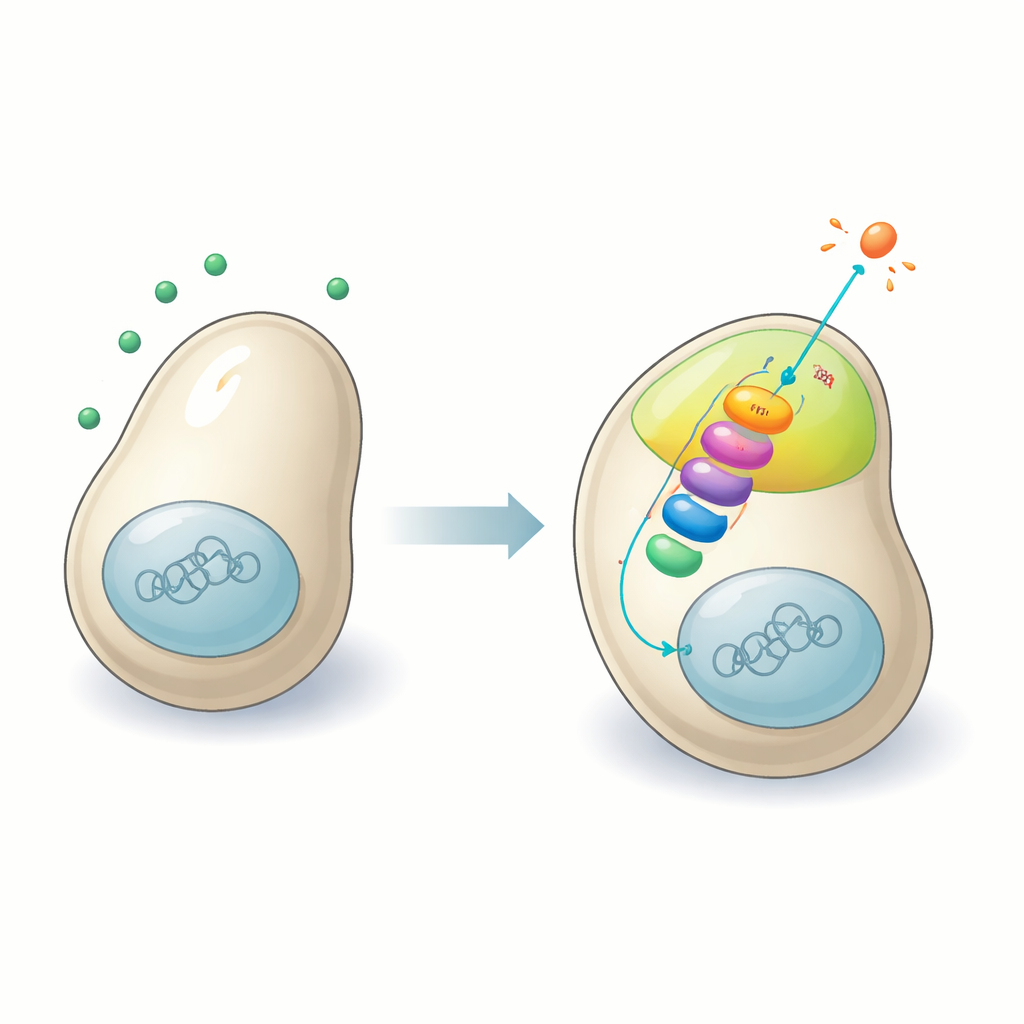
Single-celled fungi like fission yeast face a fundamental choice: keep dividing or pause growth to search for a partner and fuse. Committing to mating at the wrong time can be deadly, especially when food is plentiful or suitable partners are scarce. This study uncovers a molecular “switchboard” protein, called Sms1, that helps yeast sense when conditions are right, turn on a mating program at the cell surface, and then shut it down again before it causes trouble.
A Molecular Conversation at the Cell Surface
Yeast cells communicate with potential partners using pheromones—chemical signals detected by receptors on the cell surface. These receptors connect to a well-known signaling route inside cells called a MAP kinase cascade, a three-step chain of protein kinases that relay and amplify signals. In many organisms, special scaffold proteins hold these kinases together in the right place so that signals are transmitted efficiently. For decades, scientists believed that fission yeast ran its mating pathway without such a scaffold. By carefully tracking proteins and their interactions, the authors overturn this view and reveal Sms1 as the missing organizer that brings the components of the mating pathway together at the plasma membrane.
Building a Focused Mating Hotspot
When a fission yeast cell senses pheromone from a compatible partner, it forms small, transient “polarity patches” at its surface. These patches are the cell’s way of probing its surroundings and deciding where to grow toward a partner. The researchers show that Sms1 is recruited to these patches through two key features: an arrestin-like domain that latches onto specific membrane lipids, and direct binding to a G protein subunit that is activated by the pheromone receptor. Once at the patch, Sms1 acts as a hub, physically associating with all three levels of the MAP kinase cascade. This local clustering greatly boosts the signal that tells the cell to start oriented growth and prepare for fusion.
From Signal Relay to Shape Change
By examining mutant yeast lacking Sms1, the team finds that mating essentially fails: the crucial MAP kinase Spk1 is barely activated, genes needed for sexual differentiation are not turned on properly, and cells do not form normal mating projections. Even when the middle kinase in the chain is engineered to be switched on all the time, cells still need Sms1 to transform the global signal into a focused structural response at the cell surface. This indicates that Sms1 does more than just flip the signal “on.” It helps translate that signal into precise cell shape changes, ensuring that growth is directed toward a real partner rather than randomly into space.
A Built-In Brake to Avoid Bad Timing
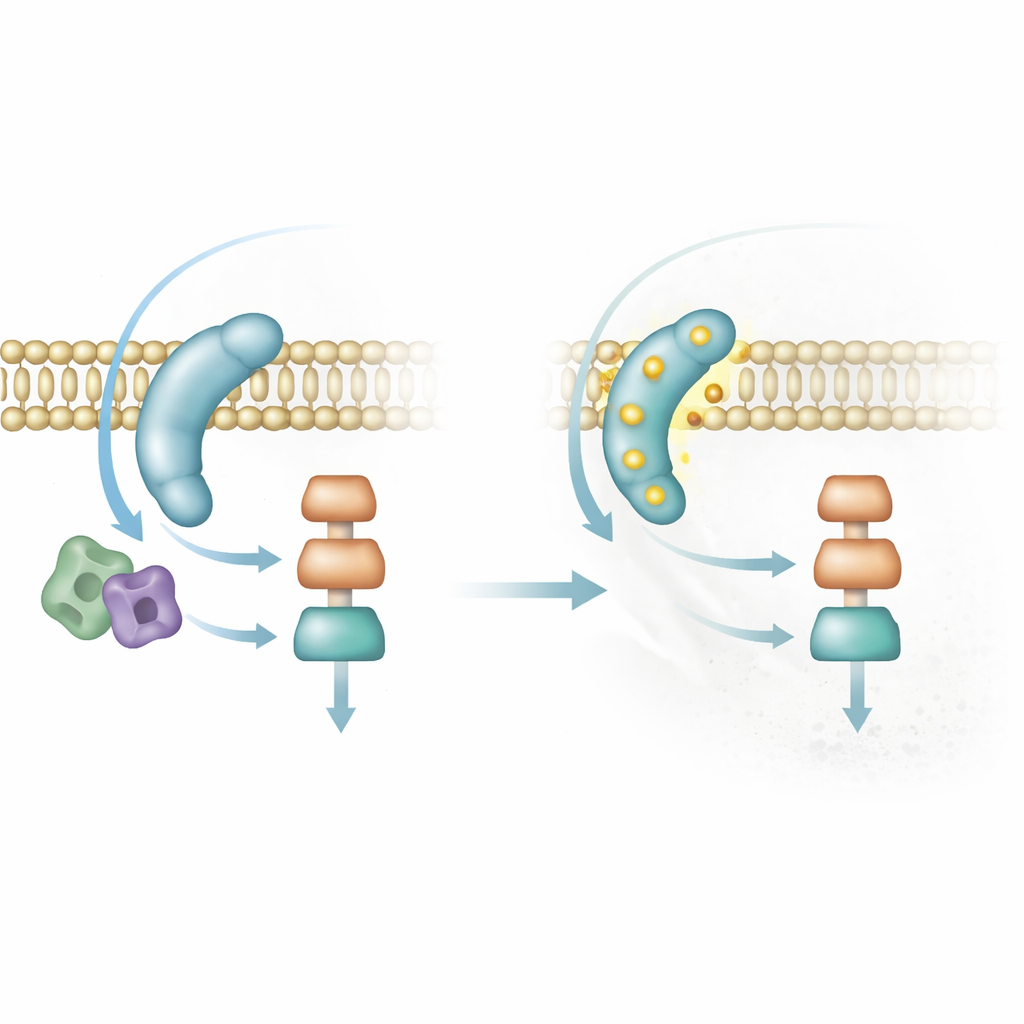
Signals that turn on mating must also be turned off. The researchers discover that Sms1 is controlled by phosphorylation—small chemical tags added by kinases, including the very MAP kinase it helps activate. When Sms1 is phosphorylated at specific sites, it is driven away from the membrane and the signaling patch dissolves. Yeast engineered to carry a non-phosphorylatable form of Sms1 accumulate long-lived, bright patches, become overly sensitive to pheromones, and attempt to mate even when nutrients are abundant or after they have already fused into a zygote. Conversely, a phospho-mimic version of Sms1 cannot reach the membrane and makes cells sterile. This feedback loop ensures that mating is switched on only briefly and in the right context.
What This Means Beyond Yeast
This work reveals Sms1 as a novel type of MAP kinase scaffold: it uses an arrestin-like fold and flexible regions to anchor signaling enzymes at the cell surface, then releases them once the job is done. Although Sms1 has a very different structure from known scaffolds in animals and budding yeast, it performs remarkably similar roles—assembling the cascade, localizing it to specific membrane sites, and being shut down by phosphorylation. This suggests that diverse organisms have independently evolved comparable solutions to the same problem: how to tightly control powerful signaling pathways so that complex decisions like mating happen only at the right place and time.
Citation: Sieber, B., Merlini, L., Li, W. et al. Phosphoregulation of the novel hemi-arrestin MAPK scaffold Sms1 prevents untimely mating. Nat Commun 17, 4084 (2026). https://doi.org/10.1038/s41467-026-70631-9
Keywords: MAPK signaling, yeast mating, scaffold protein, cell polarity, signal feedback