Clear Sky Science · en
Advancing the elimination of cervical cancer across Africa
Why This Matters to Women and Families
Cervical cancer is one of the few major cancers that the world already knows how to prevent, yet it still kills tens of thousands of women across Africa every year, often in the prime of their lives. This article explains why the disease remains so common, what tools now exist to stop it, and how African countries can realistically move toward a future where cervical cancer is rare. It looks at vaccines, modern screening tests, new uses of artificial intelligence, and better treatment systems, and asks what mix of solutions can work in real clinics and communities.
The Scale of the Problem
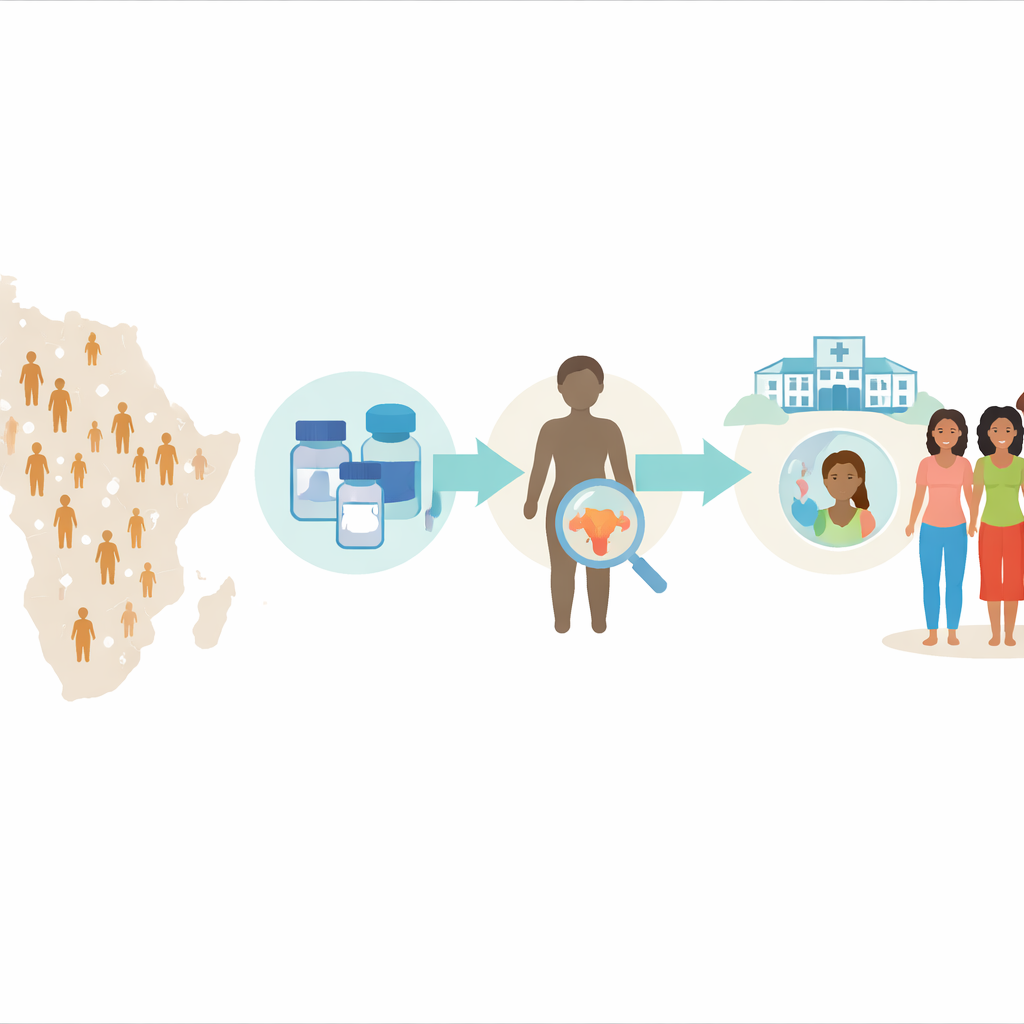
Across the globe, cervical cancer caused an estimated 660,000 new cases and 350,000 deaths in 2022, and Africa bears a disproportionate share of this burden. The continent recorded about one in five of the world’s new cases and nearly a quarter of the deaths, with the highest rates in Eastern and Southern Africa. Many women are diagnosed only when the disease is already advanced, largely because routine screening is rare. The World Health Organization has set bold goals: to vaccinate most girls against the human papillomavirus (HPV), screen most adult women at least twice in their lifetimes, and ensure that nearly all women diagnosed with cervical disease receive care. If low- and middle-income countries could reach these targets by 2030, models suggest that millions of cases and deaths could be avoided over the next century.
The Virus Behind the Cancer
Cervical cancer is almost always caused by long-lasting infection with HPV, a very common sexually transmitted virus. Different HPV types circulate in different regions. Worldwide, a handful of types cause most cancers, but in sub-Saharan Africa some less familiar types, such as HPV-35, are unusually common and are not fully covered by current vaccines. The situation is further complicated by the high prevalence of HIV. Women living with HIV are more likely to acquire HPV, to be infected with multiple types at once, and to have difficulty clearing the virus, which increases their risk of cervical cancer. Studies across several African countries show that high-risk HPV types are especially frequent in women with HIV, underscoring the need to tailor vaccination and screening strategies to this group.
Vaccines, Screening, and New Technologies
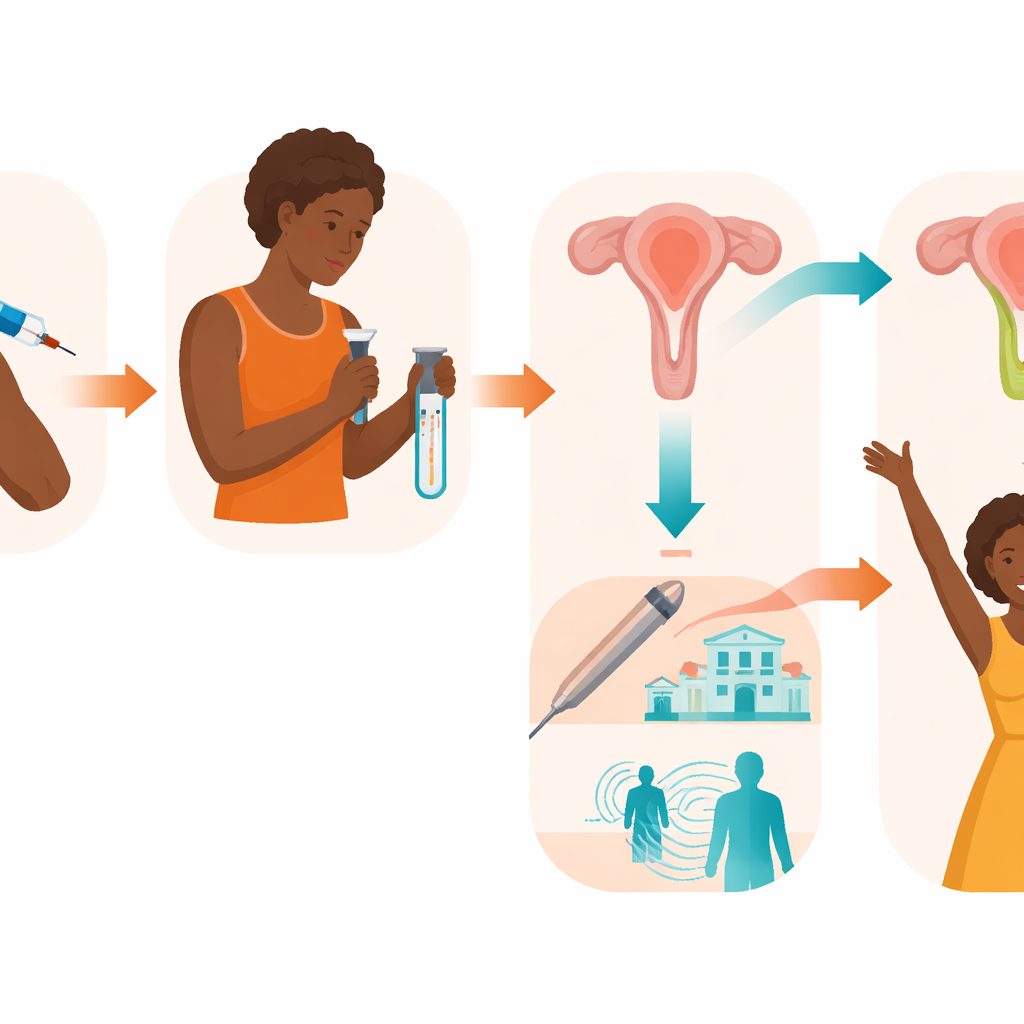
Several HPV vaccines are now licensed worldwide and have sharply reduced cervical disease where they are widely used, such as in Australia and the United Kingdom. In Africa, more than half of sub-Saharan countries have added HPV vaccination to their national schedules, often with donor support, usually targeting girls aged 9 to 14 in schools. Yet coverage is uneven and often falls short of global targets, held back by limited funding, vaccine supply, weak school systems, misinformation, and the disruption caused by events like the COVID-19 pandemic or regional conflicts. Researchers are testing whether a single vaccine dose, or more flexible two-dose schedules, could still offer strong protection while lowering costs and making programs easier to run, especially in communities where follow-up visits are hard to guarantee.
Finding Disease Early
Even with vaccination, screening remains essential because many adult women are already infected, and current vaccines do not cover every cancer-causing HPV type. Traditional methods such as Pap smears and visual inspection of the cervix require trained staff and can miss early changes. Newer approaches test directly for HPV DNA, which is more sensitive and can be delivered through “screen-and-treat” programs where women who test positive receive same-day treatment for suspicious areas of the cervix. In Africa, studies show that combining HPV tests with other methods such as targeted microscope exams, smartphone imaging, or simple follow-on tests can greatly improve detection. Women can even collect their own vaginal samples at home or in community settings, a strategy that many find more acceptable and that performs as well as clinician-collected samples.
Care, Survival, and Paths Forward
When pre-cancerous changes are found early, simple procedures that destroy or remove a thin layer of cervical tissue—such as thermal ablation using a small heated probe—can prevent cancer from ever developing. These treatments are generally safe, inexpensive, and well accepted in African clinics, though women living with HIV may face higher risks of recurrence and need closer follow-up. For invasive cancer, surgery and combinations of radiation and chemotherapy can be effective, but many health systems have too few specialists, limited radiotherapy machines, and long waiting lists. Survival is strongly linked to a country’s overall level of development and to whether patients receive guideline-based treatment in time. The authors argue that to truly move toward eliminating cervical cancer, African governments and partners must invest not only in vaccines and tests, but also in training health workers, deploying mobile and digital tools, expanding insurance and financial support, and building regional centers capable of offering quality cancer care.
What This Means for the Future
This review concludes that cervical cancer in Africa is a largely solvable problem if existing tools are scaled up in smart, locally adapted ways. Vaccinating girls before they are exposed to HPV, offering simple and accessible screening—especially HPV self-testing—and ensuring timely, affordable treatment could together turn the disease from a common killer into a rarity. Success will require political will, sustainable funding, strong community engagement, and continued research on questions such as single-dose vaccination and new screening markers. If these elements come together, the vision of making cervical cancer a disease of the past on the African continent could realistically be achieved within the lifetimes of today’s young girls.
Citation: Osafo, K.S., Zhang, Y., Obiri-Yeboah, D. et al. Advancing the elimination of cervical cancer across Africa. Nat Commun 17, 3907 (2026). https://doi.org/10.1038/s41467-026-70450-y
Keywords: cervical cancer, HPV vaccination, Africa, cancer screening, women’s health