Clear Sky Science · en
Disparities in childhood human capital investments in the United States
Why Early Investments in Kids Matter
From baby bottles and bedtime stories to doctor visits and school days, children grow up surrounded by countless investments of time and money. This study asks a deceptively simple question: how much do U.S. children actually receive, from birth to age 18, and how unevenly is that support spread across families of different incomes and racial and ethnic backgrounds? The answers matter because these early inputs help shape later education, health, and earnings.
Adding Up a Childhood
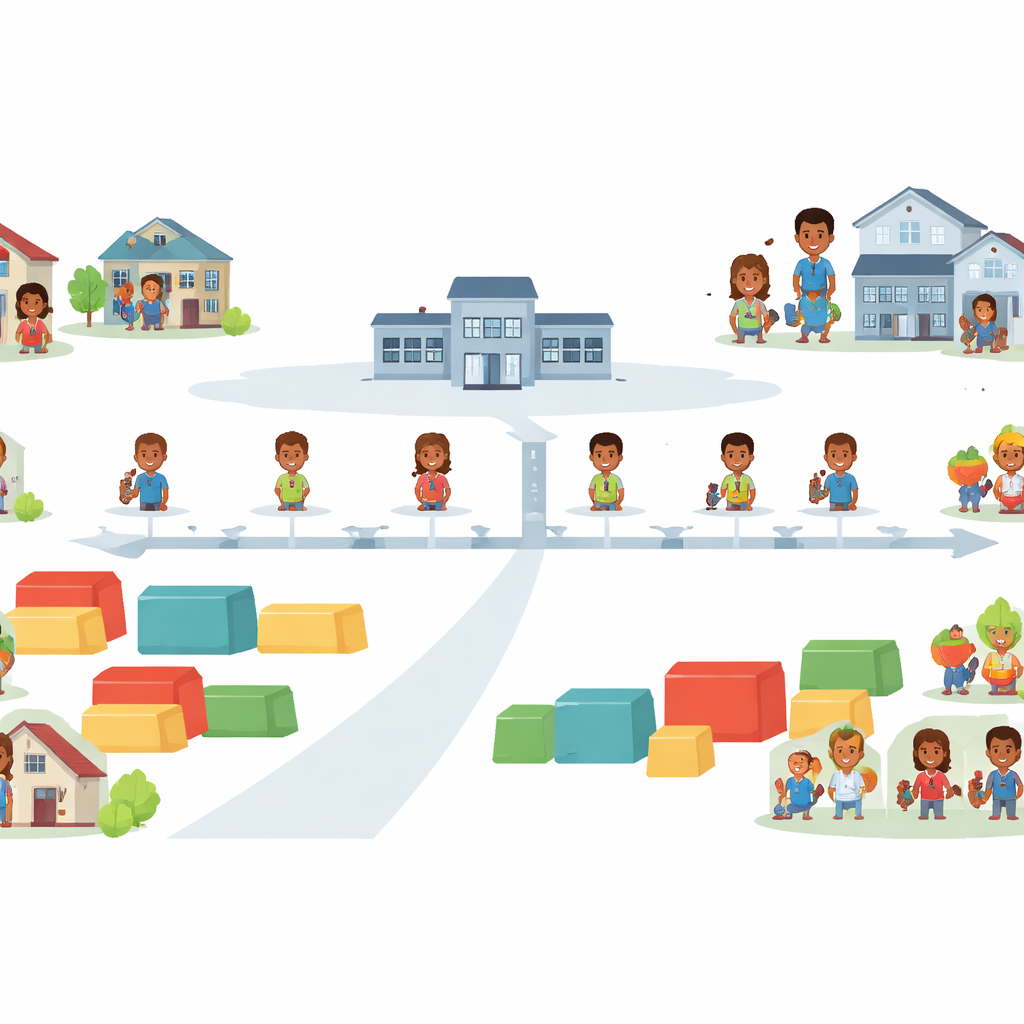
The researchers combined data from 10 large national surveys collected between 2010 and 2023 to track what they call “human capital investments” in children. They counted both money spent and time devoted by parents, caregivers, and public programs. The tally covered six broad areas: housing, health, nutrition, education inside and outside of school, child care, clothing, transportation, and exercise. Whenever possible, they converted everything into 2024 dollars using a detailed costing method that prices specific ingredients such as teacher hours, child care staff, or food portions, and they also assigned a monetary value to family time using an average U.S. hourly wage.
What the Typical Child Receives
On average, a child in the United States receives just over half a million dollars’ worth of investments between birth and age 18. The largest shares come from informal learning experiences such as reading, homework help, and family outings (about one-quarter of the total), followed closely by food and mealtime, housing, and formal schooling. Nearly half of the total takes the form of unpaid time that parents and family members spend caring for, feeding, transporting, and teaching children. Public programs—especially free K–12 schooling, publicly supported health insurance, and nutrition assistance—cover a substantial share of these resources, particularly for lower-income families.
Big Gaps in the Early Years
Despite this large overall total, the distribution is far from even. Children in the highest quarter of household income receive about 15% more total investment than those in the lowest quarter, and white children receive 6–14% more than Asian American and Pacific Islander, Black, or Hispanic children. These gaps are especially wide in the first five years of life, when brain development is most rapid. During this period, differences in housing and child care loom large: better-off and white families are more likely to pay for center-based care and larger housing spaces, while lower-income and many minority families rely more on relatives for child care, receive less publicly subsidized early education, and have fewer housing supports.
Converging Totals but Different Mixes
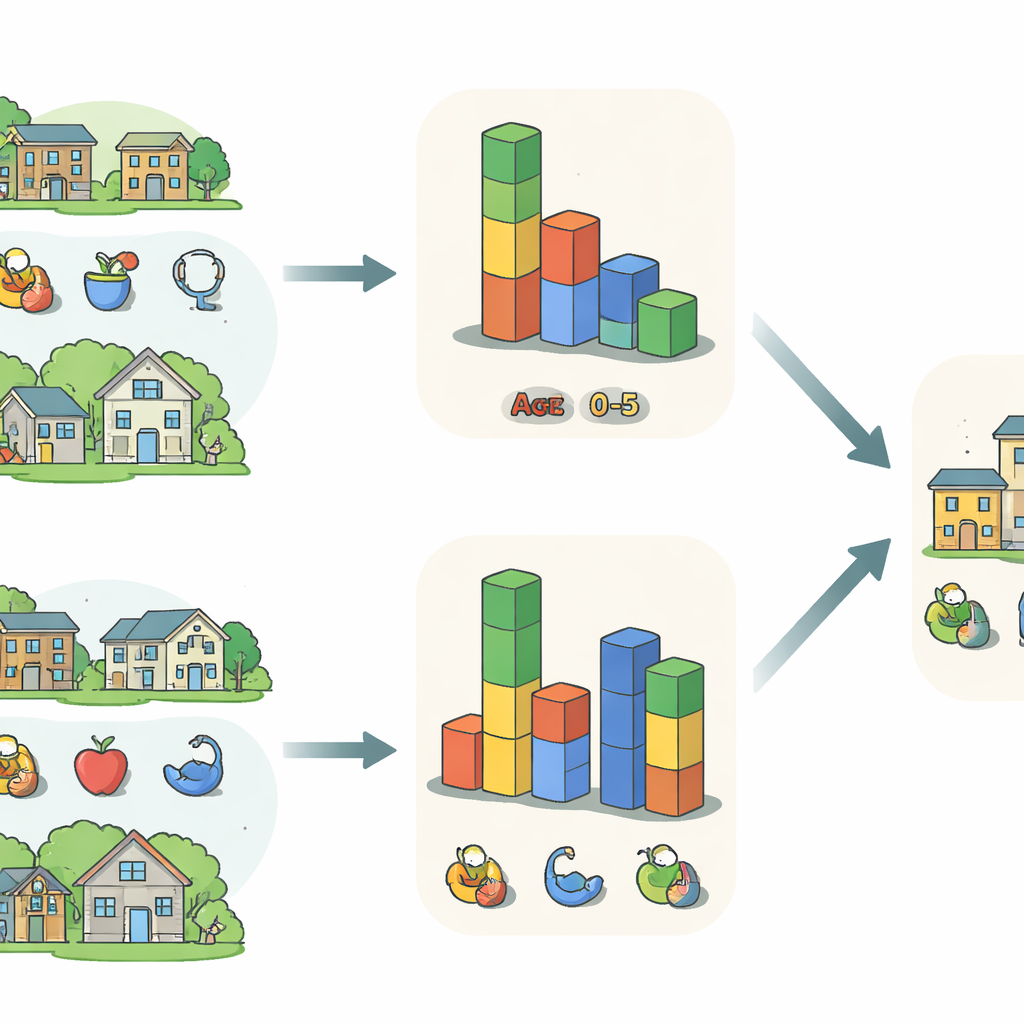
Once children enter kindergarten, total spending and time become more similar across groups, largely because almost all children attend publicly funded schools. As a result, the big early gaps shrink when researchers add up investments from ages 5 to 18. Yet beneath these similar totals, the composition diverges. Lower-income, Black, and Hispanic children are more likely to receive compensatory services such as tutoring and special education, more hospital stays and emergency room visits, and more fruit juice instead of whole fruit. Their higher-income and white peers receive more preventive health care, dental care and glasses, and a different pattern of enrichment activities. The study also shows that using parents’ actual wages to price their time dramatically exaggerates investment gaps, even though prior research finds that time with children is similarly beneficial regardless of parents’ income or education.
What Public Programs Are Doing
The team examined how much of children’s support comes from public safety-net programs. For low-income families, health care and food assistance are widely used; most children in the bottom income quarter receive some help from Medicaid or the Children’s Health Insurance Program, and from nutrition programs such as SNAP and WIC. Publicly funded center-based child care reaches a majority, though not as comprehensively as schooling or health coverage. Housing support, however, is rare even among the poorest families, and the study finds that housing is the single largest driver of overall investment disparities by both income and race or ethnicity.
What This Means for Children’s Futures
To a non-specialist, one of the most striking findings is that when all forms of support are counted—especially family time—the overall dollar gaps in childhood investments are smaller than many might expect. Yet the timing and mix of those investments differ in ways that can reinforce inequality. Children in wealthier, mostly white families get big boosts in the crucial early years and more preventive services and enrichment later on, while many of their peers of color and from lower-income households catch up in total dollars only after they need extra academic and medical help. The authors conclude that public spending plays a powerful equalizing role, but that U.S. policy still underserves the earliest years and does too little in areas like housing and high-quality child care, where better-targeted support could help narrow opportunity gaps that show up later in school, work, and health.
Citation: Blazar, D., Boudreaux, M., Klees, S. et al. Disparities in childhood human capital investments in the United States. Nat Commun 17, 2746 (2026). https://doi.org/10.1038/s41467-026-70316-3
Keywords: childhood inequality, education and housing, early childhood investment, public safety net programs, family time and child development