Clear Sky Science · en
The association of physical activity with urological cancer risk: a systematic review and meta-analysis
Why Moving Your Body Matters
Many of us have heard that exercise can help prevent cancer, but most advice focuses on a few well-known types like breast or colon cancer. This study asks a broader, practical question: can everyday physical activity lower the chance of developing common cancers of the urinary system—those affecting the bladder, prostate, and kidneys—and if so, how much activity is enough to matter? By pooling data from millions of people around the world, the authors offer a clear, numbers-based picture of how moving more may help protect these vital organs, while also warning that “more” is not always endlessly better.
Common but Often Overlooked Cancers
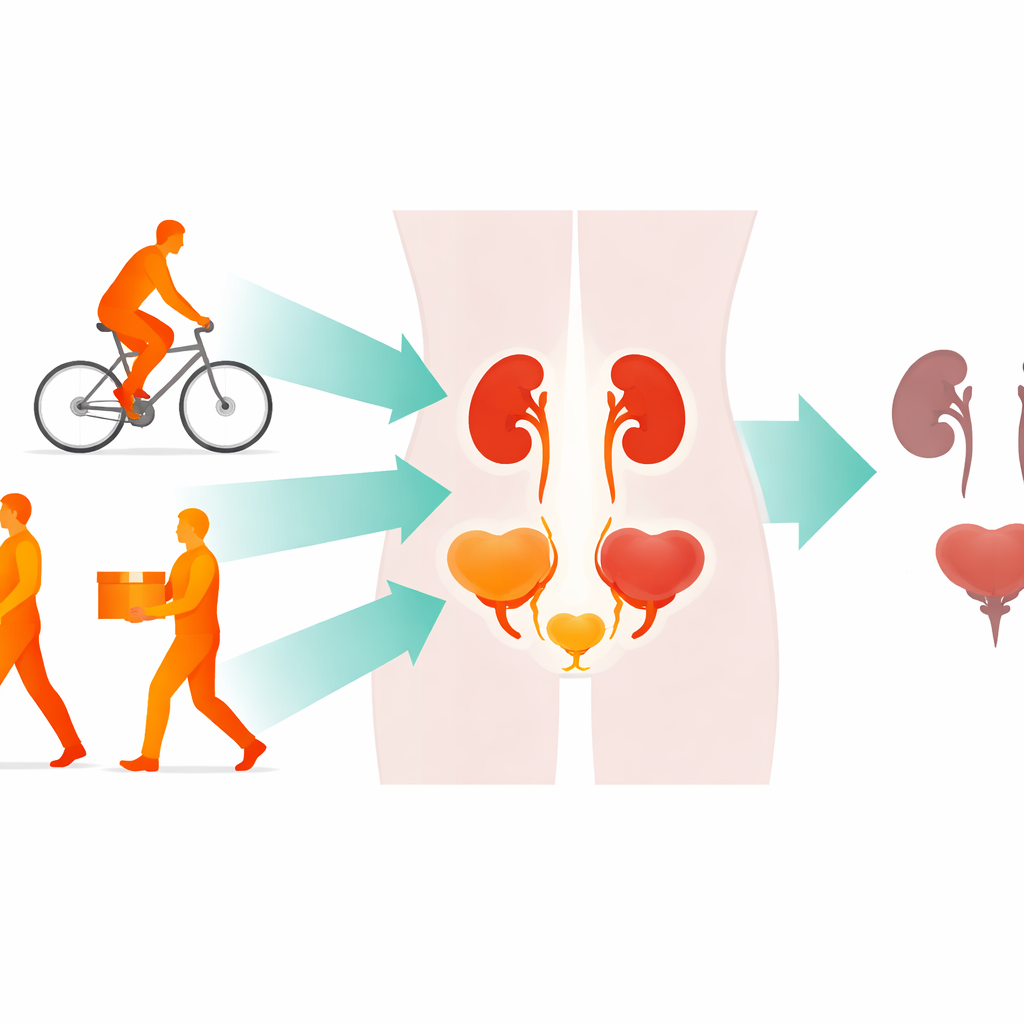
Urological cancers include prostate, bladder, and kidney cancers, all of which arise in the organs that handle urine. Together they affect more than two million people globally each year and cause nearly 800,000 deaths. In men, prostate cancer is one of the most frequently diagnosed cancers, while bladder and kidney cancers rank among the top ten. In women, kidney cancer is a leading diagnosis. Beyond the risks to life, treatments can leave people with fatigue, reduced physical function, and problems with digestion, urination, and sexual health. Because known risk factors such as age, smoking, obesity, high blood pressure, and type 2 diabetes are linked to lifestyle, scientists have long suspected that physical activity could be a powerful tool for both prevention and recovery.
What the Researchers Did
The authors carried out a systematic review and meta-analysis, which means they carefully searched seven major research databases, screened more than 12,000 articles, and combined the results of 95 high-quality studies. Altogether, these studies followed over 11.2 million people and recorded more than 1.6 million cases of urological cancer, making this one of the largest analyses of its kind. The team compared people with low activity to those with moderate and high activity, using international guidelines that define at least 150 minutes per week of moderate physical movement as a meaningful target. They considered different kinds of activity—what people do at work, during leisure time, or in total—and also checked how results changed when factoring in smoking, alcohol use, and body weight.
How Much Protection Activity Provides
Across all the data, people with higher levels of physical activity had about a 9 percent lower risk of any urological cancer than those with low activity. When the cancers were separated, risk dropped by roughly 13 percent for bladder cancer, 6 percent for prostate cancer, and 11 percent for kidney cancer among the most active groups. Women appeared to benefit more than men, and activity linked to work (such as jobs that involve standing or moving for many hours) showed slightly stronger protection than leisure-time exercise alone. Importantly, even moderate activity helped: moving from low to moderate activity cut risk by about 6 percent, and stepping up from moderate to high activity added a smaller, but still measurable, additional benefit. Studies that looked specifically at meeting international recommendations—about 150 to 300 minutes per week of moderate movement—suggested about a 7 percent lower risk overall.
How Moving May Help the Body
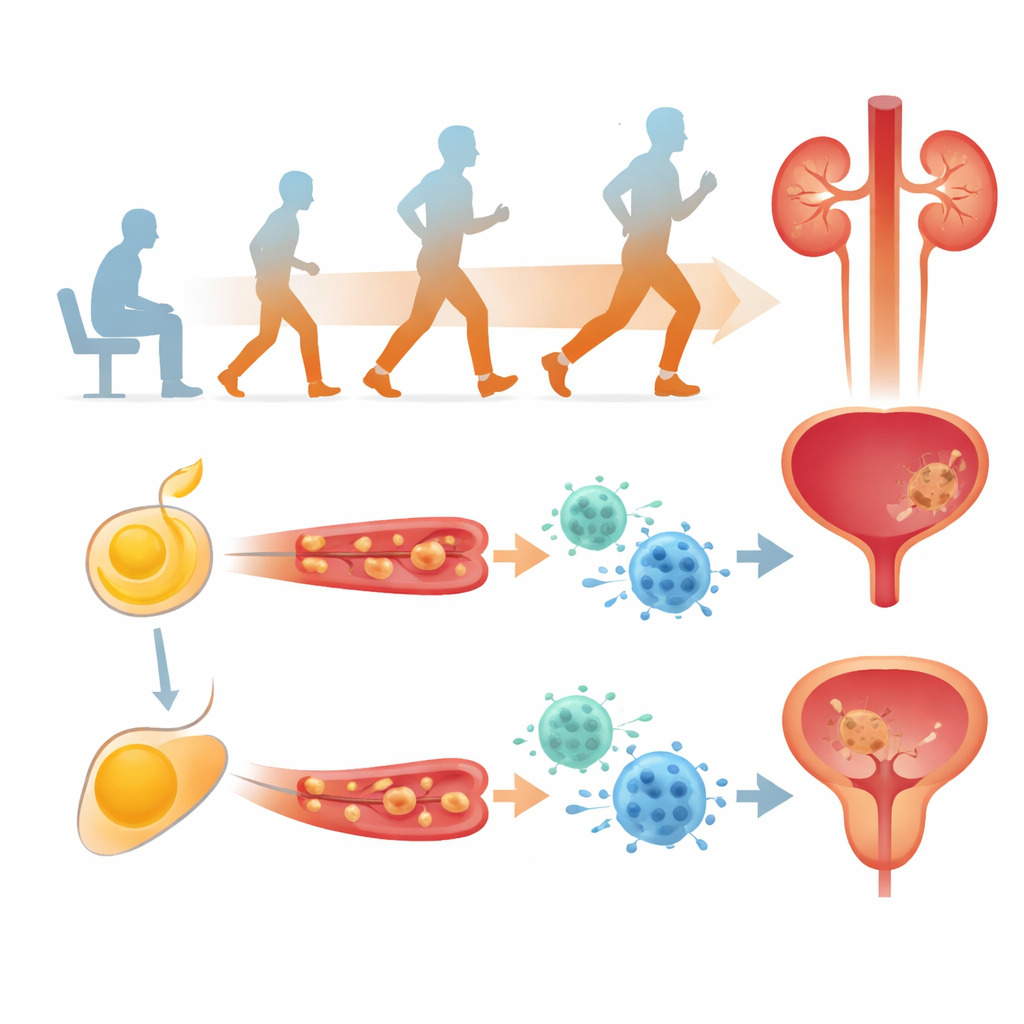
Why would regular movement protect the bladder, prostate, and kidneys? The authors highlight several biological pathways supported by earlier research. Physical activity helps control body weight and improves the body’s response to insulin, a hormone that in excess can encourage cell growth and make it easier for tumors to form. Exercise also seems to lower harmful by-products of metabolism, boost beneficial signaling molecules released by muscles, and tamp down chronic inflammation, all of which may slow or prevent tumor growth. Because smoking and obesity are major drivers of these cancers, and because active people are less likely to smoke heavily and more likely to maintain a healthy weight, part of the benefit of movement may come from its ripple effects on other habits and risk factors.
Strengths, Gaps, and What’s Next
By bringing together dozens of studies from North America, Europe, Asia, and Oceania, this work offers unusually robust evidence that physical activity is a common protective factor for several different cancers of the urinary system. The authors also carefully checked for biases and only included studies that met quality standards. At the same time, most of the underlying research relied on people’s own reports of how much they moved, which can be imperfect. Many studies did not track the exact intensity of activity or how long people spent sitting, leaving open questions about the best mix of light, moderate, and vigorous movement. Future research using more precise tracking tools will be needed to pinpoint the ideal “dose” and pattern of activity for prevention and for supporting people before and after cancer treatment.
What It Means for Everyday Life
For non-specialists, the main message is both simple and encouraging: you do not need to become an athlete to meaningfully lower your chance of urological cancers. This large analysis suggests that even modest, regular movement—such as brisk walking, active commuting, or physically engaging work—can offer protection, with additional but smaller gains at higher levels of effort. Physical activity can also serve as “prehabilitation,” improving fitness before treatment and potentially speeding recovery afterward. However, the results also hint that there may be a point beyond which more effort brings diminishing returns rather than endless added benefit. Until researchers can define that upper limit more clearly, aiming to meet or slightly exceed current guidelines for weekly movement, while also not smoking and maintaining a healthy weight, appears to be a practical and science-backed way to protect the bladder, prostate, and kidneys.
Citation: Xie, F., Xie, C., Yue, H. et al. The association of physical activity with urological cancer risk: a systematic review and meta-analysis. Nat Commun 17, 3949 (2026). https://doi.org/10.1038/s41467-026-70149-0
Keywords: physical activity, urological cancer, bladder cancer, prostate cancer, kidney cancer