Clear Sky Science · en
Analysis of isobaric quantitative proteomic data using TMT-Integrator and FragPipe computational platform
Turning Protein Measurements into Clear Pictures
Modern biology often needs to compare thousands of proteins across many patient samples, cell types, or treatments. Doing this with today’s mass spectrometers produces oceans of data that are powerful but hard to tame. This article introduces TMT-Integrator, a software tool built into the FragPipe platform, that helps scientists turn complex protein measurements into reliable, easy-to-analyze tables. By making these data cleaner and more comparable across experiments, the work helps researchers better understand diseases like cancer, test new technologies, and combine protein data with other molecular readouts such as RNA.
Measuring Many Samples at Once
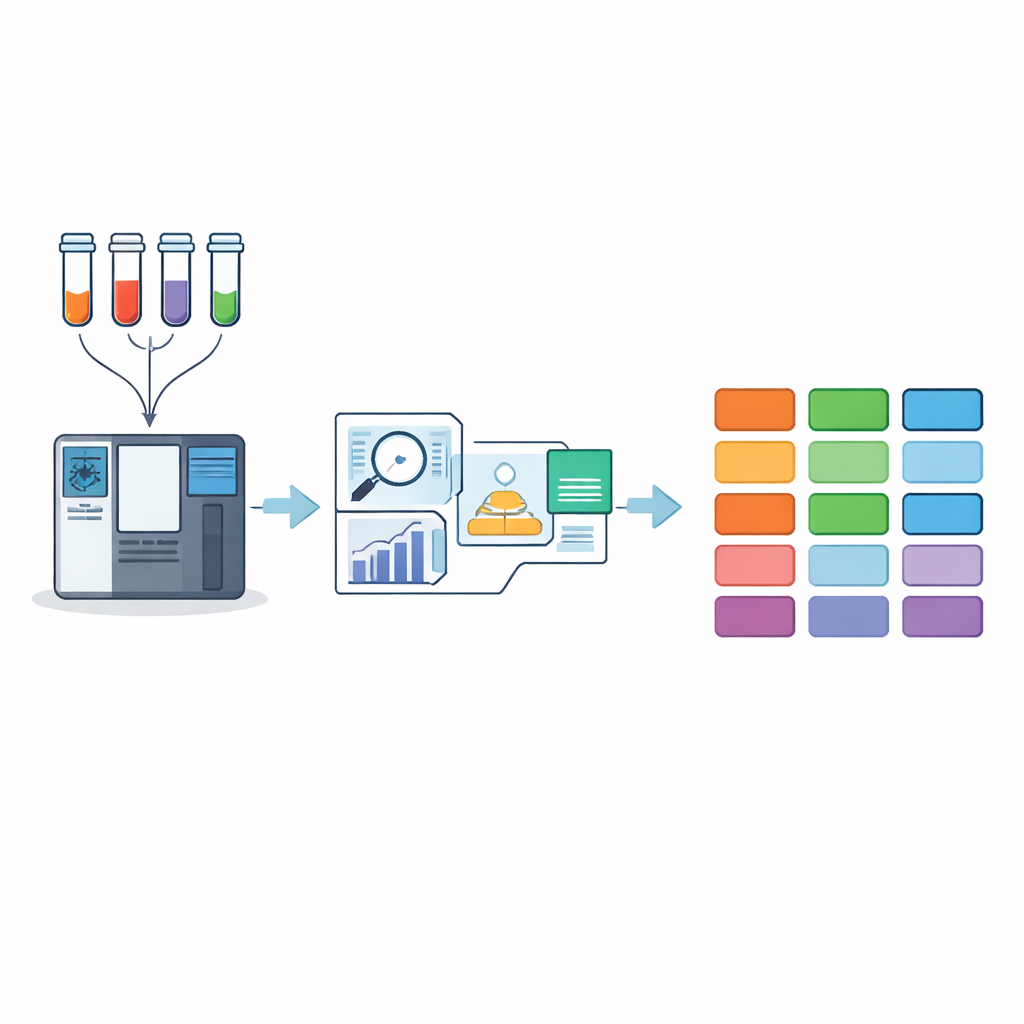
The study focuses on a family of chemical labels called isobaric tags, commonly known as TMT and iTRAQ. These tags let scientists mix many different samples together and analyze them in a single run on a mass spectrometer, greatly speeding up experiments and reducing technical variation. Each sample gets a slightly different tag, and when the proteins are broken into fragments inside the instrument, the tags produce distinct signals that reveal how much of each protein came from each sample. This “multiplexing” is now routine in large cancer studies, drug target discovery, and even single-cell proteomics. However, the raw signals are affected by noise, interference, and differences between batches of samples, so sophisticated computation is needed to make sense of the results.
From Raw Signals to Trustworthy Numbers
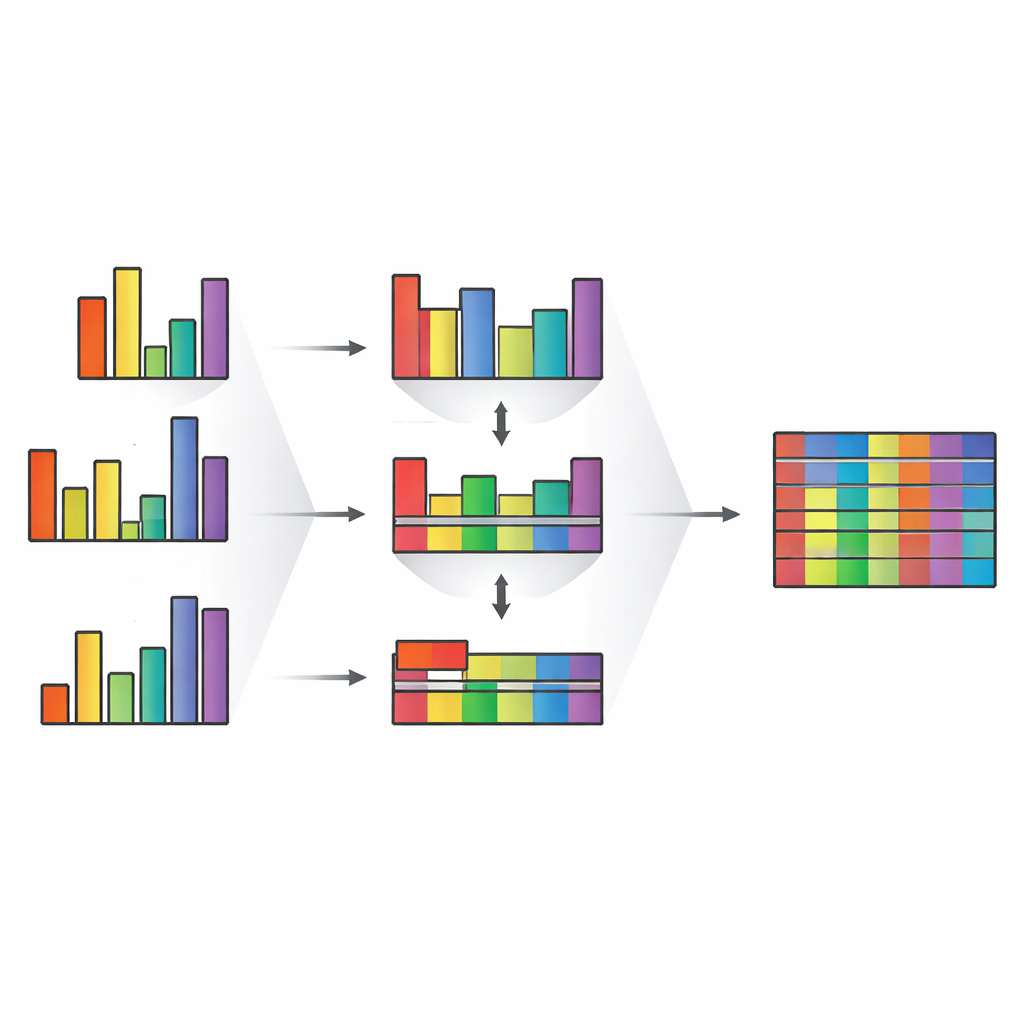
TMT-Integrator sits at the end of a larger FragPipe workflow that starts with identifying peptides from mass spectra and assigning them to proteins and genes. The tool takes detailed tables of peptide-spectrum matches and reporter ion signals from one or many multiplexed runs and then performs a series of carefully designed steps. It filters out unreliable measurements, converts raw intensities into ratios relative to a chosen reference sample, groups peptide measurements into higher-level summaries, removes outliers, and then converts ratios back into intensity-like “abundance” values. This process can be applied at several levels, including genes, proteins, peptide sequences, and specific sites of modification such as phosphorylation. TMT-Integrator also offers flexible normalization options and can work with either a real reference sample that appears in every batch or a “virtual” reference computed from the data.
Handling Many Batches and Many Technologies
A major challenge in large projects is that one set of labels cannot cover all samples, so studies are split across multiple batches, or “plexes.” Small differences between these plexes can obscure real biological changes. The authors show how TMT-Integrator’s ratio-to-reference strategy, combined with either real or virtual reference channels, effectively connects these plexes while reducing batch effects. Using clear cell kidney cancer datasets from a national cancer program, they demonstrate that FragPipe with TMT-Integrator detects more proteins and more phosphorylation sites than popular alternatives such as MaxQuant and Proteome Discoverer, especially for low-abundance proteins. The resulting protein measurements align better with matching RNA data, capture known relationships within protein complexes and pathways, and show lower noise in quality-control samples.
Zooming In on Protein Modifications
Many signaling events in cells depend on tiny chemical marks added at specific positions on proteins. Capturing these “post-translational modifications” at single sites is technically demanding. TMT-Integrator uses site-localization information from a dedicated tool to build both multi-site and single-site views of modified peptides. In kidney cancer phosphorylation data, it delivers extensive coverage of modified proteins, peptides, and individual sites, separating tumor and normal samples cleanly and providing consistent measurements across replicate controls. Compared with MaxQuant, it reports more sites with good completeness and better agreement between repeated runs, and it produces abundance-style tables that are easier to integrate with other omics layers.
Ready for Next-Generation Instruments
The authors also test TMT-Integrator on cutting-edge datasets. On a new Orbitrap Astral mass spectrometer, they compare isobaric tagging with a different approach called data-independent acquisition and find that the TMT pipeline in FragPipe achieves deep coverage with high precision and strong agreement with the alternative method. In a separate dataset using 35-plex reagents that combine regular and deuterium-labeled tags, the software’s virtual reference strategy successfully handles subtle shifts in retention time and provides consistent protein fold-changes between cell lines, without needing special bridge samples in every run. These results suggest that the tool can keep pace with rapidly evolving hardware and labeling chemistries.
What This Means for Biological Research
Overall, the work shows that TMT-Integrator, as part of FragPipe, can turn complex, multiplexed proteomics experiments into accurate, interpretable tables at multiple biological levels. By improving sensitivity, reducing technical artifacts, and providing both ratio and abundance outputs, it helps researchers make more confident connections between proteins, genes, and disease states. For a lay reader, the key message is that better software for handling mass spectrometry data directly translates into clearer biological stories, more reliable biomarkers, and a stronger foundation for precision medicine.
Citation: Chang, HY., Deng, Y., Li, R. et al. Analysis of isobaric quantitative proteomic data using TMT-Integrator and FragPipe computational platform. Nat Commun 17, 4010 (2026). https://doi.org/10.1038/s41467-026-70118-7
Keywords: quantitative proteomics, mass spectrometry, isobaric labeling, data analysis pipelines, protein phosphorylation