Clear Sky Science · en
Polymorphism and evolutionary origins of accessory chromosomes in the basidiomycete Tremella fuciformis
The hidden extra DNA in a popular medicinal mushroom
Tremella fuciformis, often sold as "snow fungus" or "silver ear" in soups and skincare products, turns out to hide a surprising amount of extra DNA. These bonus chromosomes are not required for basic survival, yet they appear to shape how the fungus evolves and which partner species it can live with. Understanding these genetic add-ons helps explain how fungi adapt, form specialized relationships, and diversify, with implications for agriculture, ecology, and mushroom cultivation.
Why some chromosomes are optional
Most organisms carry a standard set of chromosomes that encode the machinery for day‑to‑day life. Many fungi, however, also harbor accessory chromosomes—small, extra pieces of DNA that can be present in some individuals and absent in others. In crop pathogens, such chromosomes often carry genes that determine which plants the fungus can infect. Yet in the large and diverse group of basidiomycete fungi, which includes mushrooms and yeasts, these extra chromosomes have been poorly explored. Silver ear fungus offered the authors a chance to change that, because it is easy to collect, important in commerce, and depends on a partner fungus for nutrition in nature and in cultivation.
Building complete genetic maps of the snow fungus
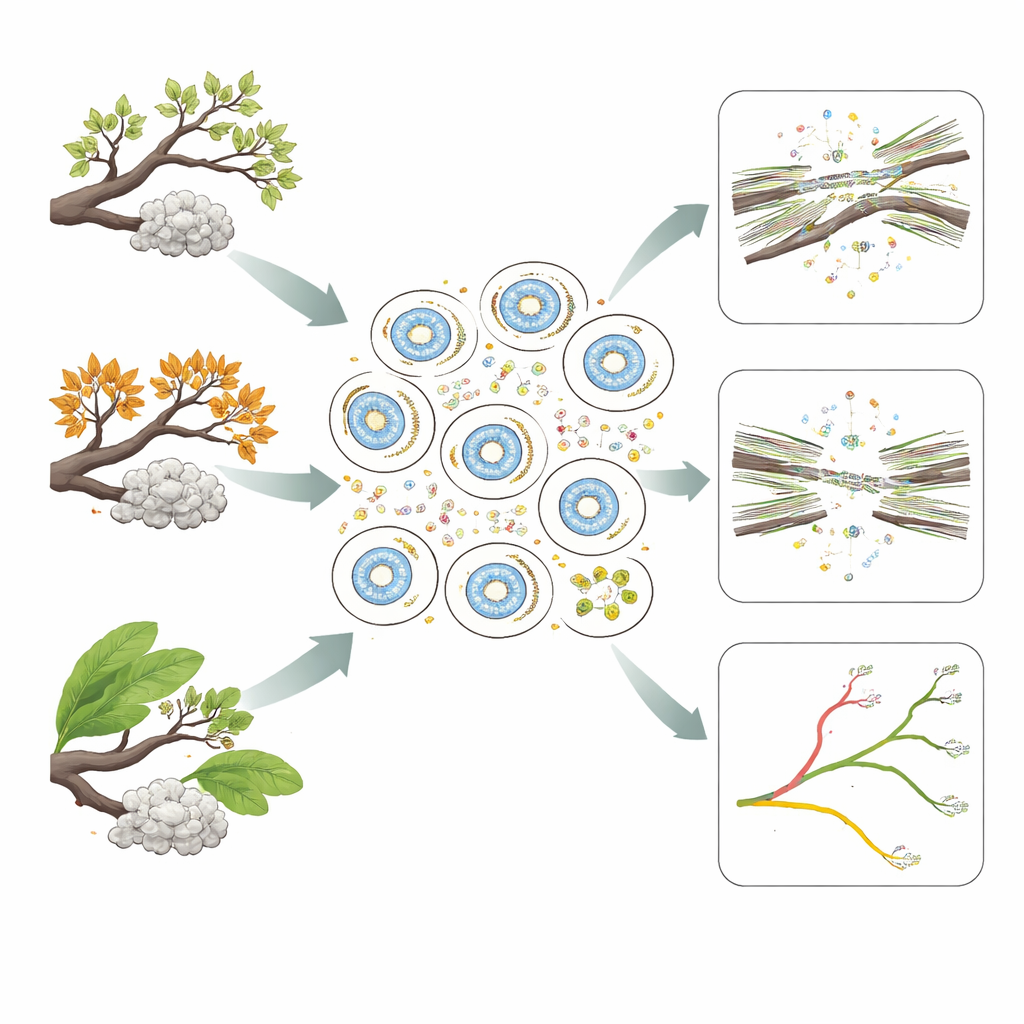
The researchers sequenced the complete genomes of 16 strains of Tremella fuciformis from across China, capturing both wild isolates and cultivated varieties. Many strains are dikaryotic, meaning each cell carries two distinct nuclear genomes, so the team assembled 27 separate haploid genome sets in total. They found that genome sizes differed by more than one‑third between strains, ranging from about 24 to over 32 million DNA letters. This variation was driven by two factors: the number and size of accessory chromosomes, and the amount of repetitive DNA packed into the core chromosomes shared by all strains. Each genome carried 8–10 core chromosomes plus 2–10 accessory chromosomes, for a total of 108 accessory chromosomes grouped into 15 related sets.
Distinctive features of the extra DNA
Compared with the core chromosomes, the accessory ones were generally smaller, more densely filled with transposable elements (mobile DNA), and contained far fewer genes per unit of length. They also showed strikingly high sequence similarity across strains but much more dramatic structural rearrangements: chunks flipped, fused, split, or were lost entirely. Both core and accessory chromosomes frequently changed in copy number when the fungus shifted between yeast‑like cells and filamentous forms. In one strain examined in detail, the number of copies of several chromosomes, including the extras, rose or fell across colonies, suggesting these chromosomes are allocated rather loosely during cell division.
Matching extra chromosomes to fungal partners
When the authors compared which accessory chromosome groups appeared in which strains, a clear pattern emerged. The 16 Tremella strains fell into three major genetic clusters based on their core genes, and each cluster carried its own characteristic set of accessory chromosomes. These same clusters also determined which strains could form a successful partnership with the companion fungus Annulohypoxylon stygium, which supplies nutrients required for Tremella to form fruiting bodies. Strains only paired effectively with A. stygium isolates from their own cluster. The largest accessory chromosomes in each cluster were always present in strains that could associate with the matching partner fungus, pointing to a role for these extras in symbiotic specificity.
Where the extra chromosomes came from
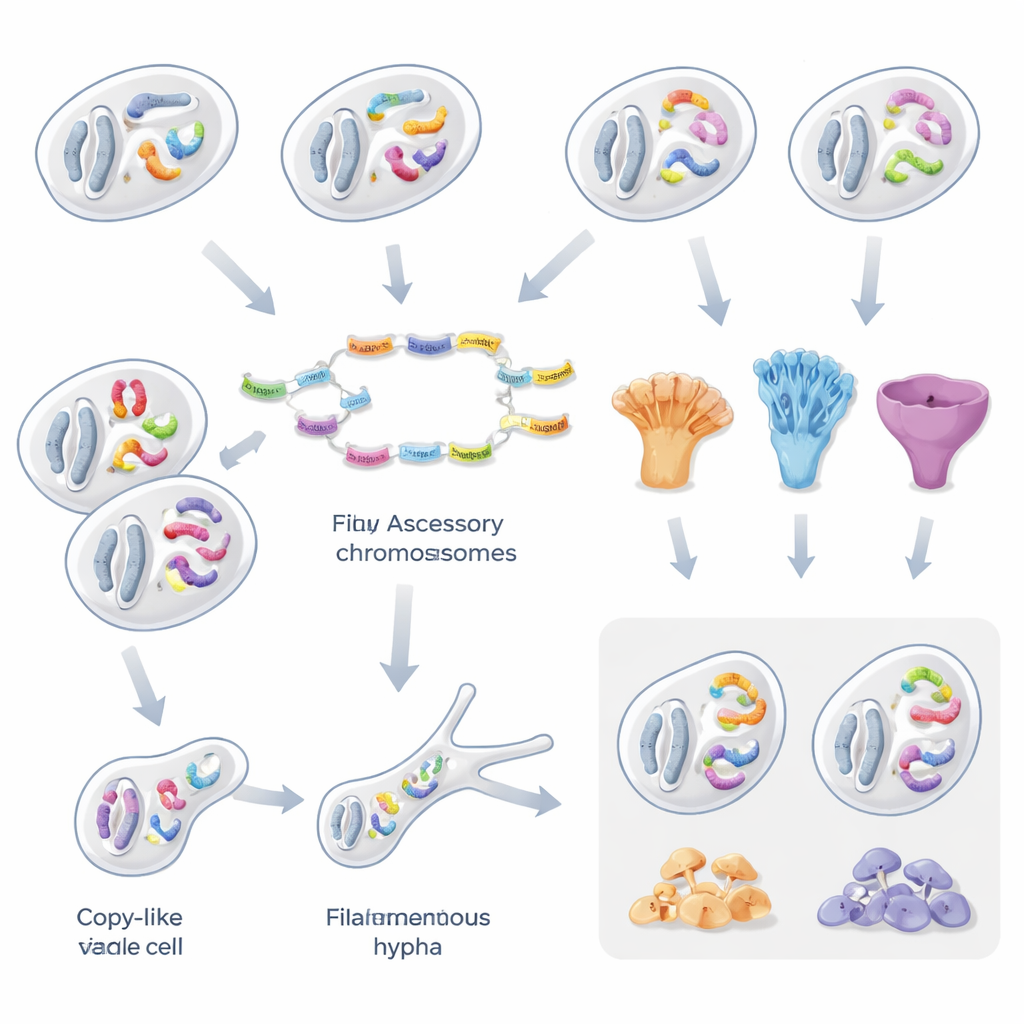
To trace the origins of these accessory chromosomes, the researchers asked whether their genes resembled those on core chromosomes or genes in public databases. Only a small fraction of accessory‑chromosome genes had counterparts on core chromosomes, and most of those were embedded in mobile DNA, hinting at recent copying events rather than shared ancestry. Across all strains, most accessory‑specific genes lacked recognizable relatives or known functions, and many of the closest matches that did exist were to other species in the same broader fungal order. Analyses of mobile elements suggested that gene exchange between core and accessory chromosomes began roughly one million years ago, before modern T. fuciformis had fully diverged, and continued afterward.
What this means for mushrooms and evolution
Together, these findings reveal that the snow fungus carries a dynamic collection of extra chromosomes that are highly variable, prone to rearrangement, and rich in mysterious genes. Rather than being trimmed‑down leftovers of ordinary chromosomes, they likely originated from now‑unidentified fungal lineages and were later incorporated into the Tremella genome. Over time, these mobile genetic packages appear to have helped define which partner fungus each Tremella lineage can cooperate with, while ongoing gains and losses fine‑tune the fungus’s biology. For growers, this work hints that managing accessory chromosomes could eventually influence yield or strain performance. For evolutionary biology, it highlights accessory chromosomes as powerful, fast‑moving units of innovation in complex fungi.
Citation: Zhang, J., Tong, Q., Lin, F. et al. Polymorphism and evolutionary origins of accessory chromosomes in the basidiomycete Tremella fuciformis. Nat Commun 17, 3275 (2026). https://doi.org/10.1038/s41467-026-70078-y
Keywords: accessory chromosomes, Tremella fuciformis, fungal symbiosis, genome evolution, transposable elements