Clear Sky Science · en
Mast-cell derived nerve growth factor drives ILC2 pro-tumoral functions in bladder cancer
Why this research matters
Bladder cancer is common, often comes back after treatment, and many patients do not benefit from modern immunotherapies. This study uncovers an unexpected communication line between nerves, allergy‑type cells, and immune cells inside bladder tumors that actually helps cancers grow. By pinpointing a key molecular "switch" in this chain, the work suggests a new, druggable way to make stubborn bladder tumors more vulnerable to existing treatments.
A hidden nerve signal in bladder tumors
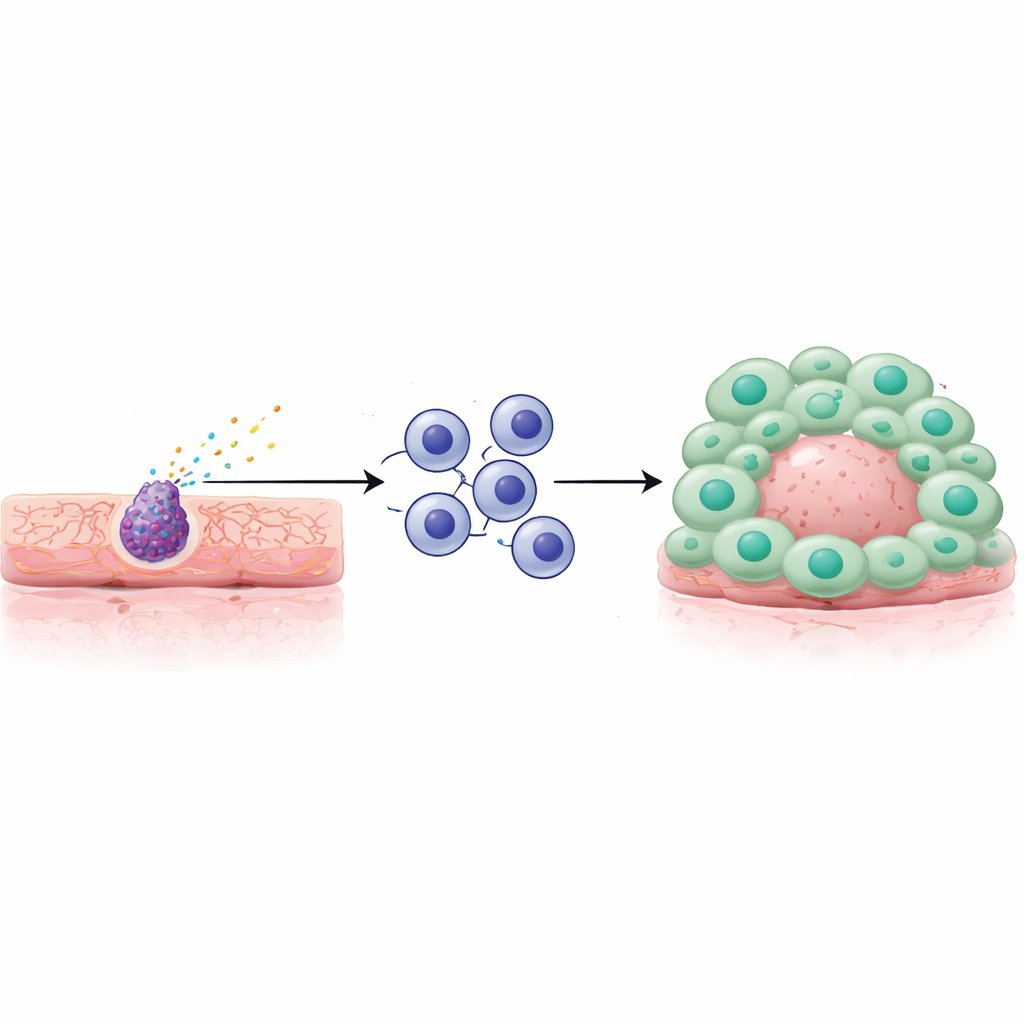
Our organs are richly wired with nerves that release growth factors to maintain normal function. One of these factors, nerve growth factor (NGF), was already known to help control bladder activity and pain. The authors examined large patient datasets and found that bladder cancers with higher NGF levels were linked to poorer overall and progression‑free survival. They then measured NGF directly in samples from patients and observed that urine and tumor tissue from people with bladder cancer contained more NGF than samples from healthy donors, pointing to an NGF‑rich tumor environment rather than a body‑wide change.
Allergy‑type immune cells receive the signal
The team focused on a group of innate immune cells called ILC2s, which behave somewhat like allergy‑driving helper T cells but respond more rapidly. In earlier work, ILC2s had been implicated in helping bladder tumors escape immune attack. Here, by mining RNA sequencing data and performing targeted tests, the researchers showed that human ILC2s preferentially carry TrkA, the high‑affinity receptor for NGF, while other related receptors are largely absent. ILC2s taken from the blood and tumors of patients displayed especially strong TrkA expression, suggesting they are primed to sense NGF specifically within the bladder cancer microenvironment.
Mast cells as the main NGF source
Where does the extra NGF come from? The investigators turned to mast cells—granule‑filled cells best known from allergies, and already reported to live in bladder tissue. In tumor samples, mast cells were not only more abundant than in healthy bladders, they also carried higher amounts of NGF. High‑resolution imaging revealed these NGF‑rich mast cells sitting in close proximity to TrkA‑positive ILC2s, hinting at direct local communication. In laboratory co‑cultures, mast cells activated ILC2s to release large quantities of type‑2 cytokines, an effect that could be shut down with a selective TrkA inhibitor, confirming that mast‑cell‑derived NGF is a potent, fast trigger for ILC2 activity.
How this circuit shields tumors from attack
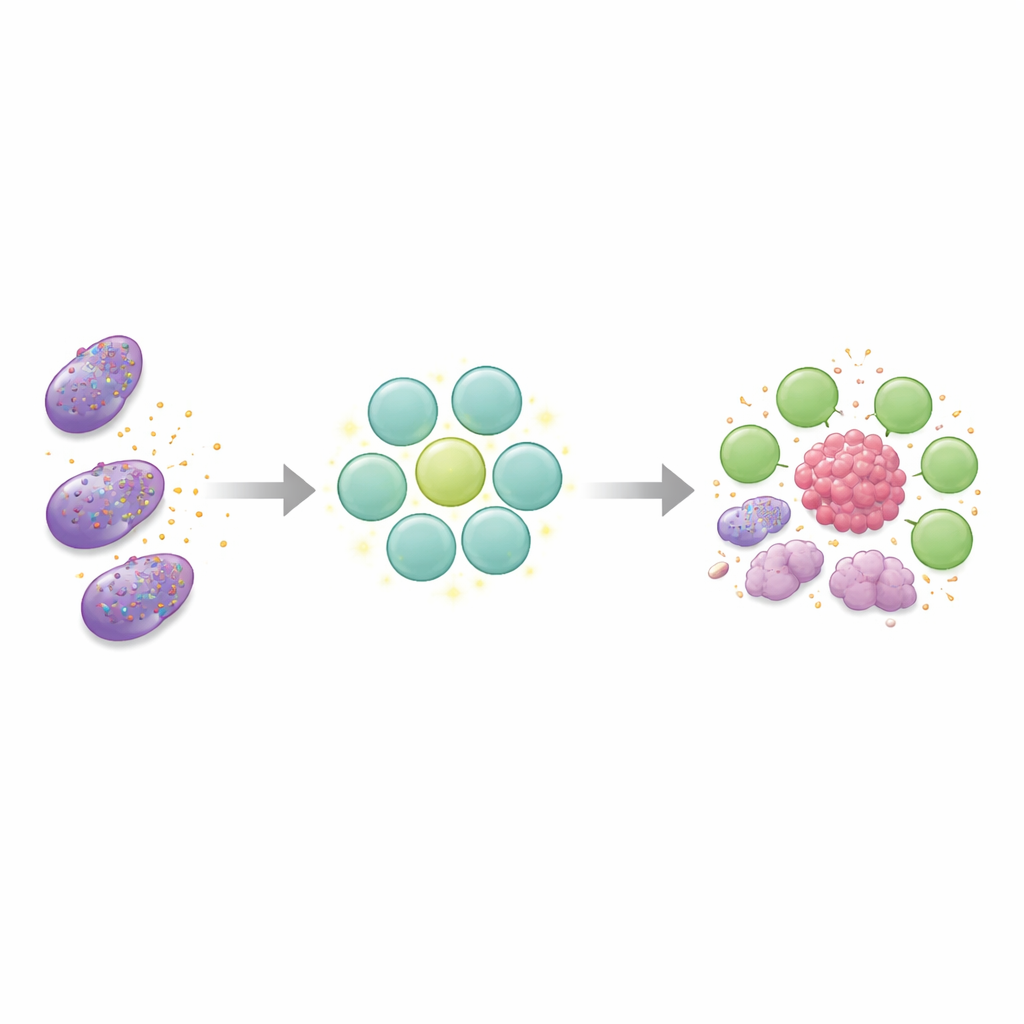
Using a mouse model of bladder cancer, the researchers confirmed that ILC2s expressing the NGF receptor accumulate in tumors, while the cancer cells themselves show very little of this receptor. When mice were engineered to lack ILC2s, they survived longer after tumor implantation. The study then followed the downstream consequences of ILC2 activation and found a marked buildup of regulatory T cells—immune cells that normally prevent excessive inflammation but can also blunt anti‑tumor responses. ILC2s were able to convert naïve T cells into regulatory T cells in culture, relying in part on the cytokine IL‑13. In mice with bladder tumors, removing either ILC2s or regulatory T cells improved survival, underscoring a mast cell → NGF → ILC2 → regulatory T‑cell chain that collectively suppresses protective immunity.
Blocking the switch to boost treatment
Because TrkA sits at the top of this immune‑suppressive circuit, the authors tested whether pharmacologically blocking the receptor could restrain tumor growth. Treating tumor‑bearing mice with a TrkA inhibitor, either systemically or directly into the bladder, extended survival and reduced both ILC2 activity and regulatory T‑cell numbers. Importantly, when this inhibitor was combined with an anti‑PD‑1 immune checkpoint drug, the two therapies worked better together than alone. Analysis of patient cancer datasets further showed that tumors with high NGF expression tended to have more checkpoint molecules and were predicted to respond less well to immunotherapy, suggesting that dampening NGF‑TrkA signaling could help convert “cold,” resistant tumors into ones that respond.
What this means for patients
This work reveals that in bladder cancer, NGF—better known for nurturing nerves—can be hijacked by tumors through mast cells and ILC2s to build an immune shelter made of regulatory T cells. Because TrkA inhibitors already exist and have acceptable safety profiles in other settings, targeting TrkA on ILC2s offers a tangible new strategy to weaken this shelter. In the future, such drugs, especially when delivered directly into the bladder and combined with checkpoint inhibitors, could improve outcomes for patients whose tumors currently resist standard immunotherapy, and similar NGF‑driven circuits may prove relevant in other cancer types rich in ILC2s.
Citation: Falquet, M., El Ahanidi, H., Gomez-Cadena, A. et al. Mast-cell derived nerve growth factor drives ILC2 pro-tumoral functions in bladder cancer. Nat Commun 17, 3061 (2026). https://doi.org/10.1038/s41467-026-69841-y
Keywords: bladder cancer, tumor immunity, nerve growth factor, innate lymphoid cells, immunotherapy resistance