Clear Sky Science · en
The intracellular inositol (pyro)phosphate receptor AtSPX1 reciprocally binds to P1BS DNA
How Plants Juggle Hidden Nutrients
Phosphorus is a vital nutrient for all plants, yet in most soils it is scarce and often locked away in forms that roots cannot easily tap. To survive, plants must sense when this key element runs low and rapidly switch on genes that help them scavenge and recycle phosphate. This study uncovers a surprising new role for a plant protein called SPX1, revealing how it can alternately grab hold of DNA or of small phosphorus-rich molecules, effectively acting as a molecular switch that helps plants cope with feast‑or‑famine conditions in the soil.
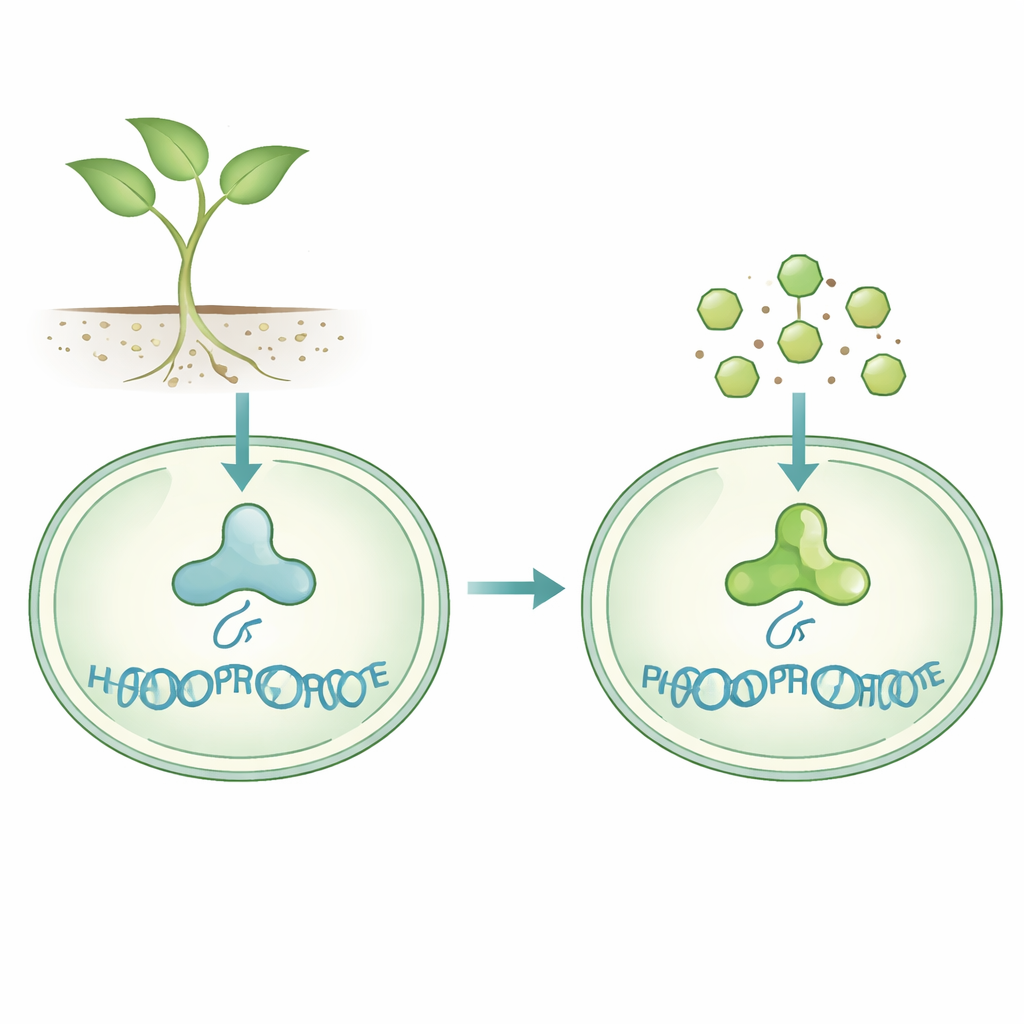
A Nutrient Crisis Inside the Cell
When phosphate levels drop around plant roots, cells launch a phosphate starvation response, turning on many genes that boost uptake from soil and mobilize internal reserves. These genes are controlled by PHR proteins, which recognize a short DNA sequence called P1BS in gene promoters. SPX proteins were known as helpers in this system, thought mainly to keep PHR in check when phosphate is plentiful by sensing inositol phosphates—small, highly charged molecules that rise and fall with phosphate status. However, past studies often relied on shortened or fusion versions of SPX proteins, leaving the behavior of the intact SPX1 protein in living plants only partially understood.
A Protein with Two Kinds of Partners
The researchers produced full-length Arabidopsis SPX1 and used a suite of biochemical tests and computer modeling to probe its behavior. They confirmed that SPX1 binds strongly to several inositol phosphate and inositol pyrophosphate species, including the common molecule InsP6 and rarer, more highly charged variants. These compounds all attached to a positively charged patch on the protein surface, and SPX1 showed only small differences in preference among them. Simulations suggested that different inositol phosphates sit in slightly different orientations on this patch, tweaking the positions and motions of key amino acids without fundamentally changing the binding site.
DNA Binding: The Missing Piece
An unexpected clue came from early protein preparations that appeared contaminated with nucleic acids. When the team cleaned SPX1 further and then tested it, they found that the pure protein directly binds short DNA pieces carrying the P1BS sequence. Using fluorescently labeled probes, gel shift assays, and DNA attached to beads, they showed that SPX1 attaches to both single- and double‑stranded DNA, with a modest preference for the P1BS motif and for specific sequence arrangements. Importantly, the strength of SPX1’s grip on P1BS DNA was in the same range as that of the PHR transcription factor itself, suggesting that SPX1 is not just a helper of PHR but can physically occupy the same regulatory DNA regions.
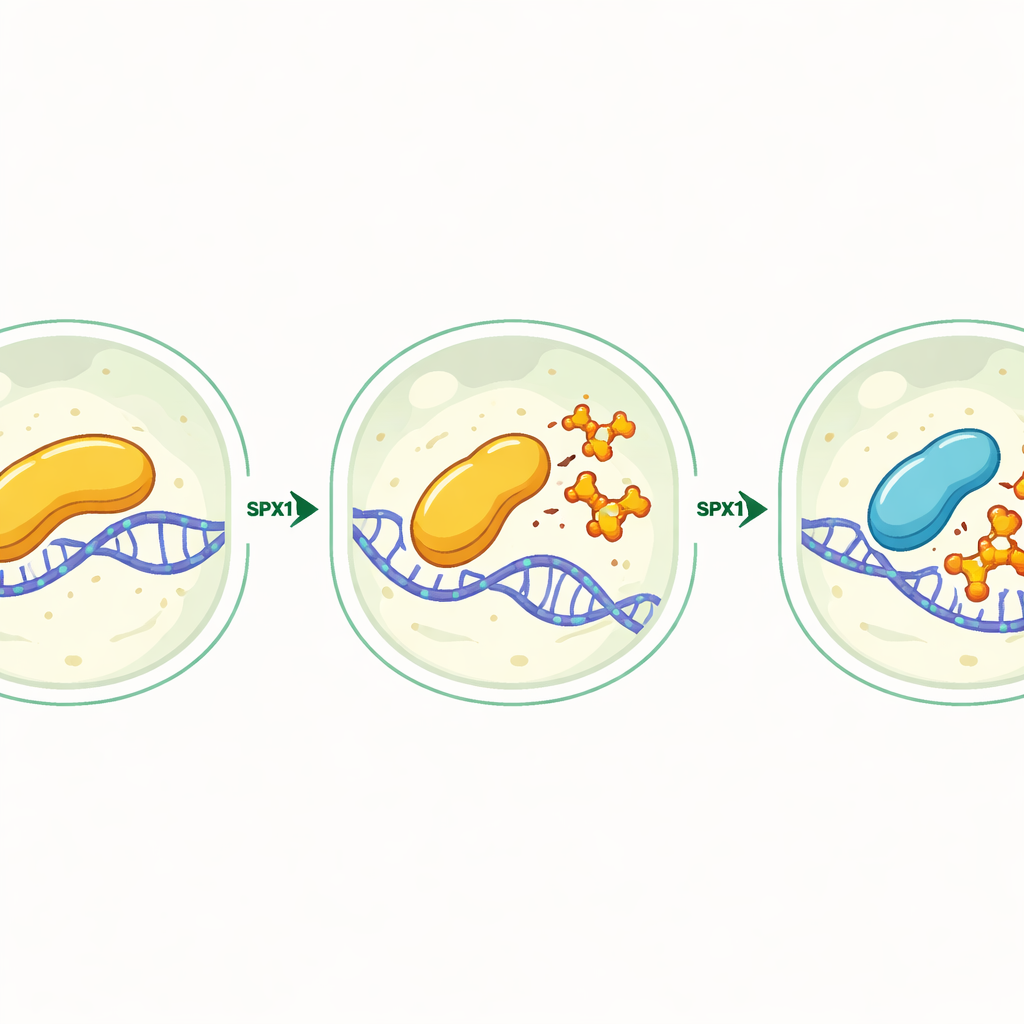
A Tug‑of‑War Between DNA and Metabolites
Because SPX1 binds both DNA and inositol (pyro)phosphates at a shared surface, the team asked whether these partners compete. In pull‑down experiments, SPX1 captured on an inositol phosphate–coated resin could be washed off either by free InsP6 or by DNA. Conversely, SPX1 bound to P1BS DNA could be displaced by inositol phosphates and pyrophosphates. Quantitative assays showed that increasing concentrations of inositol (pyro)phosphates reduce SPX1’s association with DNA, and that DNA can similarly dislodge bound inositol phosphates. Structural models place DNA and the small molecules in overlapping positions on the same positively charged region, supporting a direct physical competition rather than separate binding modes.
A New View of How Plants Sense Phosphate
These findings lead to a revised picture of how plants manage phosphate starvation. Under low‑phosphate conditions, levels of inositol phosphates and pyrophosphates fall, favoring SPX1 binding to DNA at P1BS sites in the nucleus. There, SPX1 can interact with PHR and possibly other regulators to help turn on phosphate‑starvation genes. When phosphate becomes abundant again, inositol (pyro)phosphate levels rise and outcompete DNA for access to SPX1, pulling the protein away from promoters and helping to shut down the emergency response. In everyday terms, SPX1 behaves like a sensor that switches allegiance between DNA and small phosphate‑rich messengers, allowing plant cells to tune gene activity to the changing nutrient landscape.
Citation: Whitfield, H.L., Gilmartin, M., Riley, A.M. et al. The intracellular inositol (pyro)phosphate receptor AtSPX1 reciprocally binds to P1BS DNA. Nat Commun 17, 3150 (2026). https://doi.org/10.1038/s41467-026-69810-5
Keywords: plant phosphate signaling, SPX1 protein, inositol phosphates, gene regulation in plants, nutrient stress response