Clear Sky Science · en
Intestinal interleukin-22 enhances GLP-1 production via the STAT3 pathway to improve glucose homeostasis during high-fat diet induced obesity in a study with male mice
Why the Gut Matters for Blood Sugar
Obesity and type 2 diabetes are often blamed on overeating and inactivity, but a hidden player lies inside the gut. Specialized cells in the intestine release a hormone called GLP-1 that helps the pancreas release insulin and keep blood sugar in check. This study in mice reveals that an immune signal in the gut, called interleukin‑22 (IL‑22), is a key switch that boosts GLP‑1 production—especially during a high‑fat diet. Understanding this gut–immune–hormone chain could open new ways to treat metabolic diseases.
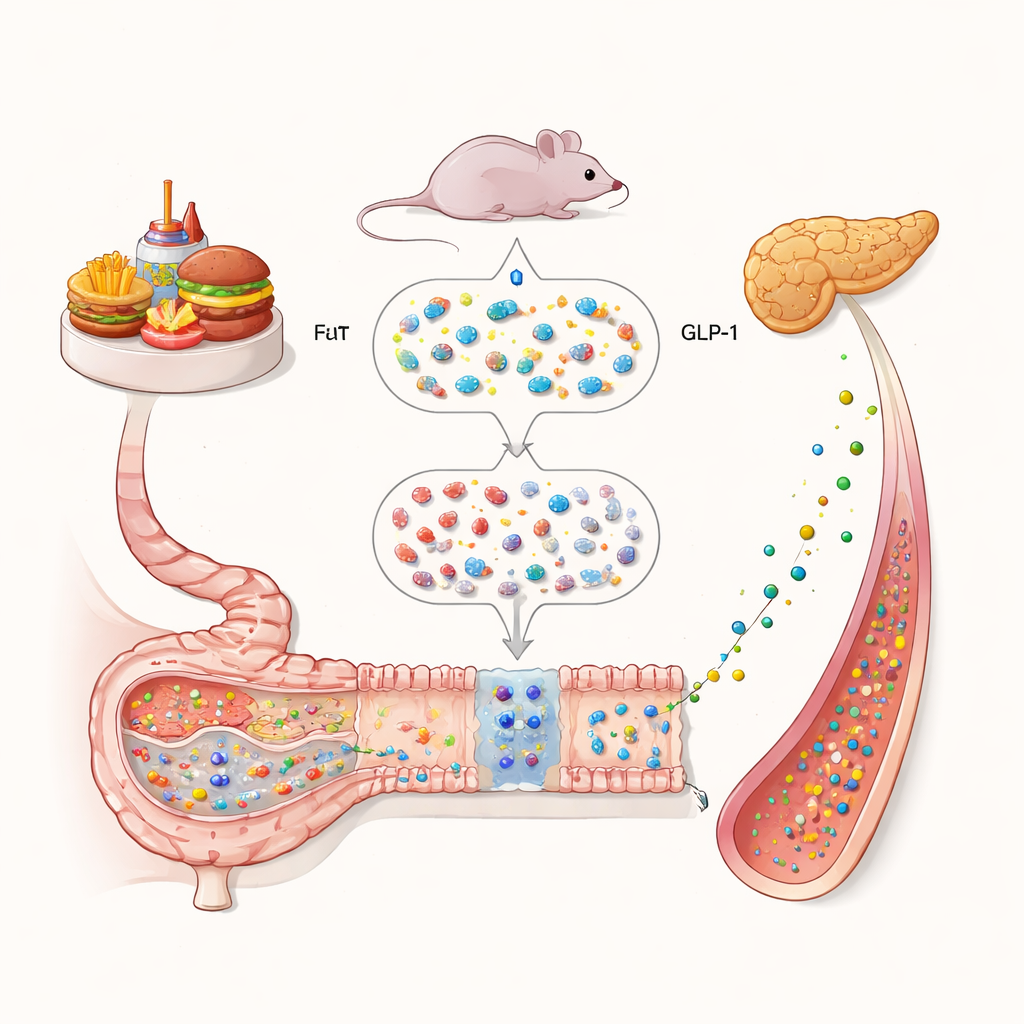
From High-Fat Meals to Hormone Slowdown
The researchers began by looking at what happens in the gut when mice eat a high‑fat diet, similar to a Western diet. Compared with animals on a regular diet, high‑fat–fed mice had much lower levels of GLP‑1 in the intestine. At the same time, they also showed a drop in IL‑22, an immune messenger known for protecting the gut lining. The team found a tight positive link between IL‑22 and GLP‑1 levels: when IL‑22 was low, GLP‑1 was also low. Mice that were genetically unable to make normal amounts of IL‑22 had fewer GLP‑1–producing cells, poorer insulin release, and smaller insulin‑secreting islets in the pancreas, all signs of impaired blood sugar control.
A Gut Signal That Feeds the Pancreas
To test whether IL‑22 directly influences metabolism, the scientists blocked IL‑22 signaling only in the gut lining or only in GLP‑1–producing cells. In both cases, mice on a high‑fat diet developed worse glucose intolerance and, in some models, insulin resistance, even though they ate the same amount of food and weighed about the same as control animals. These mice produced less GLP‑1 in their intestines and had lower insulin levels in the blood, along with shrunken pancreatic islets. In contrast, long‑term treatment with IL‑22 restored GLP‑1 levels, improved glucose tolerance, and brought pancreatic islets back toward normal size, showing that this single gut signal can strongly influence how well the pancreas responds to a high‑fat diet.
Zooming In on the Cellular Machinery
The team then examined how IL‑22 acts inside the gut cells that make GLP‑1. Using cultured intestinal cells and miniature gut organoids grown in the lab, they showed that IL‑22 raises GLP‑1 production in a dose‑dependent way. Blocking calcium entry into the cells or blocking a protein called STAT3 sharply reduced this effect. Molecular tests revealed that activated STAT3 binds directly to the DNA region that controls the precursor of GLP‑1, turning up its production. In organoids, IL‑22 increased both the number of GLP‑1–producing cells and the amount of hormone they secreted, but this boost disappeared when STAT3 was blocked. Together, these findings map a simple chain: IL‑22 switches on STAT3, which turns on GLP‑1 production in intestinal cells.
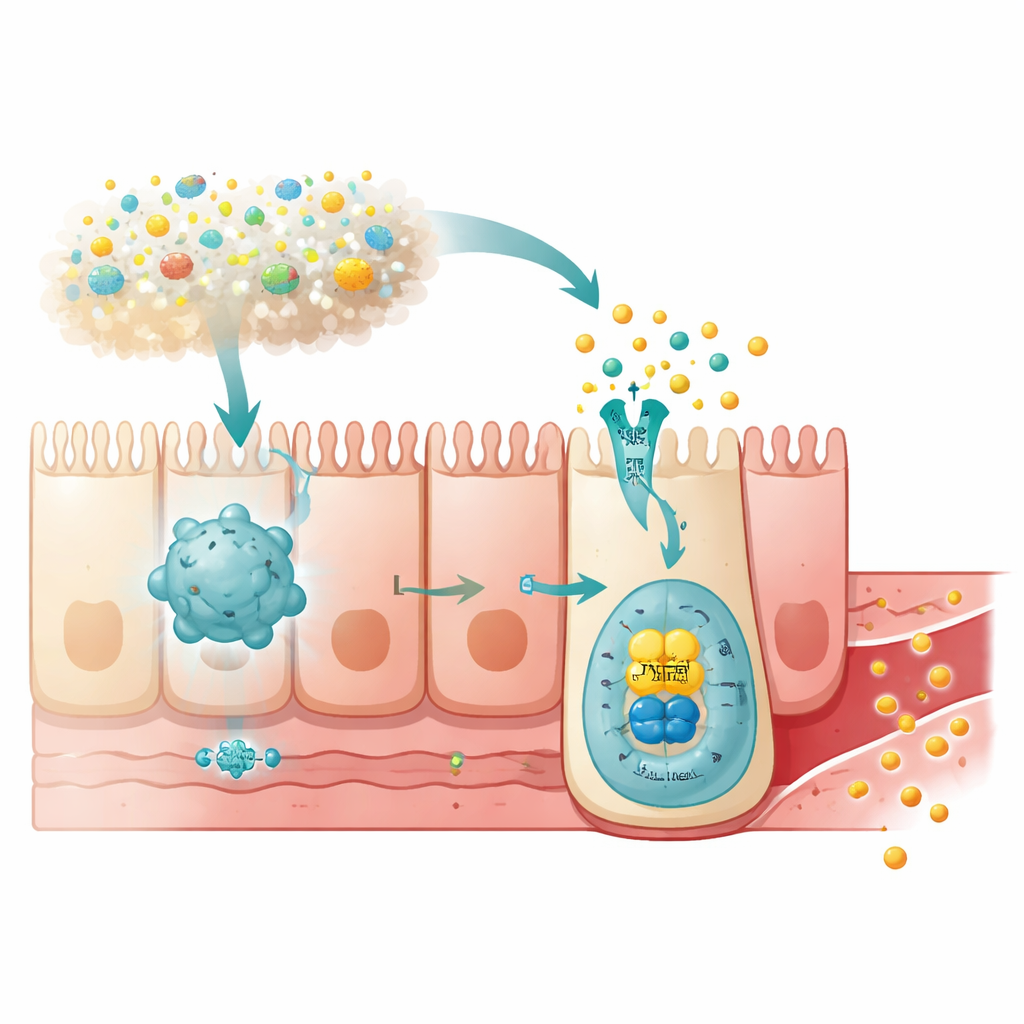
Gut Microbes, Short Fatty Acids, and an Immune–Hormone Chain
Because diet reshapes the gut microbiome, the researchers asked whether microbes help control this IL‑22–GLP‑1 axis. High‑fat–fed mice had less diverse gut bacteria and fewer species that make short‑chain fatty acids, particularly butyrate. Levels of these fatty acids were lower in their feces and correlated with reduced IL‑22 and GLP‑1. In cell tests, butyrate boosted IL‑22 production from gut immune cells. Giving butyrate to obese mice improved glucose tolerance, insulin sensitivity, GLP‑1 levels, and pancreatic islet size—but only when IL‑22 signaling in the intestinal lining was intact. When that pathway was genetically disabled, butyrate no longer produced metabolic benefits, indicating that much of its positive effect runs through IL‑22 and then GLP‑1.
Proving GLP-1 Is the Key Middleman
Finally, the study asked whether IL‑22’s benefits depend on GLP‑1. In obese mice with defective IL‑22 signaling, treatment with a GLP‑1–like drug restored glucose tolerance and insulin sensitivity, and enlarged pancreatic islets. Conversely, when normal obese mice were given IL‑22 together with a drug that blocks the GLP‑1 receptor, the improvements in body‑weight gain, blood sugar control, and islet size largely vanished. Analyses of human gut samples from people with obesity, with or without diabetes, showed that genes related to GLP‑1 and IL‑22 tend to drop together, suggesting a similar connection in humans.
What This Means for Future Treatments
In plain terms, this work reveals a gut‑centered circuit: diet and microbes shape IL‑22, IL‑22 drives GLP‑1 production in the intestine, and GLP‑1 in turn helps the pancreas keep blood sugar under control. When a high‑fat diet disrupts the microbiota and lowers IL‑22, GLP‑1 falls, insulin release falters, and metabolic disease worsens. Restoring this chain—by boosting IL‑22, supporting butyrate‑producing microbes, or directly targeting GLP‑1—could offer powerful new strategies to prevent or treat obesity‑related diabetes.
Citation: Kim, CW., Ahn, JH., Lee, B.R. et al. Intestinal interleukin-22 enhances GLP-1 production via the STAT3 pathway to improve glucose homeostasis during high-fat diet induced obesity in a study with male mice. Nat Commun 17, 3009 (2026). https://doi.org/10.1038/s41467-026-69734-0
Keywords: gut immune signaling, GLP-1 hormone, interleukin-22, gut microbiome, obesity and diabetes