Clear Sky Science · en
Baloxavir outperforms oseltamivir, favipiravir, and amantadine in treating lethal influenza A(H5N1) HA clade 2.3.4.4b infection in mice
Why this matters for future flu threats
Bird flu usually sounds like a problem for farms and wildlife, but a recent strain called H5N1 has begun infecting cows and people, raising worries about a future pandemic. This study asks a very practical question: if that happens, which existing flu pills are most likely to save lives? Using a well-established mouse model of severe H5N1 disease, the researchers directly compared four licensed drugs and found that one—baloxavir—clearly stood out. Their results help guide which medicines should be front‑line options if this strain ever starts spreading widely in humans.
A dangerous virus on the move
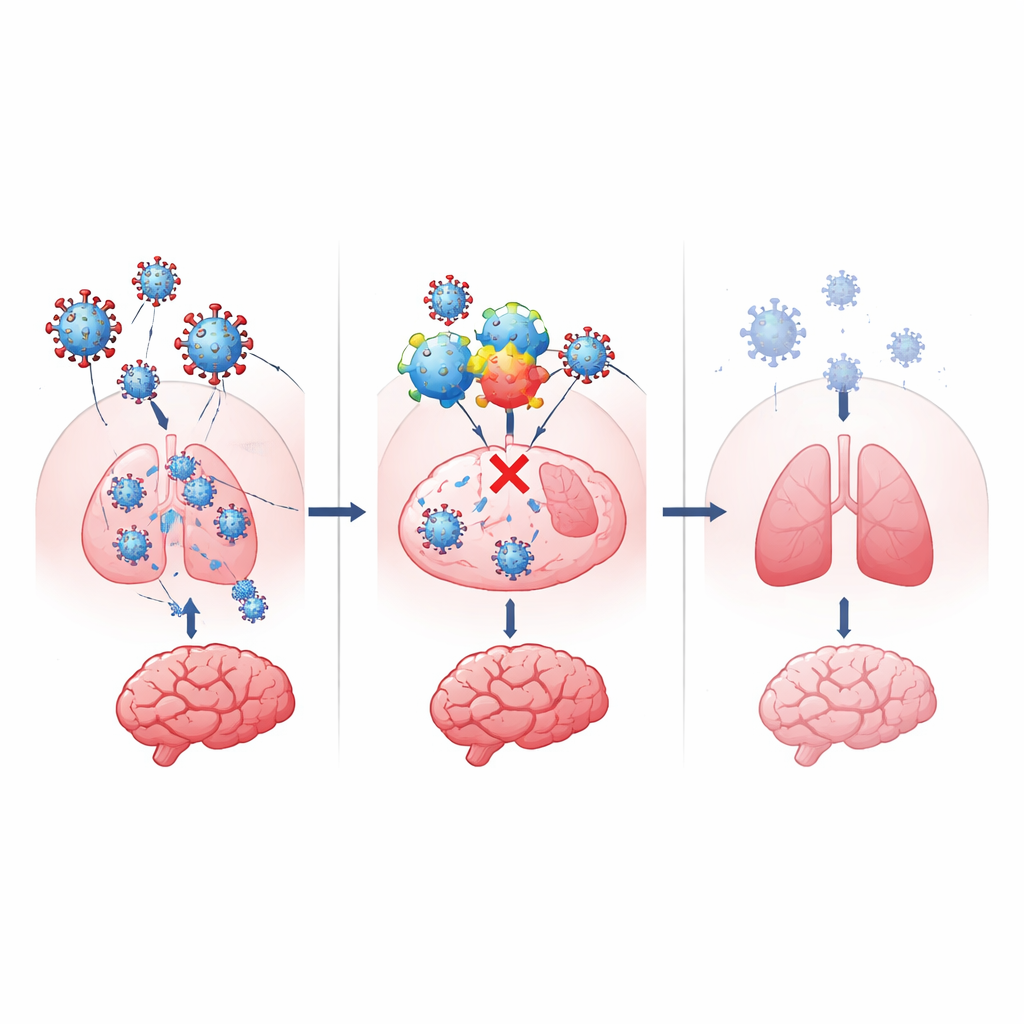
The work focuses on a modern branch of H5N1, known as clade 2.3.4.4b, that has swept across continents in wild birds and poultry and has now infected mammals such as foxes, seals, cows, and a small number of people. In animals and in rare human cases, this virus can move from the lungs into the brain, causing severe lung damage, neurological symptoms, and often death. Vaccines tailored to this exact strain are not yet stockpiled at scale, so antiviral drugs—medicines that directly block the virus—may be crucial if outbreaks grow. The authors previously showed that these viruses look sensitive to several approved flu drugs in lab dishes, but it was unknown whether that lab susceptibility would translate into real protection in a living body.
Putting four flu drugs to a head‑to‑head test
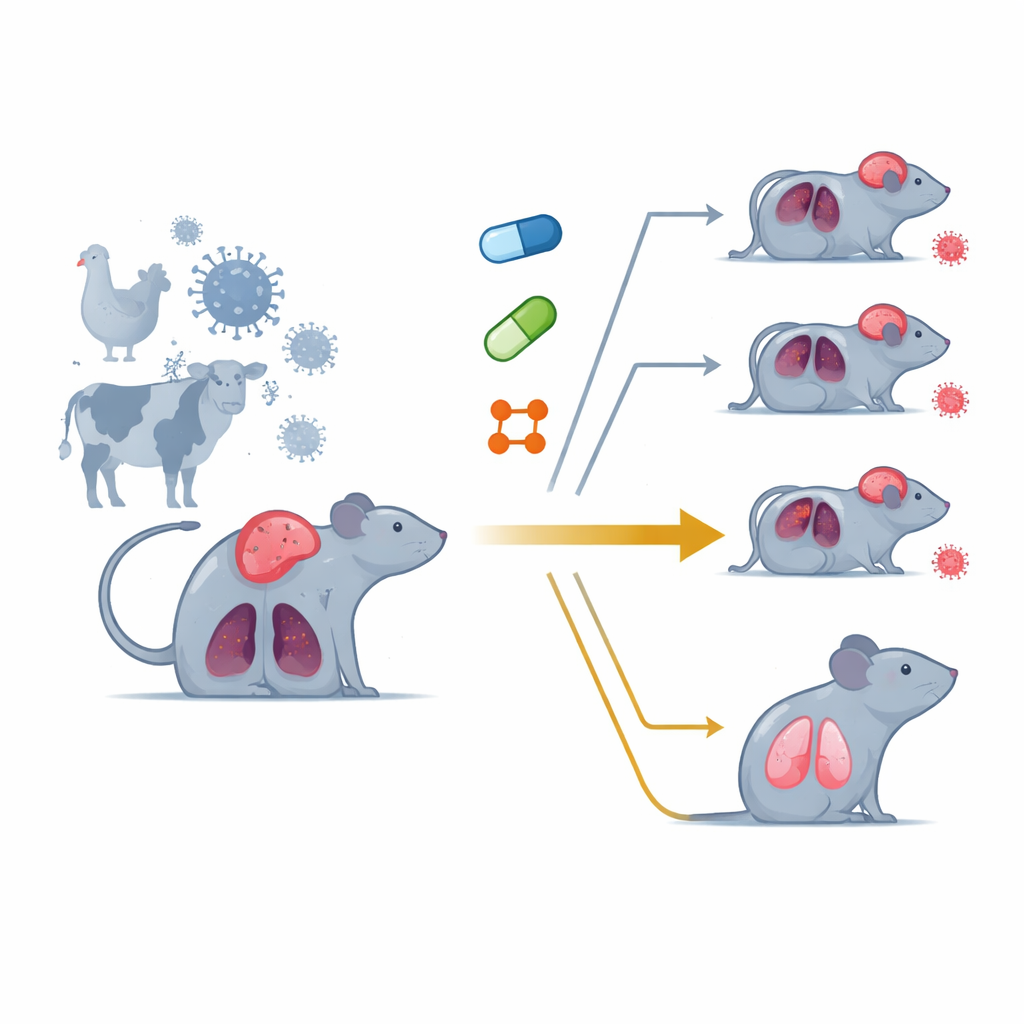
The team infected mice with two highly lethal H5N1 viruses originally isolated from wild birds in North America. Without treatment, nearly all mice quickly lost weight, developed signs of brain involvement such as tremors and hind‑limb weakness, and died within about a week. The scientists then treated separate groups of mice with one of four medicines that each attack a different step in the virus life cycle: oseltamivir (a standard flu drug that blocks virus release), baloxavir (a newer drug that shuts down a key viral copying enzyme), favipiravir (another polymerase‑targeting drug), and amantadine (an older drug that blocks a viral ion channel). Doses and timing were chosen to mirror or exceed realistic human exposures, including both preventive use and treatment starting a day after infection.
Baloxavir stops virus in lungs and brain
Baloxavir emerged as the clear winner. A single dose of baloxavir given 24 hours after infection kept 80% of mice alive, largely prevented weight loss and obvious illness, and sharply lowered the amount of virus found in lung and brain tissue. At higher doses, virus could barely be detected at all. Under the microscope, lungs from baloxavir‑treated animals showed only small, scattered areas of damage compared with widespread pneumonia in untreated mice. Importantly, baloxavir largely blocked the virus from invading the brain, addressing one of the most frightening features of H5N1 infection. Genetic analysis of viruses from treated mice found only rare changes associated with reduced baloxavir sensitivity, suggesting that resistance did not commonly arise under the conditions tested.
Other drugs fall short in key ways
Oseltamivir, the mainstay in current flu stockpiles, showed only partial benefit even at doses many times higher than typical human use. High‑dose treatment modestly improved survival and lowered virus levels in the lungs but failed to protect the brain or fully prevent severe disease. Favipiravir, despite targeting the virus’s copying machinery, also provided only partial protection: some mice survived longer, and lung damage was reduced at high doses, but virus levels in lungs and brains remained high. Amantadine, once widely used for flu but largely abandoned because of resistance in seasonal strains, gave no meaningful benefit at any dose and even appeared toxic at the highest dose in uninfected mice.
What this means for pandemic planning
For a non‑specialist, the bottom line is that not all flu drugs are equal against this dangerous version of bird flu. In this rigorous mouse model, only baloxavir consistently kept animals alive while also stopping the virus from spreading from the lungs to the brain. Oseltamivir and favipiravir helped a bit but did not adequately control the infection, and amantadine failed outright. While mouse results do not automatically guarantee the same outcomes in people, they strongly suggest that stockpiling and prioritizing baloxavir—or combinations built around it—could offer the best medical backstop if H5N1 clade 2.3.4.4b ever sparks a serious human outbreak.
Citation: Andreev, K., Jones, J.C., Kandeil, A. et al. Baloxavir outperforms oseltamivir, favipiravir, and amantadine in treating lethal influenza A(H5N1) HA clade 2.3.4.4b infection in mice. Nat Commun 17, 2937 (2026). https://doi.org/10.1038/s41467-026-69721-5
Keywords: H5N1 bird flu, influenza antivirals, baloxavir, pandemic preparedness, mouse infection model