Clear Sky Science · en
The combination of a cancer vaccine, pembrolizumab, and stereotactic body radiation in patients with locally advanced pancreatic cancer: a single-arm, phase II study
Why this matters to people and families
Pancreatic cancer is one of the deadliest cancers, often discovered too late for surgery, which is currently the only path to cure. This study explores whether combining a cancer vaccine, an immunotherapy drug, and highly focused radiation can turn more “inoperable” tumors into ones that surgeons can remove and help patients live longer. For patients and families facing few options, even modest improvements in survival and surgical chances are important.
A tough cancer that resists current treatments
Most people diagnosed with pancreatic ductal adenocarcinoma have advanced disease, and only about 12% are alive five years after diagnosis. Many tumors wrap around vital blood vessels and are labeled “locally advanced,” meaning they have not yet spread far, but are too entangled for safe surgery. Standard care uses strong chemotherapy and, for these locally advanced cases, carefully targeted radiation. Immunotherapy drugs that have transformed other cancers, like melanoma and lung cancer, have largely failed in pancreatic cancer because the tumors are poorly penetrated by immune cells and surrounded by a hostile, suppressive environment.
A three-part plan to wake up the immune system
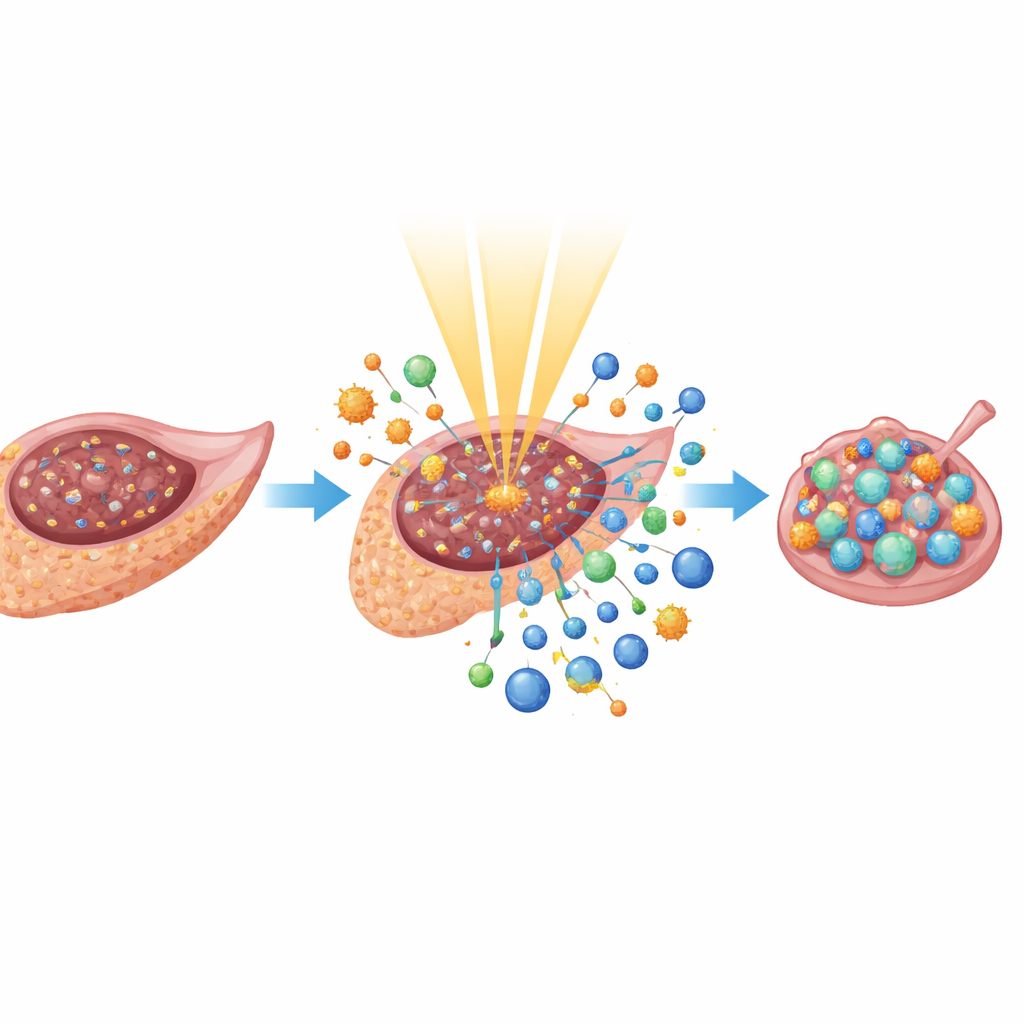
The researchers designed a single-center phase II trial (called J15237) to see if layering several immune-activating treatments could change this picture for 58 patients with locally advanced pancreatic cancer. After at least four months of standard chemotherapy, patients received two cycles of a three-part combination: a cancer vaccine made from pancreatic tumor cells engineered to release an immune-stimulating factor (GVAX), the immune checkpoint inhibitor pembrolizumab (which frees immune cells from braking signals), and stereotactic body radiation therapy (SBRT), a precise, high-dose form of radiation. Radiation can make tumor cells die in ways that expose their contents to the immune system, acting like an on-the-spot vaccine. Together, the team hoped these steps would draw more cancer-fighting T cells into the tumor and nearby tissues. After treatment, doctors reassessed whether surgery was possible, and patients without spread of disease could go on to more chemotherapy and up to two years of continued combination immunotherapy.
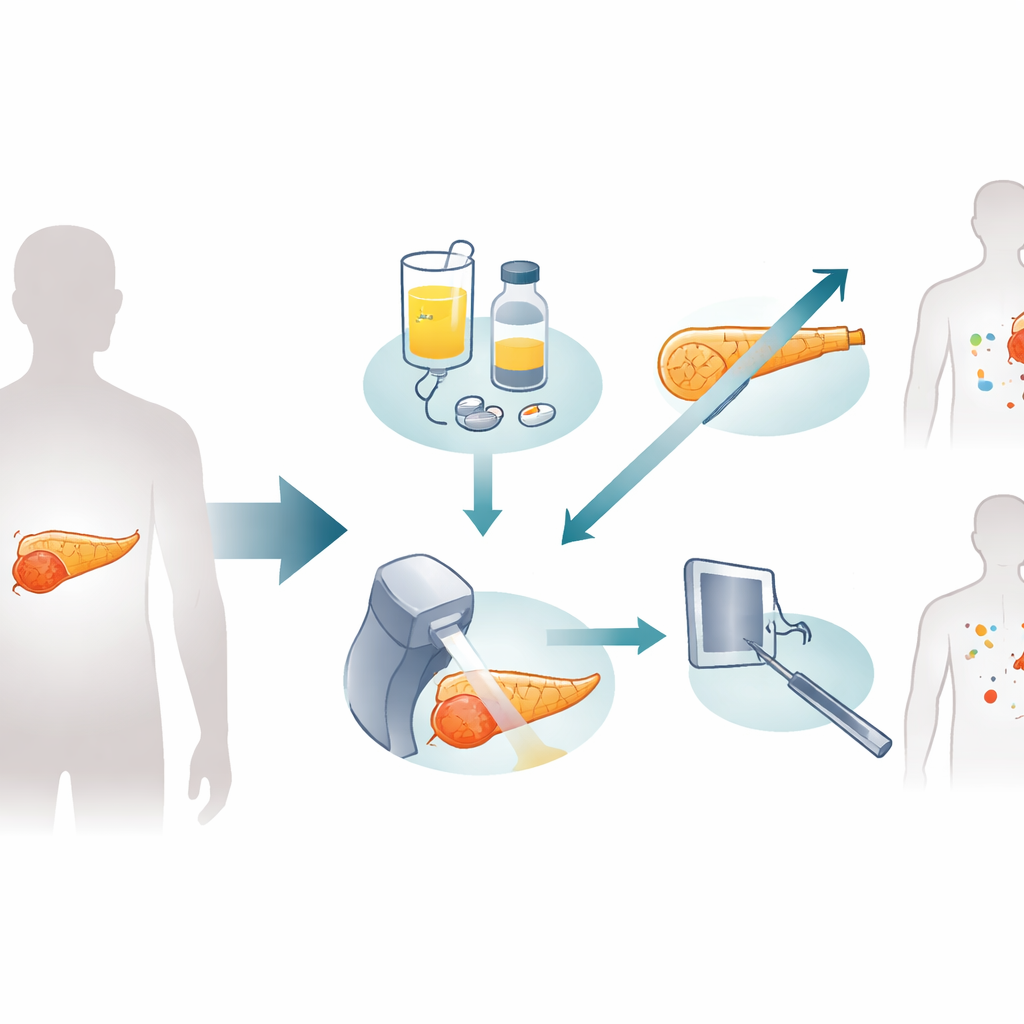
What happened to patients in the study
Of the 58 enrolled patients, 54 received the planned two cycles of immunotherapy plus SBRT and had follow-up scans, making them evaluable. After the combination, about two-thirds (35 patients, 64.8%) looked potentially operable on imaging and went to the operating room; 24 of them (44.4% of all evaluable patients) ultimately had their tumors removed with no or only microscopic cancer left at the margins (R0/R1 resections), and most of these were complete margin-negative operations. Median distant metastasis-free survival—the time before cancer first spread to distant organs—was 9.8 months for all evaluable patients, but it stretched to 20.3 months for those who had successful surgery. In contrast, patients who were explored but could not be resected because of new metastases or persistent local disease had a median time without distant spread of just 2.4 months, although a few outliers did well.
How survival compared with past experience
Median overall survival from the start of the immunotherapy was 21.8 months for all evaluable patients, nearly 30 months for those who were resected, and about 12 months for those explored but not resected. Measured from diagnosis, patients lived a median of 28.2 months overall, and 36.7 months if they reached surgery. To understand whether this approach truly helped, the team compared their results with a carefully matched historical group of 45 patients treated earlier at the same center with modern chemotherapy and SBRT but without the vaccine and pembrolizumab. Among surgically explored and especially surgically resected patients, time without distant metastasis was significantly longer in the new trial than in the historical group (20.3 versus 10.2 months for resected patients), suggesting that the added immune stimulation may better control microscopic disease. Overall survival showed a similar trend but did not reach clear statistical significance, likely in part because of sample size.
Safety and what still needs to improve
The combined treatment was generally manageable. All patients had mild reactions at the vaccine injection sites. More serious treatment-related side effects, mostly immune-related conditions such as pneumonitis, colitis, kidney inflammation, or hormone disturbances, occurred in about 12% of patients, but surgery was not delayed and no unexpected postoperative problems were linked to the trial therapy. Importantly, the benefits were concentrated among those who ultimately had their tumors removed; patients whose cancers remained unresectable continued to fare poorly. Laboratory analyses from related work by the same group suggest that while the combination can draw more active T cells into tumors, other cells, such as certain macrophages that promote tumor growth, may still blunt the effect in unresectable disease.
What this means for future care
This study indicates that adding a cancer vaccine and pembrolizumab to focused radiation after chemotherapy is feasible and appears to extend the period before spread, especially in patients who reach surgery. It does not yet transform outcomes for all people with locally advanced pancreatic cancer, and the trial did not fully meet its ambitious primary goal for the entire group. But it points to a promising direction: using combined “radioimmunotherapy” to better control microscopic disease around the time of surgery. The authors argue that future, larger randomized trials—likely adding drugs that target tumor-supporting immune cells—will be needed to confirm and build on these gains, with the ultimate aim of turning more patients with this difficult cancer into long-term survivors.
Citation: Lee, V., Sachidanand, A.S., Rodriguez, C. et al. The combination of a cancer vaccine, pembrolizumab, and stereotactic body radiation in patients with locally advanced pancreatic cancer: a single-arm, phase II study. Nat Commun 17, 4141 (2026). https://doi.org/10.1038/s41467-026-69294-3
Keywords: pancreatic cancer, immunotherapy, stereotactic body radiation, cancer vaccine, locally advanced tumors