Clear Sky Science · en
Two types of axonal muscarinic acetylcholine receptors mediate formation of saliva cocktail in the tick Ixodes ricinus
Why Tick Saliva Matters
Ticks are more than just itchy nuisances. When they feed, they inject a complex mix of fluids and proteins into our skin that keeps blood flowing, quiets our immune system, and can help dangerous microbes slip into the body. This paper unpacks how one common European tick, Ixodes ricinus, carefully tunes that saliva “cocktail” during a long blood meal. By uncovering a hidden nerve-based control system, the authors reveal new weak points that might one day be targeted to block both tick feeding and pathogen transmission.
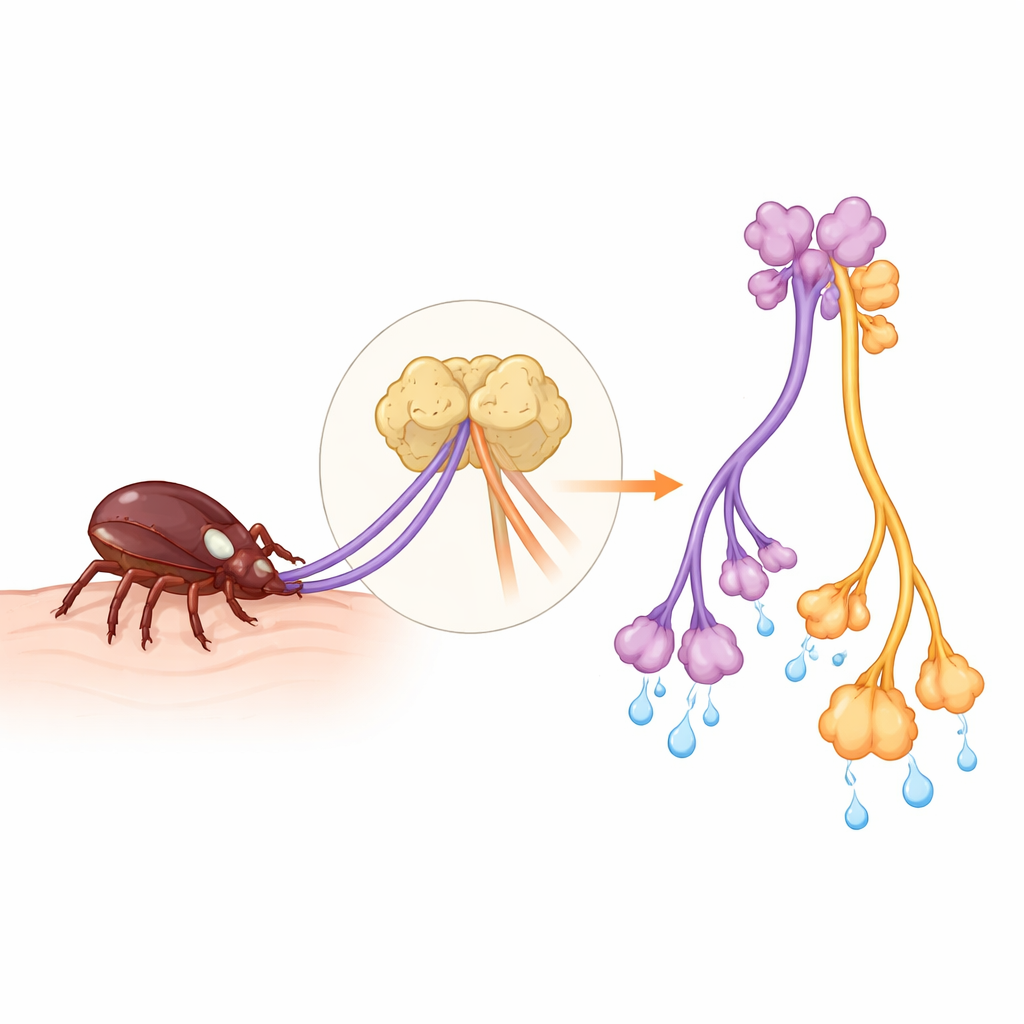
Two Control Knobs on Tick Nerves
The study focuses on a familiar brain chemical, acetylcholine, which in humans helps control everything from heartbeat to digestion. Ticks use acetylcholine too, but for years scientists only knew that a drug called pilocarpine could force them to drool in the lab. The natural, in‑tick control system remained mysterious. Here, the researchers searched tick genomes and found two distinct types of acetylcholine‑sensing switches, called muscarinic receptors, sitting on the long nerve fibers (axons) that run from the tick’s central nerve mass to its salivary glands. They call these two kinds type A and type B receptors. Both respond to acetylcholine, but they react very differently to many drugs, and type B shows an unusual, “non‑mammalian” profile, marking it as an invertebrate‑specialized target.
Mapping the Tick’s Saliva Nerve Network
Using fluorescent antibodies and high‑resolution electron microscopy, the team traced where these two receptor types live. In the tick’s central nerve mass, specific groups of hormone‑releasing nerve cells send axons to the gland area, and different groups carry either type A or type B receptors. Within the salivary glands themselves, the picture is even more intricate. One branch of axons carrying type A receptors projects mainly into one acinus type (a small secretory unit) that is rich in protein‑filled cells. Another branch, decorated with type B receptors, reaches both this protein‑rich acinus type and a second acinus type specialized in fluid production. The two axon systems meet only in the protein‑rich units, but they occupy distinct zones there, hinting at complementary roles in controlling when and how material is released.
A Local Chemical Factory in the Glands
The scientists then asked where the acetylcholine that drives these receptors actually comes from. Chemical measurements showed that the salivary glands themselves hold higher levels of acetylcholine than the central nerve mass, and that these levels rise during feeding. The glands also carry the genetic instructions for the enzyme that makes acetylcholine and the transporter that loads it into secretory packets. Together, this points to gland cells acting as a local acetylcholine factory, bathing nearby nerve endings in the chemical rather than relying solely on signals from far‑off nerve cell bodies. In response, the axons with type A and type B receptors can release their own neuropeptides into the blood space and onto gland cells, linking local chemical cues to whole‑body fluid balance and gland activity.
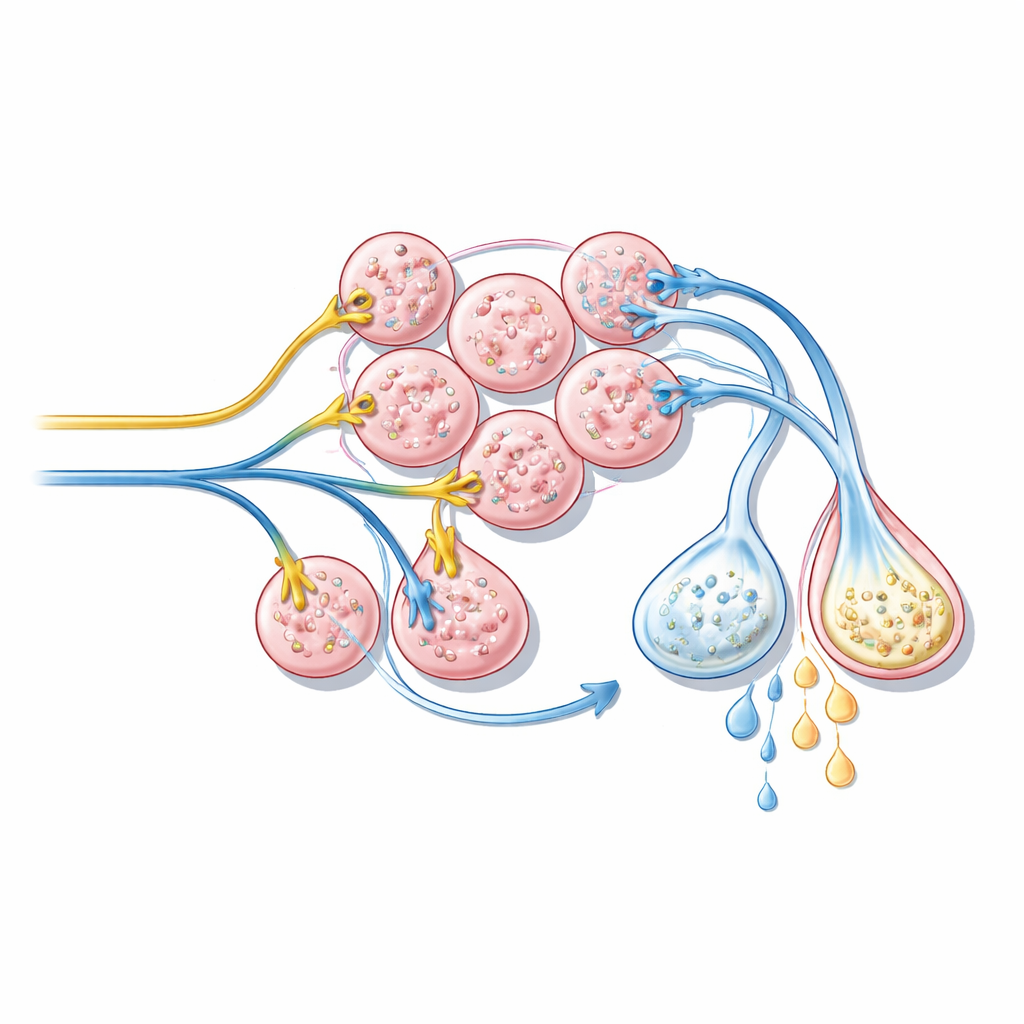
How Two Switches Shape the Saliva Cocktail
To see what these receptors actually do, the team injected partially fed ticks with different drugs that either turn the receptors on or block them, then collected and analyzed the resulting saliva. Broad activators of both receptor types triggered the greatest volumes of saliva. Drugs that mainly hit type A receptors still produced strong fluid secretion, while conditions that left only type B active yielded much smaller volumes but saliva that was richer in proteins. Detailed protein profiling showed that the overall “menu” of saliva proteins is similar across conditions, but their relative amounts shift depending on which receptor type is driving secretion. Together, the results suggest that type A is the main driver of fluid flow, whereas type B fine‑tunes the release and flushing of protein components.
What This Means for Stopping Ticks
In everyday terms, this work shows that tick saliva output is controlled by two cooperating nerve‑based switches: one that opens the tap and one that adjusts what is mixed into the flow and when it is flushed out. Because type B receptors have a pharmacological signature distinct from any known mammalian receptor, they represent an especially attractive target for new tick‑specific drugs or vaccines. Disrupting this two‑switch system could leave ticks unable to manage their saliva cocktail, making it harder for them to feed successfully and to transmit the pathogens that cause Lyme disease and other infections.
Citation: Nìng, C., Valdés, J.J., Mateos-Hernández, L. et al. Two types of axonal muscarinic acetylcholine receptors mediate formation of saliva cocktail in the tick Ixodes ricinus. Nat Commun 17, 2867 (2026). https://doi.org/10.1038/s41467-026-68654-3
Keywords: tick saliva, acetylcholine receptors, Ixodes ricinus, vector-host interactions, salivary gland regulation