Clear Sky Science · en
The effects of glucagon-like peptide-1 receptor agonists on sympathetic neuron activity
Why heart rate changes matter
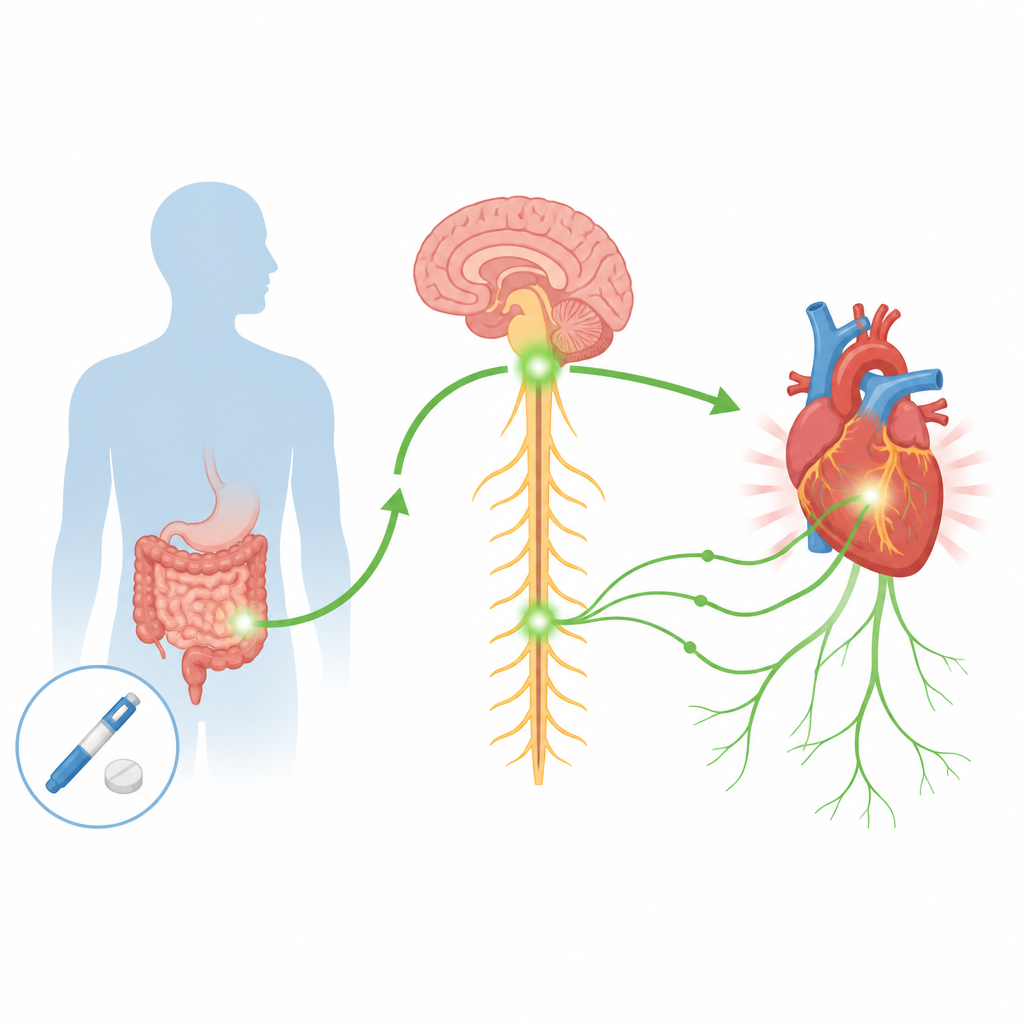
Many people with type 2 diabetes now take drugs based on a natural gut hormone called GLP-1 to lower blood sugar and support weight loss. Doctors have noticed, however, that these medicines often make the heart beat faster and can sometimes be linked with rhythm problems. This study asked a simple but important question: do these drugs act directly on the nerve cells that control blood vessels and heart rate, and if so, how?
From diabetes treatment to nerve effects
GLP-1 is normally released from the intestine after a meal and helps the body release insulin, curb appetite, and influence brain function. Its drug versions, known as GLP-1 receptor agonists, also lower the risk of some cardiovascular events, so they are increasingly given to people who have both diabetes and heart failure. At the same time, clinical and animal studies have repeatedly reported higher heart rates, and in some cases more serious rhythm problems, in people taking these agents. Earlier research suggested that GLP-1 drugs might turn up the activity of the sympathetic nervous system, the body’s "fight or flight" wiring, but the precise sites and pathways in the brain and spinal cord were unclear or even conflicting.
Probing the body’s "fight or flight" circuits
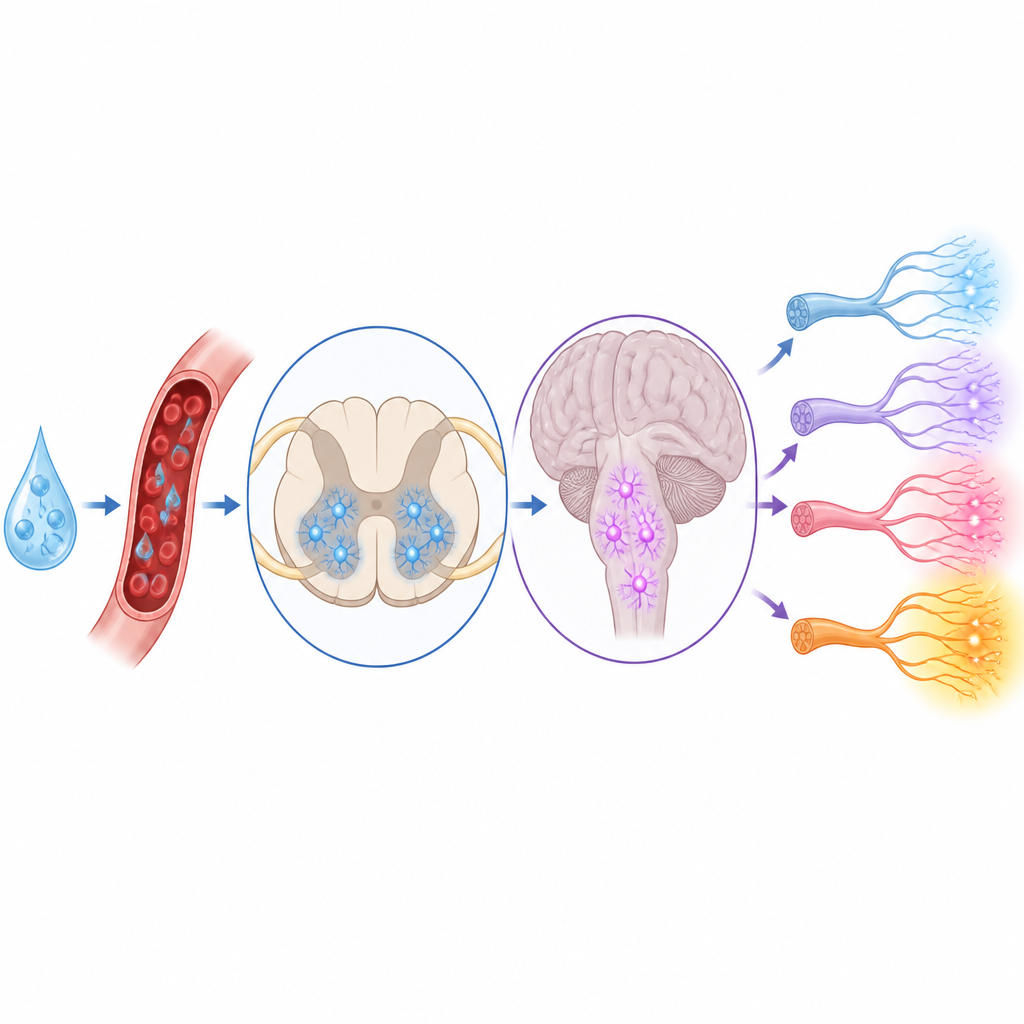
To pinpoint what happens, the researchers used newborn rat brainstem and spinal cord tissue kept alive in a dish, which allowed them to record nerve activity in real time. They focused on three key levels in the pathway that drives sympathetic output to the body: the sympathetic nerve trunk itself, the preganglionic neurons in a spinal cord region called the intermediolateral cell column, and a cluster of brainstem cells in the rostral ventrolateral medulla, known to raise blood pressure and heart rate. They applied exendin-4, a commonly used GLP-1 receptor drug, at different concentrations and tracked how nerve firing and cell membrane voltage changed. They also added a specific GLP-1 receptor blocker to test whether any effects truly depended on these receptors.
What the nerve signals revealed
When exendin-4 was applied at moderate to high doses, the strength of sympathetic nerve activity rose in a dose-dependent way, while breathing-related signals remained largely unchanged. In the spinal cord, individual sympathetic preganglionic neurons, and nearby interneurons, became more electrically positive and fired more often, clear signs of excitation. In the brainstem, both a group of neurons that contain a chemical marker called tyrosine hydroxylase and neighboring cells without this marker also increased their firing when exposed to the drug. A few of these brainstem cells briefly became less excitable before switching to a more active state, suggesting a mix of direct and indirect effects. In every case tested, a GLP-1 receptor antagonist blocked these excitatory responses, tying the changes firmly to GLP-1 receptor activation.
Where the drug can act in the nervous system
Using fluorescent labeling, the team confirmed that GLP-1 receptors are present on many of the neurons they recorded from in both the spinal cord and brainstem regions. This means the drug can act at several points along the sympathetic pathway: directly on the spinal neurons that send signals to peripheral nerves, through local spinal interneurons that shape these signals, and through descending brainstem neurons that project down the spinal cord. Together, these actions provide a straightforward explanation for why GLP-1 drugs can acutely boost sympathetic drive, and so raise heart rate and blood pressure, even though other longer-term effects of these drugs may lower blood pressure through kidney and hormone changes.
What this means for patients
The study shows that a GLP-1 based drug can directly excite nerve cells in the brainstem and spinal cord that belong to the body’s "fight or flight" system, leading to stronger signals along sympathetic nerves. For people taking these medicines, this helps explain the often-seen rise in heart rate and suggests that the nervous system itself is an important target of action, not just the pancreas or gut. While these drugs remain valuable tools for treating type 2 diabetes and protecting the heart and kidneys, understanding their nerve effects can guide safer use, closer monitoring in vulnerable patients, and the design of future therapies that keep metabolic benefits while putting less strain on the heart’s control circuits.
Citation: Koyanagi, Y., Iigaya, K., Ikeda, K. et al. The effects of glucagon-like peptide-1 receptor agonists on sympathetic neuron activity. Hypertens Res 49, 1939–1950 (2026). https://doi.org/10.1038/s41440-026-02633-5
Keywords: GLP-1 receptor agonists, sympathetic nervous system, exendin-4, heart rate, brainstem and spinal cord