Clear Sky Science · en
Blood pressure status, JSH 2019-based control rate, and associated factors among community-dwelling adults: The NOSE study
Why blood pressure at home matters
Many people think their blood pressure is fine because it looks normal at the doctor’s office, yet problems can be brewing quietly at home, especially in the early morning. This study from a rural town in Japan shows how common high blood pressure really is in everyday life, how rarely it is fully controlled, and why simple home measurements can reveal hidden risks that office visits miss.
Life in a small aging town
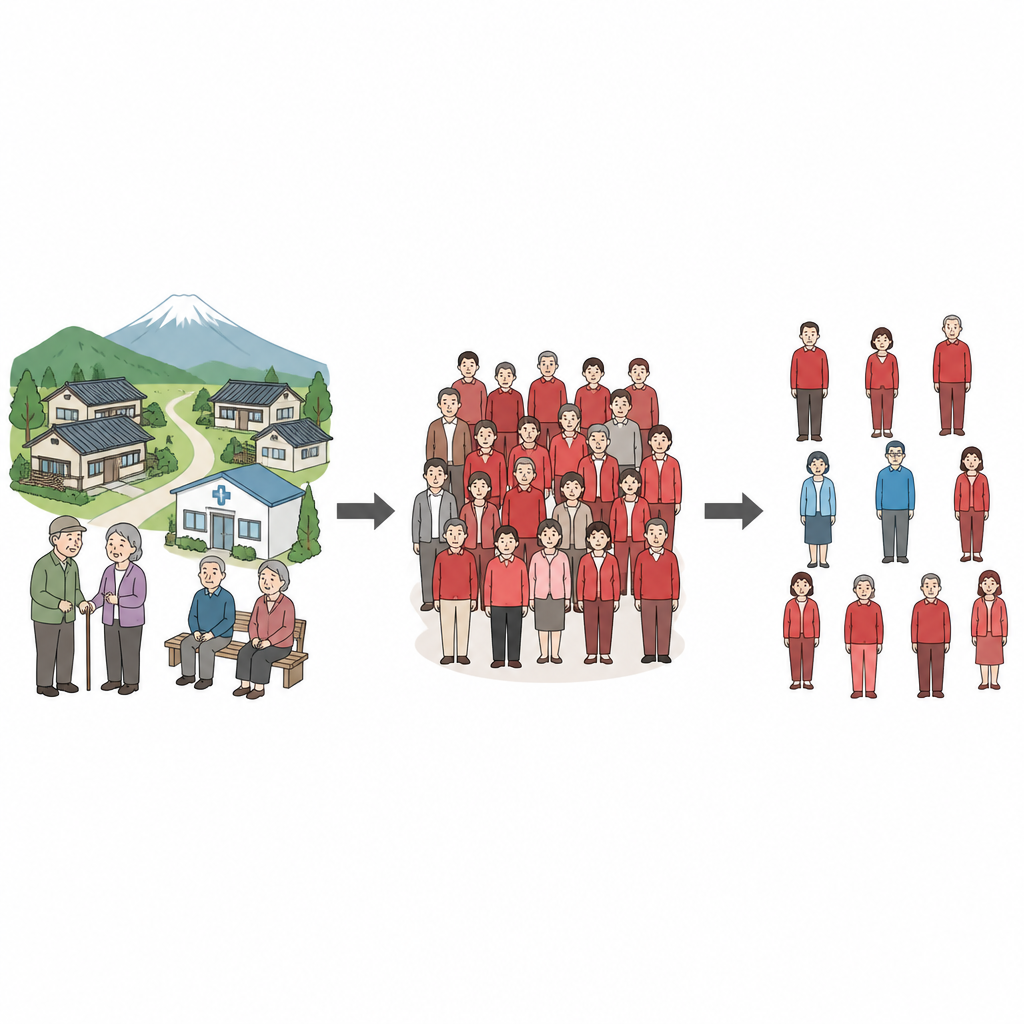
The research took place in Nose Town, a small rural community in northern Osaka Prefecture with about 9000 residents and a large share of older adults. Healthcare options are limited, with only a few outpatient clinics and no hospital. Stroke and heart disease occur more often there than in Japan overall. These conditions make the town a good place to see how well high blood pressure, a major cause of stroke, is being detected and treated in ordinary community life.
Who was studied and how
Researchers invited adults aged 40 and older to join the NOSE Study, which examines how long term home blood pressure checks relate to brain and heart health. This report uses the starting data from 623 participants who measured their blood pressure at home for up to 30 days between 2020 and 2021. Everyone had their pressure taken carefully at a community survey site, and then at home twice each morning and twice each evening using the same automatic device. The team judged whether people had high blood pressure and whether it was under control using Japan’s strict 2019 national guidelines, which call for lower targets than many older standards.
Hidden high blood pressure is common
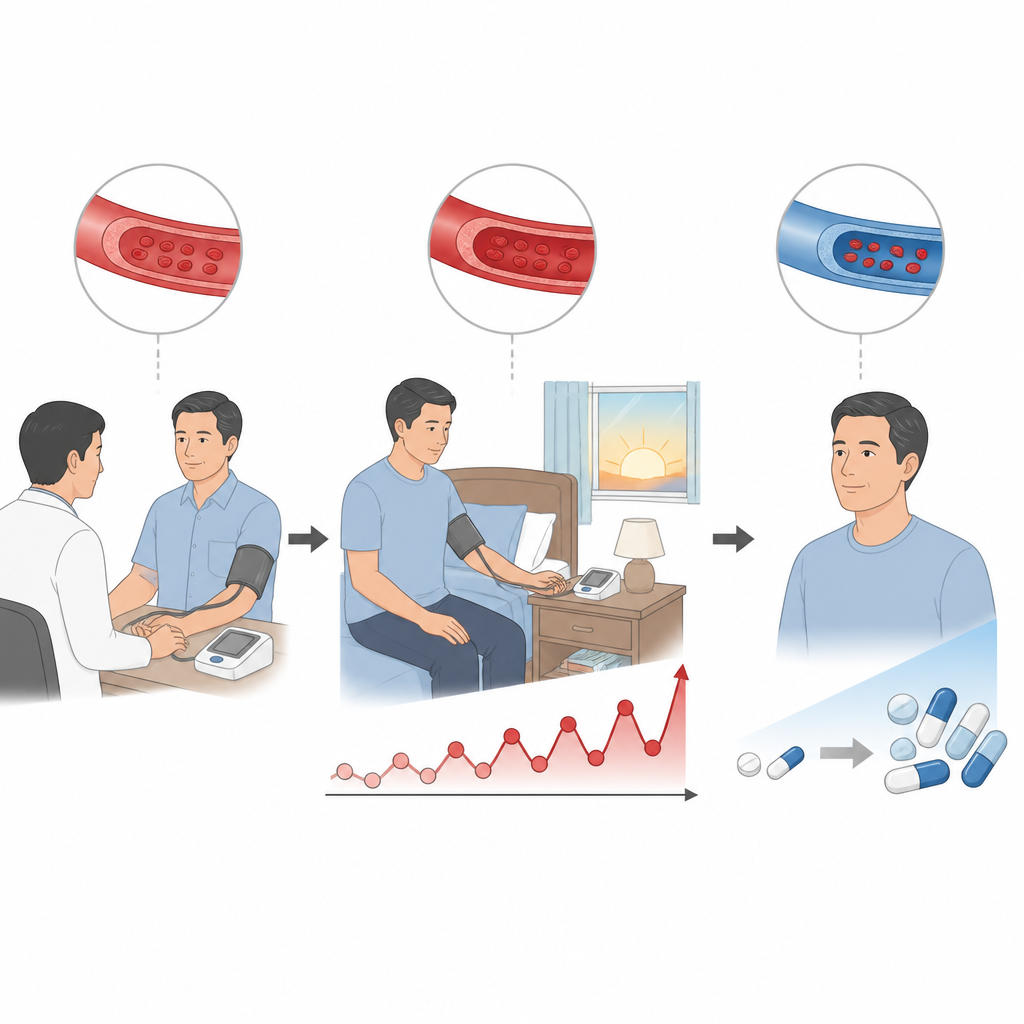
The findings revealed that about two thirds of participants had high blood pressure. Strikingly, nearly half of them were not taking any blood pressure medicine, even though this untreated group actually showed the highest readings both in the clinic and at home. Untreated people tended to be younger and to have fewer diagnosed illnesses, which may make them less likely to visit doctors. Among those who were on treatment, only about one in five met the tight office blood pressure targets, and fewer than one in ten met the morning home targets. A quarter of all participants had “masked” high blood pressure, where readings looked normal in the clinic but were high at home, particularly in the morning. This pattern was more frequent in untreated people, suggesting a large pool of hidden risk.
Treatment patterns and their limits
Looking at prescriptions helped explain the poor control. Most treated patients were taking only one blood pressure drug, and powerful combinations recommended by guidelines were relatively rare. Water pills and beta blockers, important drug types for many patients, were used in only a small minority. When people did receive more than one medicine, their chances of reaching target levels improved, especially for office and morning readings. Certain health problems, such as chronic kidney disease, were linked with worse control, while lifestyle factors like smoking were tied to poorer evening readings. These results point to a mix of late diagnosis, light treatment, and the natural surge in blood pressure that occurs in the morning.
What this means for everyday health
For lay readers, the message is clear: high blood pressure is very common, often goes untreated, and can be much worse at home than it appears in a clinic visit. In this Japanese town most people with high blood pressure were either unmedicated or not fully controlled under modern targets, and simple home checks uncovered many cases that would otherwise be missed. The authors conclude that regular home monitoring, especially in the morning, together with stronger use of combination medicines guided by up to date guidelines, is essential to bring blood pressure under better control and reduce the risk of stroke and heart disease in aging communities.
Citation: Chanthavong, P., Kobayashi, K., Akagi, Y. et al. Blood pressure status, JSH 2019-based control rate, and associated factors among community-dwelling adults: The NOSE study. Hypertens Res 49, 1853–1865 (2026). https://doi.org/10.1038/s41440-026-02622-8
Keywords: home blood pressure, hypertension control, masked hypertension, rural health, Japan