Clear Sky Science · en
Are changes in the urinary sodium-to-potassium ratio associated with changes in blood pressure in a healthy population with low urinary sodium-to-potassium ratios? Eight-year follow-up results from the KOBE Study
Why everyday salt and potassium matter
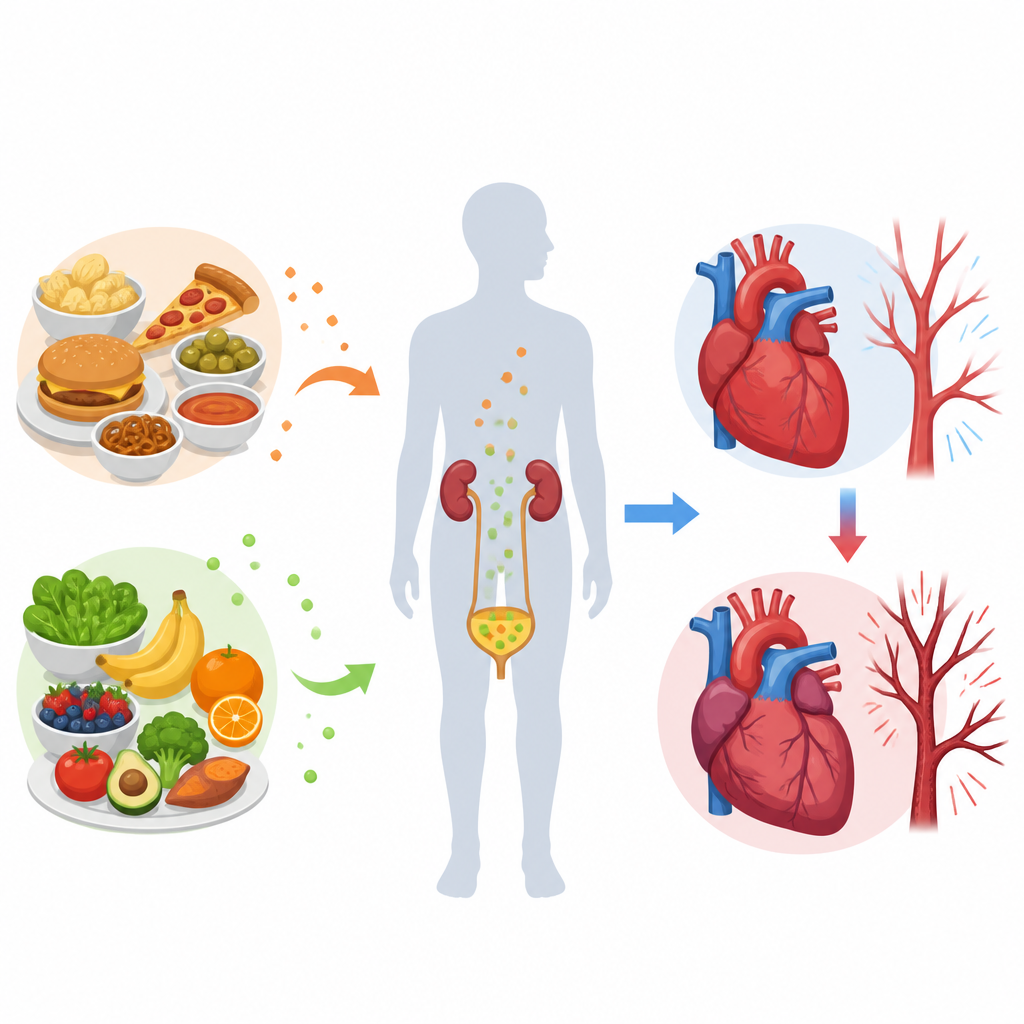
Most of us know that salty food can raise blood pressure, but few people realize that the balance between salt and potassium in the body may quietly shape heart health over many years. This study followed healthy adults in Japan for eight years to ask a simple question with big implications: if the salt-to-potassium balance in urine changes over time, does blood pressure change too, even in people who start out healthy and with good habits?
A long look at healthy middle age
The researchers drew on the KOBE Study, which tracks residents of Kobe, an urban city in western Japan. They focused on 567 men and women aged 40 to 74 who were free of high blood pressure, heart disease, stroke, cancer, and related treatments at the start. These volunteers were generally lean, with average blood pressure in the normal range, and had lifestyles that suggested they were more health conscious than the general population. This design allowed the team to examine how subtle shifts in diet-related factors might slowly influence blood pressure, without the added confusion of serious illness or strong medications.
Measuring the body’s salt balance
Instead of asking people to record everything they ate, the team used urine samples as a shortcut to the diet. In the morning before breakfast, each person provided a spot urine sample. Laboratory tests measured sodium and potassium levels, and the researchers calculated a simple sodium-to-potassium ratio. A lower ratio suggests a diet with less salt and more potassium-rich foods such as fruits and vegetables. Participants also had their blood pressure checked twice while seated, along with measurements such as body weight, blood fats, and blood sugar. The same set of checks was repeated eight years later.
What changed over eight years
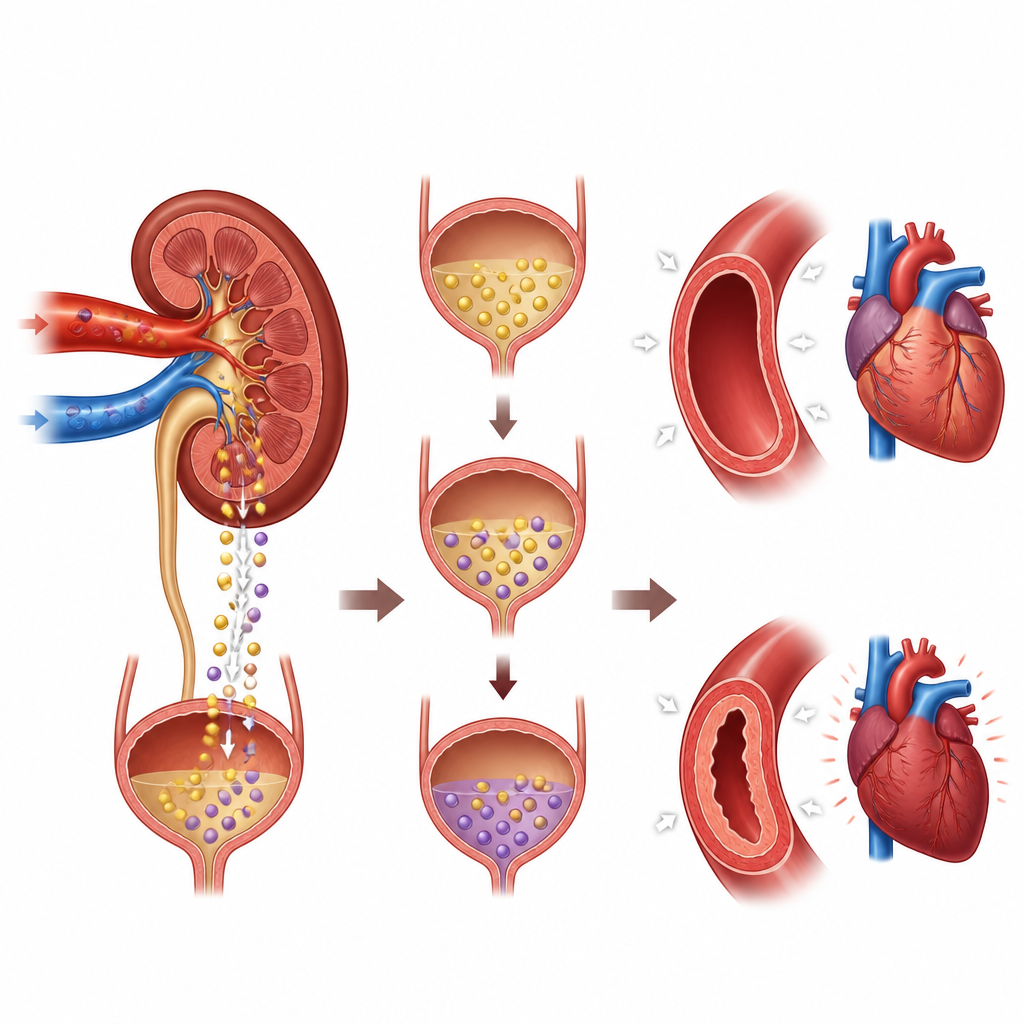
On average, the group’s sodium-to-potassium ratio in urine started at 2.1, close to the “near optimal” target recommended by Japanese hypertension experts. Over the eight years, this ratio did not change much at the group level, and both sodium and potassium in urine tended to fall slightly, likely reflecting aging or modest changes in diet. Blood pressure, however, crept upward: systolic and diastolic values both rose by a few millimeters of mercury. When the researchers looked at individuals, they found that those whose urinary sodium-to-potassium ratio increased over time were also the ones whose blood pressure rose more.
Linking small shifts to rising pressure
To be sure this pattern was not due to other factors, the team used statistical models that took into account age, sex, changes in body weight, starting blood pressure, blood fats, blood sugar, alcohol use, smoking, education, job status, taste sensitivity to salt, and even the season when measurements were taken. After all these adjustments, the link remained: each rise in the sodium-to-potassium ratio was tied to a measurable increase in both the top and bottom blood pressure numbers. This relationship held true even among people who already started with low ratios and normal blood pressure, especially in those who were not underweight. In contrast, among people who went on to start blood pressure or heart medications, the same clear link did not appear, likely because treatment altered the course of their blood pressure.
What this means for daily life
For a layperson, the message is straightforward. In this group of healthy Japanese adults, even small long-term increases in the body’s salt-to-potassium balance were followed by higher blood pressure years later. This was true even though their starting levels already met current “good” targets. The study suggests that keeping the sodium-to-potassium ratio low over time, by limiting salty foods and getting enough potassium from fruits and vegetables, may help keep blood pressure from slowly drifting upward as people age. Regularly checking this simple urine ratio could one day become a practical tool to flag early changes and support heart health, especially in regions where salty diets are common.
Citation: Kawahara, M., Tsukinoki, R., Miyamatsu, N. et al. Are changes in the urinary sodium-to-potassium ratio associated with changes in blood pressure in a healthy population with low urinary sodium-to-potassium ratios? Eight-year follow-up results from the KOBE Study. Hypertens Res 49, 1878–1887 (2026). https://doi.org/10.1038/s41440-026-02621-9
Keywords: blood pressure, urinary sodium potassium ratio, hypertension risk, diet and salt, Japanese cohort