Clear Sky Science · en
Sex-specific trajectories of blood pressure and pulse pressure across body mass index categories: a descriptive study based on 13-year health checkup data
Why Weight, Sex, and Blood Pressure Matter Together
Most people know that high blood pressure raises the risk of heart attacks and strokes. But fewer realize that how blood pressure changes as we age can look very different for men and women, and for people who are lean versus those who are overweight. This study followed over 200,000 adults in Japan through routine health checkups over 13 years to see how blood pressure patterns unfold across adulthood when you factor in sex and body size. The results suggest that extra weight may make our blood vessels "age" faster, and that women and men do not follow the same paths.
A Huge Health Checkup Snapshot
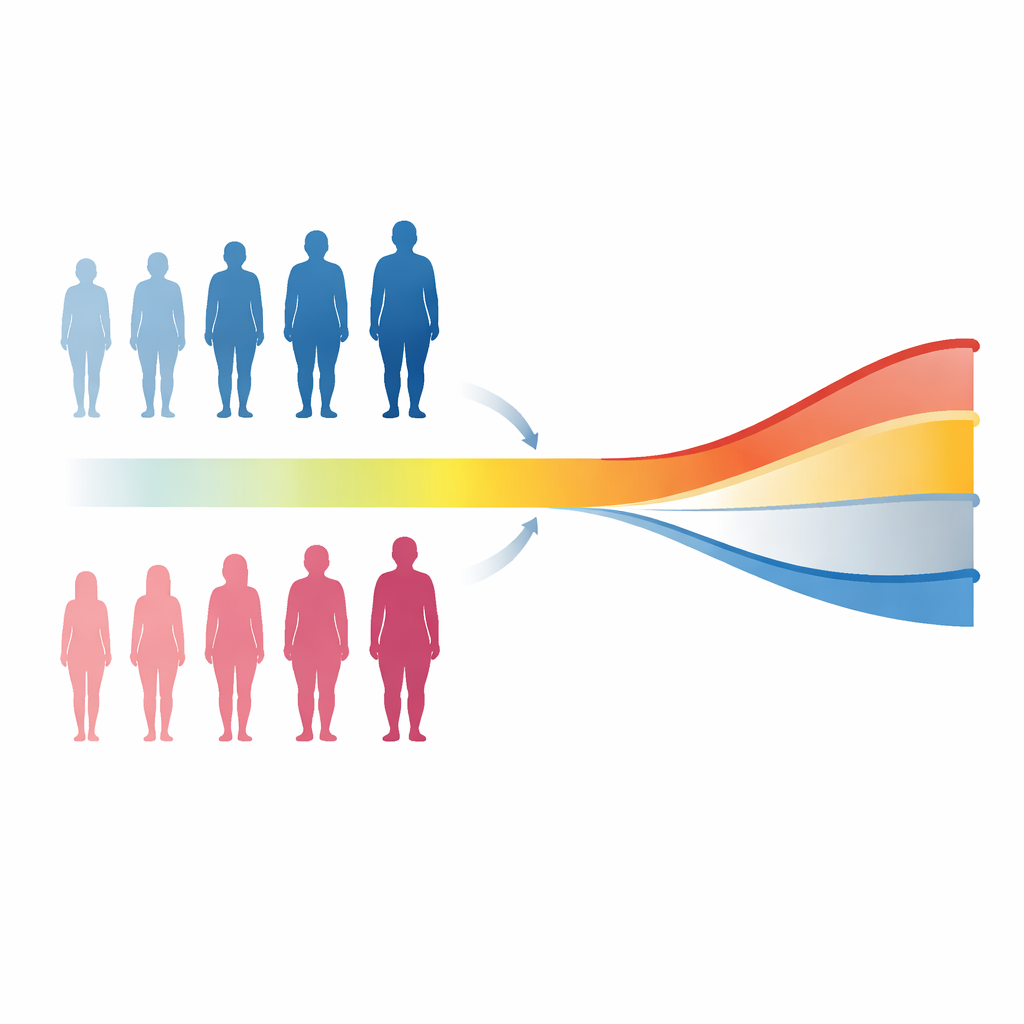
The researchers used data from more than 213,000 people who took part in standardized annual health exams at a Japanese hospital between 2007 and 2019. At each visit, staff measured height, weight, blood pressure, and heart rate, and drew blood for routine lab tests. People were grouped into four body mass index (BMI) categories: underweight, normal weight, mildly obese, and more severely obese. The team then used a smoothing technique to draw curves showing how systolic blood pressure (the top number), diastolic blood pressure (the bottom number), pulse pressure (the difference between them), and resting heart rate changed with age for men and women in each BMI group.
How Blood Pressure Rises and Falls Over Life
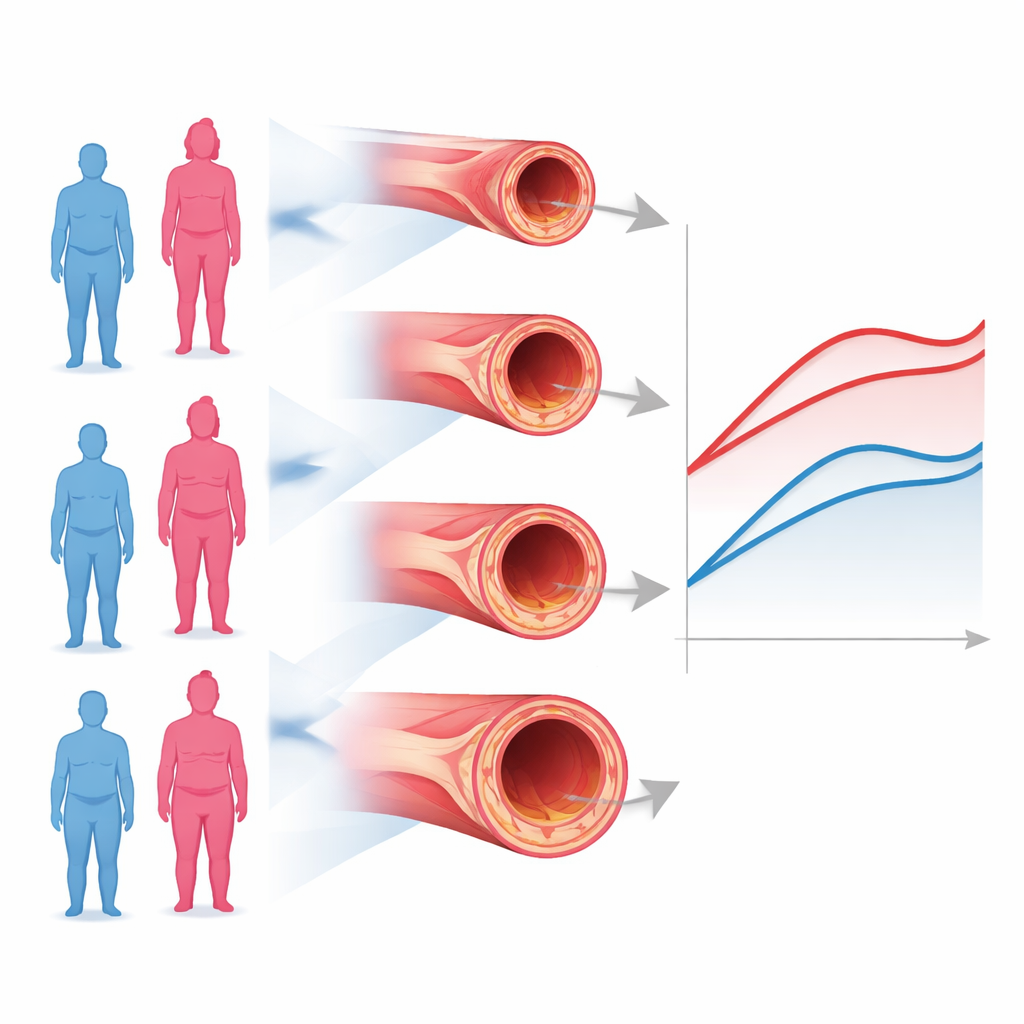
Across all groups, systolic pressure climbed steadily with age. This increase started earlier and was steeper in people with obesity, meaning they carried a heavier pressure load on their arteries from a relatively young age. Diastolic pressure behaved differently: it rose into midlife and then started to fall, creating a bend or "tipping point" in the curve. Men reached this peak earlier than women, and heavier people of both sexes reached it earlier than their leaner peers. Underweight women had the latest peak of all, well into older age. Together, these patterns point to earlier onset of age-like changes in the circulation among people with higher BMI.
The Widening Gap and What It Signals
Because systolic pressure keeps rising while diastolic pressure eventually turns downward, the gap between them—pulse pressure—widens with age. That widening was most pronounced in men and in people with obesity. Men showed a slight dip in pulse pressure in early adulthood, then a sharp rise from about their forties onward. Women stayed flatter in early adulthood but began a strong rise after their thirties, especially if they were heavier. This earlier and steeper widening in women with higher BMI likely reflects changes around menopause, when loss of estrogen speeds up stiffening of the arteries. Resting heart rate also told an important story: it was consistently higher in women than men and higher in heavier people than in leaner ones, with the highest values seen in obese women, hinting at greater strain on the heart and nervous system.
Weight, Sex, and Treatment Do Not Erase the Pattern
To see whether blood pressure medicines might be hiding the real patterns, the researchers repeated their analysis after excluding everyone taking drugs for hypertension. The shapes of the curves hardly changed: systolic pressure still rose with age, diastolic pressure still peaked in midlife and then fell, and obesity still amplified these trends. This suggests that the basic path of "vascular aging"—how our arteries and blood pressure change over time—is strongly shaped by age, sex, and body size, and that treatment mainly lowers the levels rather than rewriting the overall trajectory.
What This Means for Everyday Health
For non-specialists, the main takeaway is that extra body weight does more than just nudge blood pressure up a little; it appears to bring forward blood vessel changes that usually come later in life. Men with obesity see very high rates of hypertension by their sixties, and women with obesity may experience an earlier jump in pulse pressure around midlife. These insights support more personalized screening and prevention—checking blood pressure earlier and more often in people with higher BMI, paying special attention to women as they approach menopause, and viewing heart rate as another clue to strain on the cardiovascular system. Losing weight, staying active, and following medical advice may help slow this apparent "early aging" of the arteries, reducing the chances of serious heart and vessel disease later on.
Citation: Kawasoe, S., Kubozono, T., Akasaki, Y. et al. Sex-specific trajectories of blood pressure and pulse pressure across body mass index categories: a descriptive study based on 13-year health checkup data. Hypertens Res 49, 1597–1609 (2026). https://doi.org/10.1038/s41440-026-02607-7
Keywords: blood pressure, obesity, vascular aging, sex differences, hypertension prevention