Clear Sky Science · en
Population attributable fraction of modifiable risk factors for incident hypertension: an analysis of large-scale epidemiological cohort
Why everyday habits matter for blood pressure
High blood pressure, or hypertension, is a leading cause of heart attacks and strokes, yet it often develops silently over many years. This study asked a simple but powerful question: among everyday habits and health conditions that we can change, which ones are responsible for the largest share of new high blood pressure cases in Japan? By following over a million adults, the researchers show that extra body weight stands out as the single biggest contributor, especially in younger people and men. Their findings can help shape public health efforts and personal choices about which risk factors to tackle first.
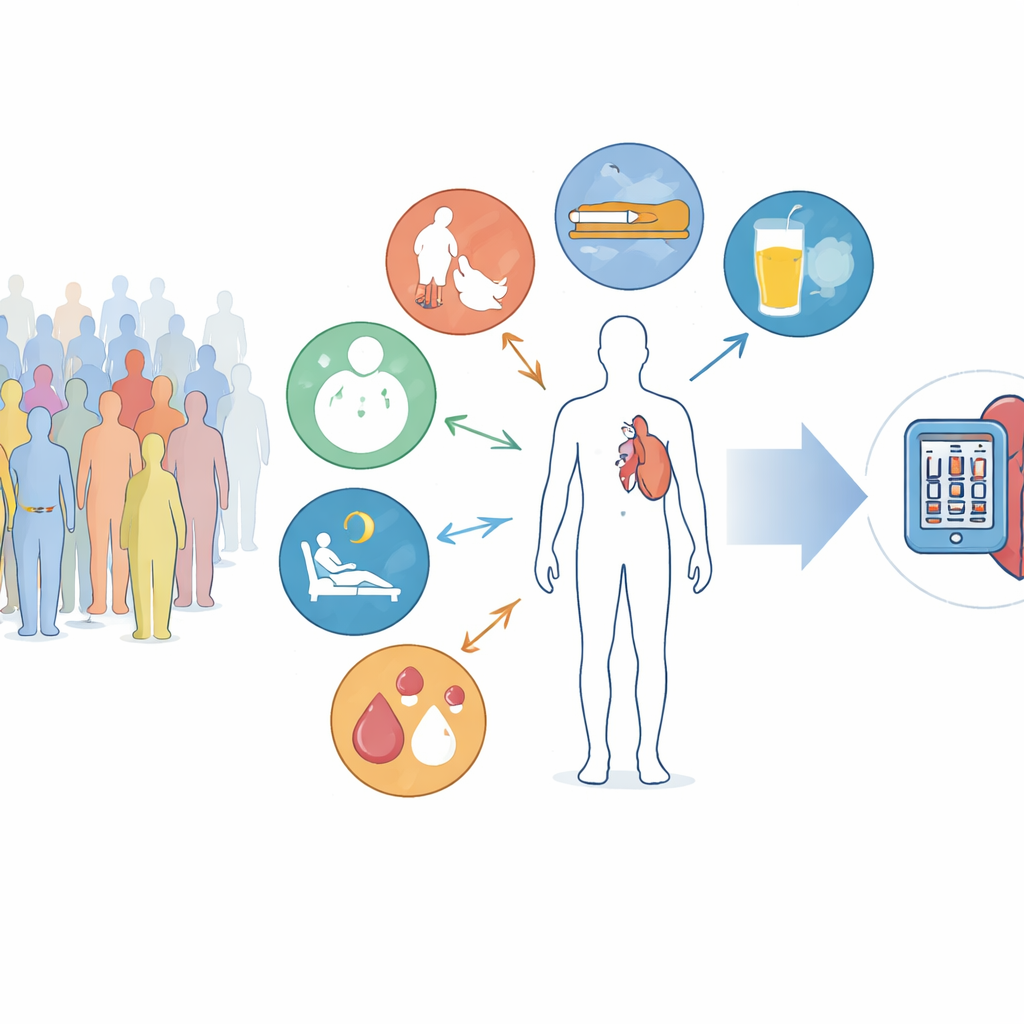
A nationwide look at health and lifestyle
The researchers used a huge medical database from Japan that combines routine health check-up results with insurance claims. From more than three million people, they focused on 1,069,948 adults who did not yet have hypertension and who had complete information on key lifestyle factors. Participants were followed for a median of almost four years. During this time, doctors’ billing records were used to spot new diagnoses of high blood pressure. Because the data came from three major health insurance systems, the group studied closely resembled the Japanese population in age and rates of common illnesses.
Seven changeable risks under the microscope
The team examined seven modifiable risk factors: obesity (based on body mass index), diabetes, abnormal blood fats, smoking, habitual drinking, physical inactivity, and poor sleep. At the start, nearly half of participants had unhealthy blood fat levels, about 44% were physically inactive, roughly one in five drank alcohol daily, and nearly one in five were obese or smoked. Using statistical models that adjusted for age, sex, existing blood pressure, and the other risk factors, the researchers estimated how strongly each factor was linked to developing hypertension over time.
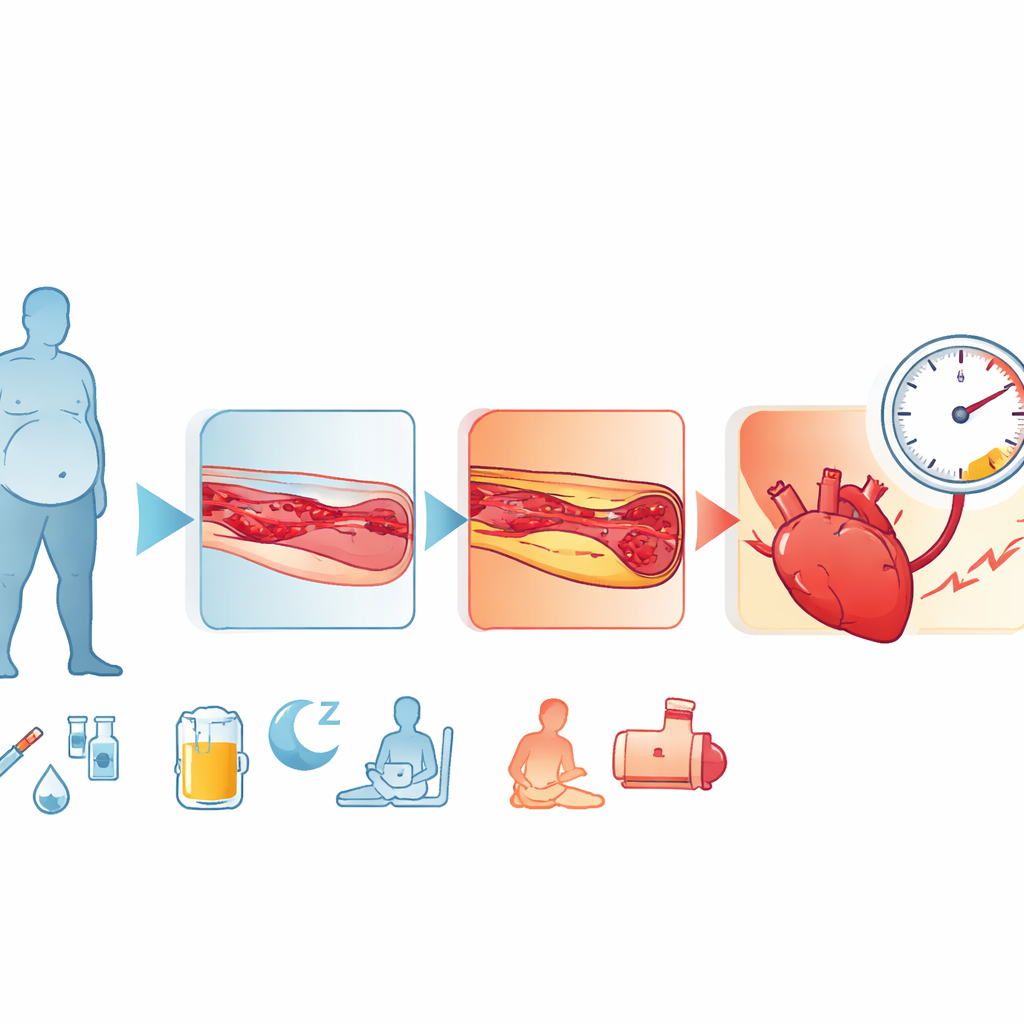
How much of hypertension can be traced to each factor?
To translate these links into a measure useful for public health, the study calculated the “population attributable fraction.” This tells us what share of new hypertension cases in the whole population could theoretically be prevented if a given risk factor were eliminated, assuming the relationship is causal. Obesity had the largest impact: about 6% of new high blood pressure cases overall were attributed to excess body weight. Poor sleep came next at about 4%, followed by smoking at about 3%, abnormal blood fats at nearly 3%, daily drinking at about 2%, physical inactivity at about 2%, and diabetes at about 1.5%. When all seven factors were considered together, nearly one in five new hypertension cases in the total population could be linked to these modifiable risks.
Stronger impact in younger adults and men
The influence of these risks was not the same for everyone. Obesity’s share of new hypertension cases was far higher in people under 40 years old—about 15%—and still substantial in those aged 40 to 64, but much lower in adults 65 and older. A similar pattern emerged for abnormal blood fats, which explained nearly 9% of new cases in the youngest group but almost none in the oldest. Overall, the combined effect of all seven risks reached about 31% of new hypertension cases in adults under 40 and about 25% in those aged 40 to 64, compared with roughly 12% in older adults. Men also showed a larger contribution from lifestyle factors than women, largely because risks such as obesity, smoking, and heavy drinking were more common among men.
What this means for everyday life and health policy
For a layperson, the takeaway is that while many things influence blood pressure, extra body weight and other lifestyle factors play an outsized role in who develops hypertension, particularly among younger and middle-aged adults and men. The study does not prove that fixing these habits will prevent every case, and it cannot fully account for diet, genes, or income. Still, its scale and consistency suggest that population-wide efforts to prevent and reduce obesity—along with improving sleep, curbing smoking and heavy drinking, and encouraging regular activity—could meaningfully cut future cases of high blood pressure. In practical terms, targeting healthier weight and lifestyle earlier in adulthood may offer some of the biggest long-term gains in protecting the heart and blood vessels.
Citation: Nishikawa, M., Suzuki, Y., Kaneko, H. et al. Population attributable fraction of modifiable risk factors for incident hypertension: an analysis of large-scale epidemiological cohort. Hypertens Res 49, 1726–1735 (2026). https://doi.org/10.1038/s41440-026-02570-3
Keywords: hypertension prevention, obesity and blood pressure, lifestyle risk factors, Japanese cohort study, population attributable fraction