Clear Sky Science · en
Genetic exploration of the relationship between liability to psychiatric disorders and acne vulgaris
Why Skin and Mind Might Be Linked
Acne is often dismissed as a cosmetic nuisance of adolescence, yet for many people it brings lasting emotional scars as well as spots. At the same time, serious mental health conditions like schizophrenia and depression can profoundly alter how a person feels and functions. This study asks a surprising question with big implications for both dermatology and psychiatry: are there shared genetic roots that help explain why acne and certain mental illnesses so often appear together?
Looking for Clues in Our DNA
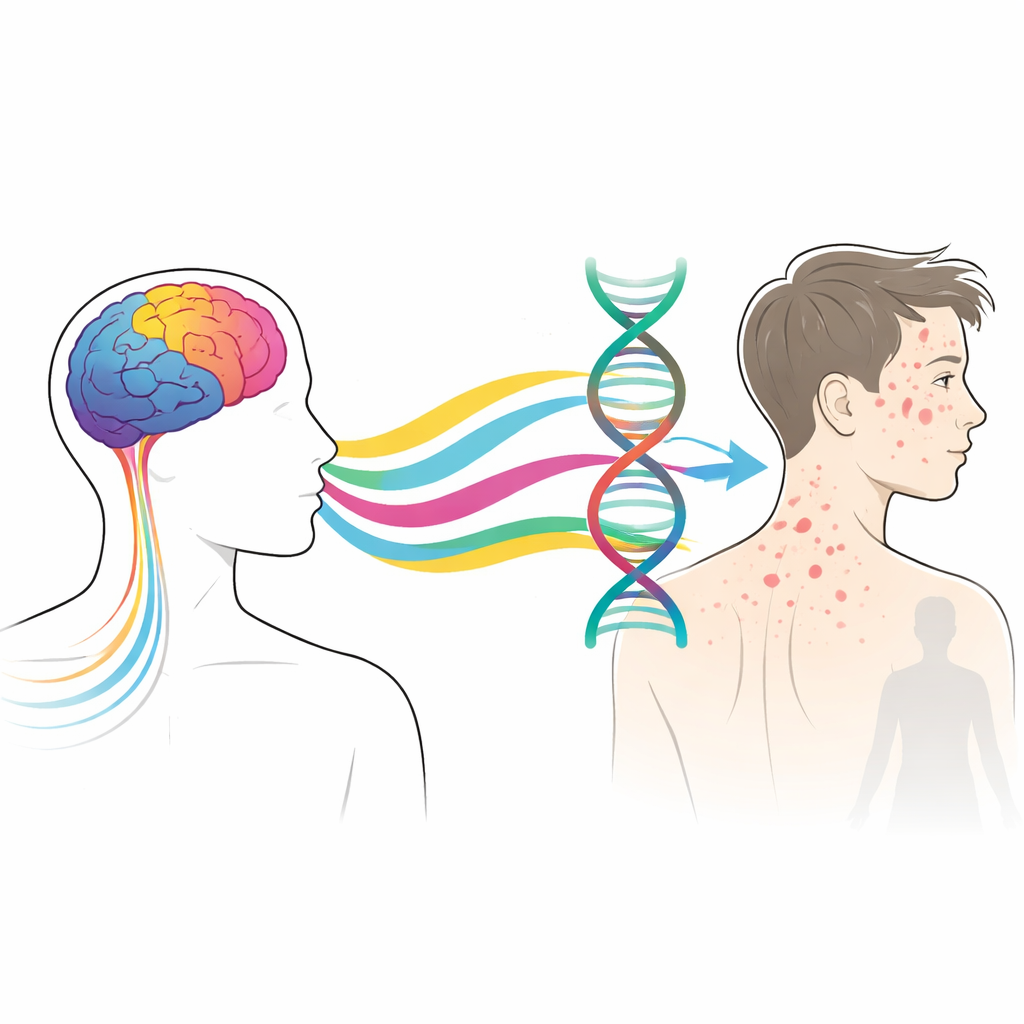
Instead of tracking individual patients over time, the researchers turned to very large genetic datasets that pool DNA information from hundreds of thousands of people. They focused on “acne vulgaris,” the common inflammatory skin condition, and compared its genetic fingerprints with those of ten psychiatric diagnoses, including schizophrenia, depression, bipolar disorder, anxiety disorders, and obsessive–compulsive disorder. By examining how often the same genetic variants show up across these different conditions, they could test whether the same inherited factors raise the chances of both skin problems and mental illness.
Shared Risk, but Mostly Modest
The first discovery was that acne and several psychiatric conditions do share some inherited risk. The overlap was clearest for schizophrenia, obsessive–compulsive disorder, bipolar disorder, and major depression, with smaller hints of overlap for post-traumatic stress and generalized anxiety. These links were not huge; they were described as small to moderate in size. That means most people with acne will not develop a psychiatric disorder because of their skin, and most people with mental illness will not have severe acne for genetic reasons alone. Still, the pattern suggests that part of the connection between skin and mind is written into our DNA rather than being driven only by life stress or medication side effects.
When Brain Risk Spills Over to Skin
The team then asked a more pointed question: does a genetic tendency toward acne make mental illness more likely, or is it more that a genetic tendency toward mental illness also nudges up acne risk? Using several statistical approaches that treat naturally occurring genetic differences as a kind of long-term “experiment,” they found the most consistent signal in one direction. People whose DNA carried a higher inherited risk for schizophrenia also had a slightly higher genetic risk of developing acne. Evidence that acne risk itself pushes toward schizophrenia was weaker. In a separate group of nearly two thousand adults, those who reported more severe acne tended to carry somewhat higher overall schizophrenia risk scores in their DNA, again with modest effects.
Zooming In on the Biological Pathways
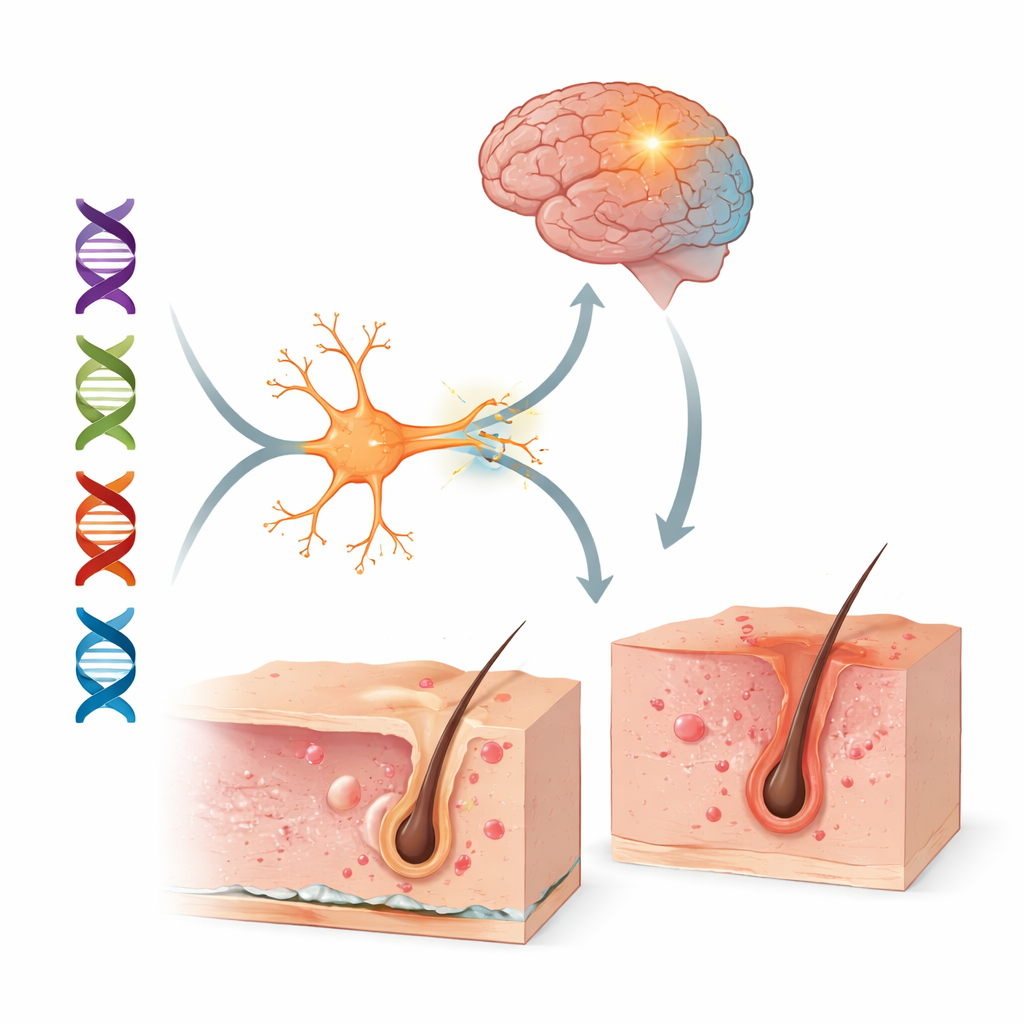
To move from numbers to biology, the authors searched the genome for specific regions where the same inherited variants appear to influence both schizophrenia and acne. They identified several such “hotspots,” including areas that house genes involved in how nerve cells communicate using the chemical glutamate and how skin cells grow and respond to inflammation. One highlighted gene, DLG1, helps organize structures at nerve cell junctions and has also been tied to acne in earlier work. Another region lies near a gene called RERE, which helps control retinoic acid, a vitamin A–related molecule central to both brain development and acne treatment. These overlaps hint that the same chemical signals and cell processes may be acting in both the brain and the skin, though not always in simple, one-directional ways.
What This Means for Patients and Care
For non-specialists, the main takeaway is that the observed link between acne and mental health problems is not just “in people’s heads” or only a reaction to visible blemishes. This study provides genetic support for a small but real biological relationship, especially between schizophrenia and acne. That does not mean acne causes schizophrenia or that everyone with schizophrenia will have severe acne. Instead, it suggests some shared underlying wiring that can make both conditions more likely in the same person. As scientists learn more about these shared pathways, it could eventually guide treatments that ease both skin inflammation and mental distress, and encourage doctors to pay closer attention to mental health in people with severe acne—and to skin health in people living with serious psychiatric disorders.
Citation: Mitchell, B.L., Lupton, M.K., Rentería, M.E. et al. Genetic exploration of the relationship between liability to psychiatric disorders and acne vulgaris. Eur J Hum Genet 34, 565–573 (2026). https://doi.org/10.1038/s41431-026-02028-7
Keywords: acne, schizophrenia, genetic risk, skin and mental health, glutamate signalling