Clear Sky Science · en
De novo heterozygous variants of the RSF1 gene are responsible for a syndromic neurodevelopmental disorder
When Gene Packaging Goes Awry
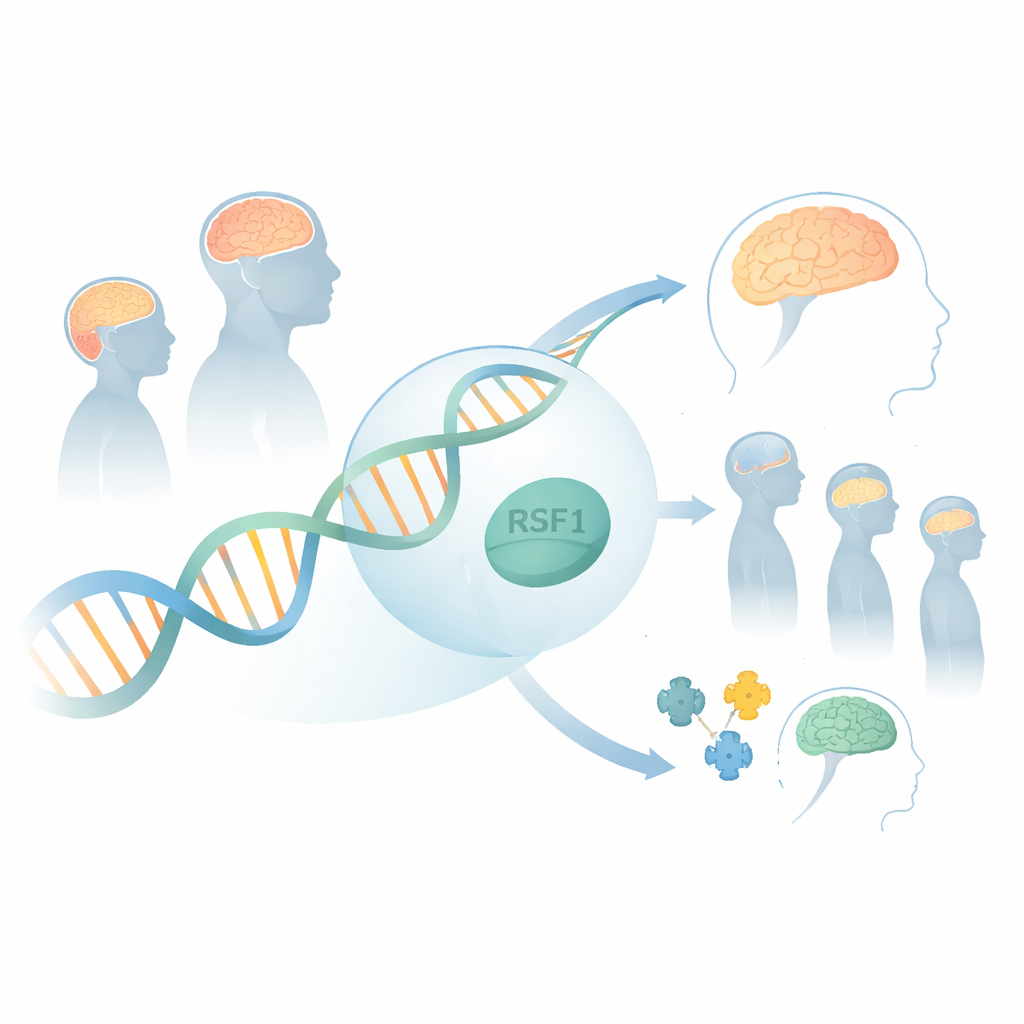
Why do some children develop differently, even when pregnancy and birth seem typical? This study explores a little-known gene called RSF1, which helps organize how our DNA is packaged inside cells. When RSF1 is altered, the way the brain develops can subtly shift, leading to learning differences, autism, or other developmental challenges. By piecing together data from families around the world, the researchers show that changes in this single gene are linked to a new, rare neurodevelopmental condition.
A Master Organizer Inside Our Cells
Every cell in the body packs a huge amount of DNA into a tiny nucleus, and that DNA must be opened and closed at the right times so genes can turn on or off. RSF1 is part of a molecular “remodeling crew” that slides and spaces DNA around protein spools, helping decide which genes are accessible. This gene is active in many tissues, but it seems especially important in the developing brain, where precise timing of gene activity guides how brain cells grow, move, and connect. Earlier work showed that many other DNA-packaging genes are tied to developmental disorders, hinting that RSF1 might also be involved.
Finding Families With the Same Hidden Clue
The team used modern DNA sequencing to scan the genomes or exomes (the protein-coding parts of DNA) of children and adults with unexplained developmental conditions. Through international data-sharing platforms, they identified 11 unrelated individuals who all carried rare changes in one copy of RSF1—either newly arisen in the child or inherited from a parent with symptoms. Seven of these individuals were described in detail. All had some form of neurodevelopmental difference: intellectual disability, autism spectrum features, delayed milestones, or a combination of these. Many needed extra support at school, such as individualized education plans or specialized classrooms.
A Pattern of Subtle Yet Consistent Body Signs
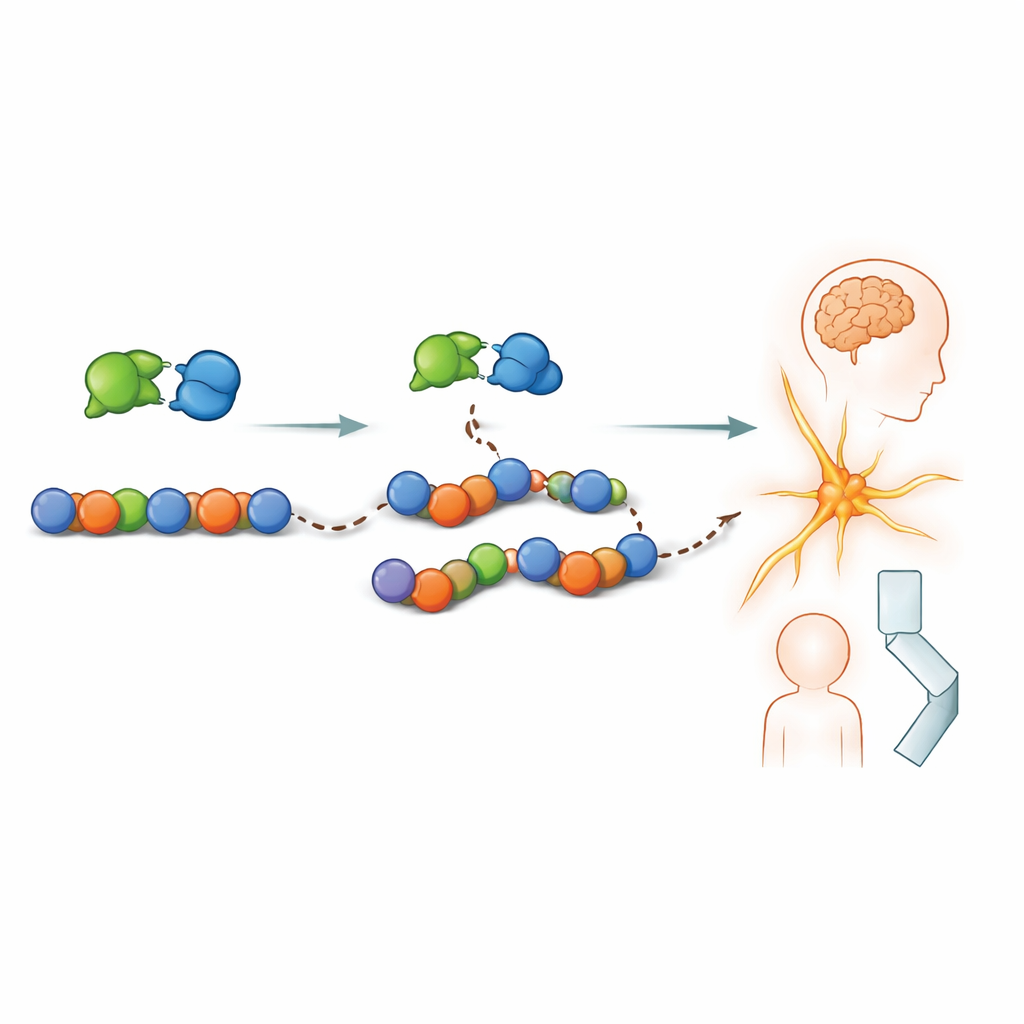
Although no single physical feature defined the condition, certain traits recurred across individuals. Several had unusual head size—either larger or smaller than average—and mild differences in facial shape, particularly around the nose, lips, and ears. Some had eye movement or vision problems, flat feet or clubfoot, joint looseness, or differences in fingers and toes. Others showed skin pigment changes, digestive issues such as constipation or feeding difficulties, hormonal or metabolic problems like delayed puberty or diabetes, or brain imaging findings including enlarged fluid spaces. Seizures and low muscle tone appeared in a minority, emphasizing that the condition can vary widely from person to person.
Zooming In on the Molecular Changes
The RSF1 gene variants uncovered in this study mostly caused the protein to be cut short or its instructions to be spliced incorrectly, changes that usually weaken or remove its function. A smaller number of cases carried single-letter “missense” changes that swap one building block of the protein for another. Using advanced computer models of RSF1’s 3D structure, the researchers showed that these missense changes cluster in tightly constrained regions where the protein is likely to interact with DNA or other partners, suggesting they could disturb its normal role in organizing chromatin. Population data indicate that RSF1 rarely tolerates loss of function in healthy people, reinforcing the idea that damaging variants are biologically important.
What This Means for Families
Taken together, the evidence points to RSF1 as the cause of a newly recognized syndromic neurodevelopmental disorder—“syndromic” meaning it affects the brain along with other body systems. For families, a diagnosis involving RSF1 can explain a child’s learning and developmental differences, guide medical follow-up for associated features, and end a long search for answers. The authors stress that more patients will need to be studied to fully map out the range of symptoms and to confirm how each type of RSF1 change affects brain development. Still, this work adds RSF1 to the growing list of DNA-packaging genes whose disruption subtly reshapes early development, reminding us that how DNA is folded can matter just as much as the letters of the genetic code itself.
Citation: Jost, C., Busa, T., Wegner, D. et al. De novo heterozygous variants of the RSF1 gene are responsible for a syndromic neurodevelopmental disorder. Eur J Hum Genet 34, 554–564 (2026). https://doi.org/10.1038/s41431-026-02017-w
Keywords: RSF1 gene, neurodevelopmental disorder, chromatin remodeling, intellectual disability, autism spectrum