Clear Sky Science · en
Overview of dietary intake assessment methods and dietary outcomes in Roma population: a scoping review
Why Everyday Eating Habits Matter
What people eat day to day quietly shapes their health over a lifetime. For Europe’s Roma communities—the continent’s largest ethnic minority—diet is tightly bound to culture, poverty, and discrimination, and many studies suggest they face higher risks of nutrition-related diseases. This article maps out what scientists actually know about Roma eating patterns, and how well current research tools capture the reality of life in Roma settlements. Understanding these gaps is crucial for designing fair, effective nutrition programs rather than one-size-fits-all advice that misses the mark.
Looking for Answers in Many Studies
The authors carried out a “scoping review,” a broad kind of research that does not test a single hypothesis but instead gathers and organizes all available evidence on a topic. They searched major scientific databases and grey literature up to the end of 2023 for any English-language study that measured what adult Roma people eat or drink. Out of hundreds of initial records, only 13 studies met the criteria. Most came from Central and Eastern Europe—Hungary, Slovakia, the Czech Republic, Romania, Albania, and Spain—reflecting where many Roma live in large numbers. These studies varied in size and design, but together they provide the clearest available picture of both Roma diets and the tools used to study them. 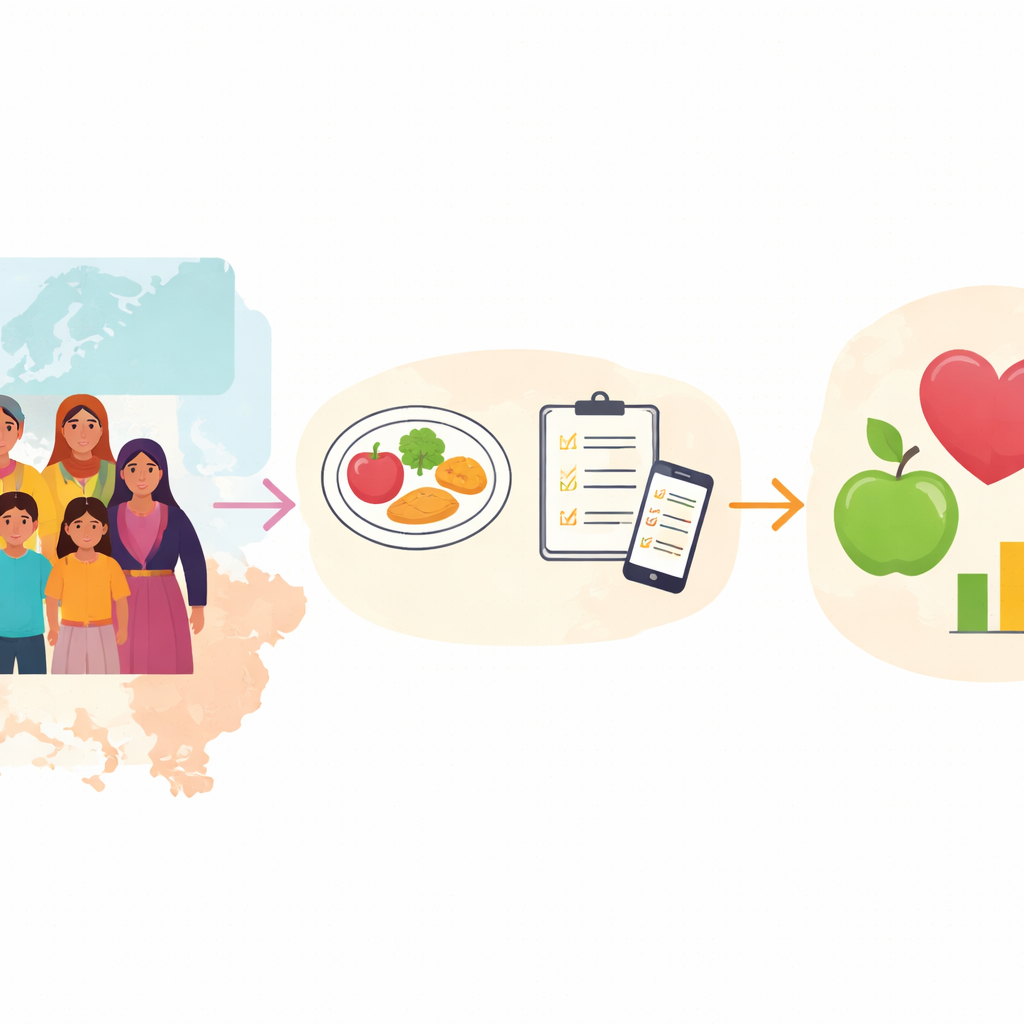
How Researchers Measured Food and Drink
To peer into kitchens and plates, researchers mainly used three approaches. The first was the 24-hour dietary recall, where trained interviewers ask participants to describe everything they consumed the previous day, sometimes over several different days. The second was the food frequency questionnaire, which lists foods and asks how often they are eaten, giving a sense of long-term habits but not precise nutrient amounts. The third involved diet quality scores that translate a person’s reported intake into numerical ratings of how closely their diet matches national or international guidelines. A few studies also used in-depth interviews and document analysis to explore the cultural meanings of food beyond numbers.
What the Studies Say About Roma Diets
Across countries, findings point in the same direction: Roma diets often fall short of recommended patterns. Recalls and questionnaires showed lower intake of fruits, vegetables, and dairy, and higher consumption of sugary drinks and starchy side dishes like potatoes, pasta, rice, and dumplings. In some groups, fat and protein—especially from animal sources—were higher than advised, while fiber and several vitamins and minerals were too low. Diet quality indices revealed that Roma households tend to have less diverse and less healthy diets than neighboring majority populations. Qualitative work added nuance: irregular meal patterns, moderate overeating when food is available, and using plentiful or “rich” foods as a visible marker of social status within the community. 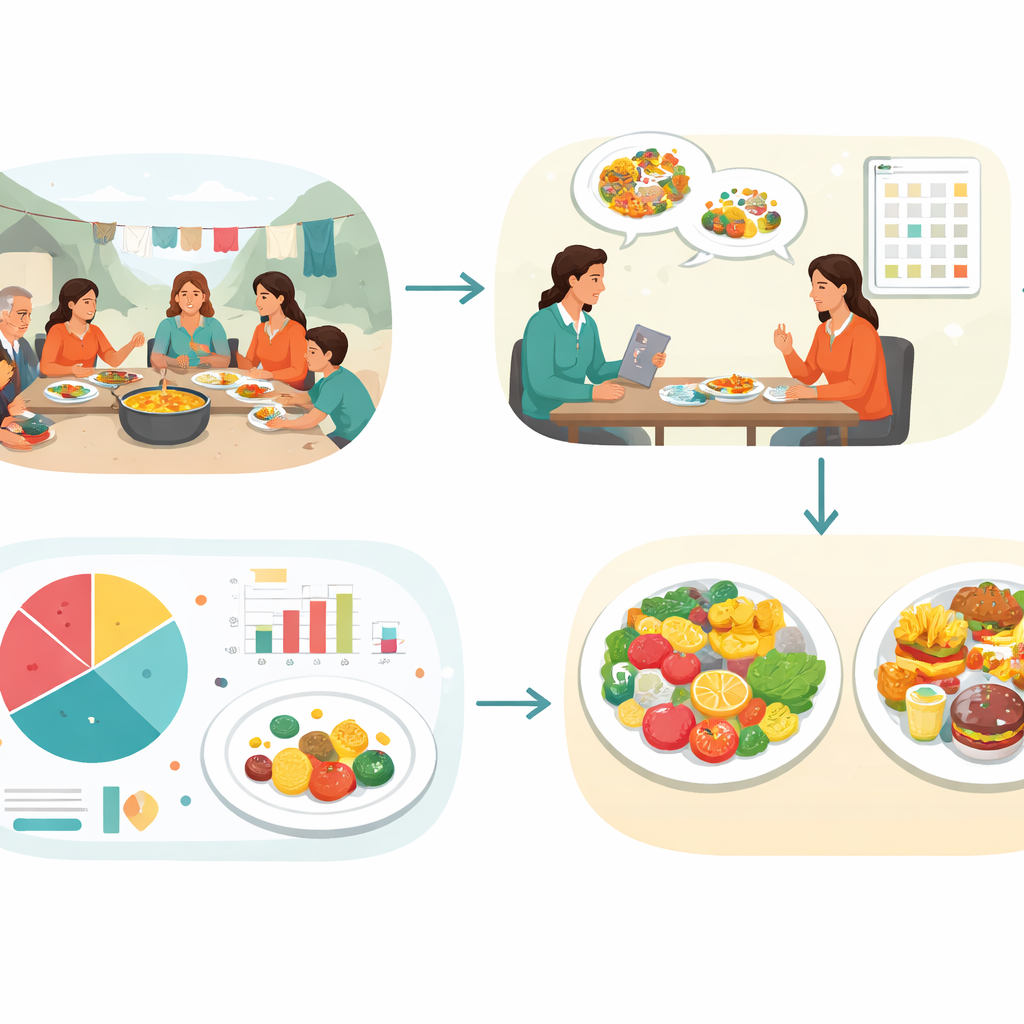
Where the Research Tools Fall Short
Despite these consistent signals, the review highlights serious blind spots in how Roma diets are assessed. Many questionnaires were not checked for accuracy in Roma communities, and often did not include traditional dishes or shared eating styles, such as several family members eating from a common pot. Portion sizes were rarely measured with tools adapted to local habits, and food composition tables sometimes lacked data on ethnic foods. Most studies were one-off snapshots rather than long-term follow-ups, and advanced analysis methods common in nutrition research were seldom used. Given high rates of poverty, low literacy, and distrust of outsiders, the authors argue that interview-based tools, culturally sensitive training for fieldworkers, and participatory methods that involve Roma themselves are essential to collect reliable information.
What This Means for Health and Policy
For a general reader, the takeaway is clear: Roma communities face real, documented disadvantages in diet quality, but our instruments for measuring their food habits are blunt and often poorly suited to their lives. The review concludes that better-adapted, validated methods—combining standard dietary questionnaires with deeper, community-driven qualitative work—are urgently needed. Only by accurately understanding what Roma people eat, why they eat that way, and how culture and hardship shape those choices can health professionals design nutrition programs that are respectful, realistic, and capable of narrowing long-standing health gaps across Europe.
Citation: Kiss, A., Tompa, O., Soós, S. et al. Overview of dietary intake assessment methods and dietary outcomes in Roma population: a scoping review. Eur J Clin Nutr 80, 354–364 (2026). https://doi.org/10.1038/s41430-025-01677-z
Keywords: Roma nutrition, dietary assessment, ethnic minority health, diet quality, health disparities