Clear Sky Science · en
WAT-to-BAT communication facilitates the sustained activation of BAT thermogenesis during cold exposure
How Body Fat Helps Us Stay Warm
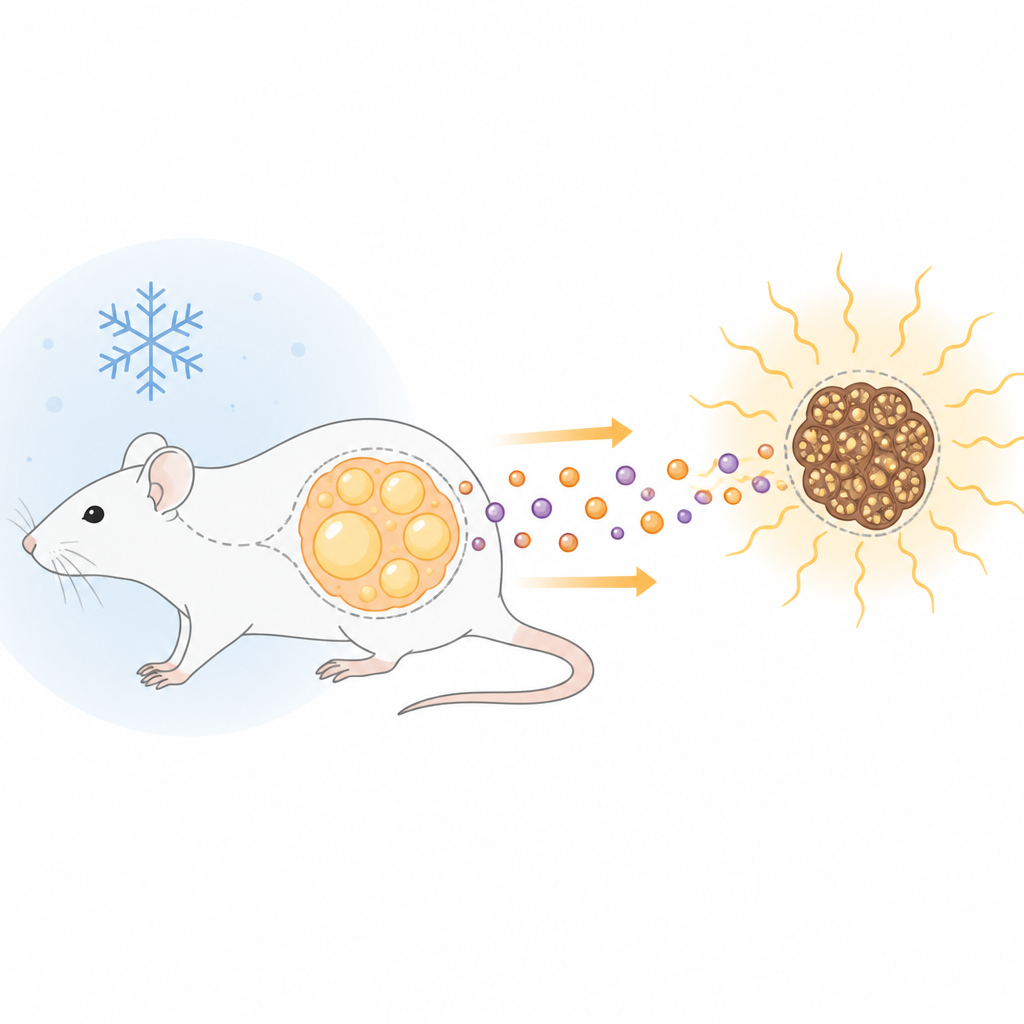
When we step into the cold, our bodies quickly switch on hidden “heaters” inside certain fat cells to keep us warm. This study uncovers a surprising conversation between different kinds of fat that helps maintain this inner heating system over many hours of cold exposure. Understanding this dialogue not only explains how we survive the cold but may also hint at safer ways to influence metabolism and body weight.
The Two Types of Fat Heaters
Our bodies contain more than one type of fat. Brown fat is packed with tiny power plants that burn fuel to make heat rather than store energy. Under longer-lasting cold, ordinary white fat can partly change into “beige” fat, gaining some of the same heating abilities. Traditionally, scientists thought that nerves releasing a chemical called norepinephrine were the main on switch for these heat-making fat cells. The nerves tell brown and beige fat to burn fat and sugar, helping to keep core temperature steady.
When Nerve Signals Run Low
The researchers found that in mice exposed to strong cold, norepinephrine inside brown fat spikes early but then drops, even while the animals stay warm and their brown fat keeps working. They went a step further and cut the sympathetic nerves going into brown fat, which almost removes local norepinephrine. At very low temperatures the mice struggled at first, showing this nerve signal is crucial for rapid heating. But at milder cold, those same nerve-cut mice could still maintain body temperature and brown fat activity. This suggested that another, blood-borne signal must step in when nerve-based control fades.
A Message Sent From White Fat
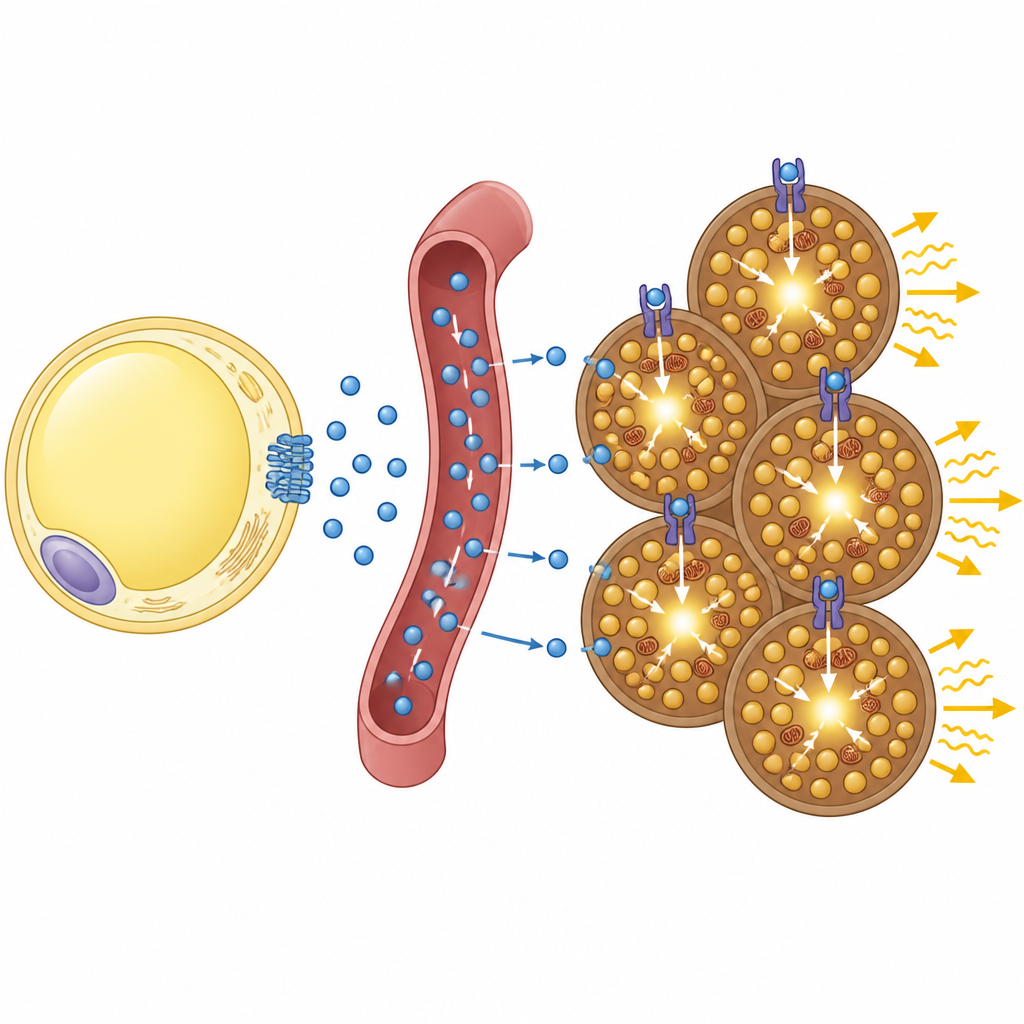
Using protein hunting techniques on mouse blood, the team identified a substance called soluble ST2 (sST2) that rose strongly when nerve supply to brown fat was removed and the animals were cooled. They traced the source of sST2 mainly to a deep white fat depot in the abdomen. There, cold-triggered nerve signals acting on specific receptors in white fat cells switch on a protein called CREB1, which in turn boosts the production and release of sST2 into the bloodstream. The authors showed that this pathway works in both mice and human fat samples treated in the lab, confirming that white fat behaves as an active sender of this chemical message.
How the Signal Supercharges Brown Fat
Once in the circulation, sST2 travels to brown fat and binds directly to adrenergic receptors on the brown fat cell surface, especially a form known as the beta-3 receptor. This binding strengthens the same internal signaling route normally triggered by norepinephrine, raising activity of enzymes, increasing expression of heat-related genes such as UCP1, and keeping fat burning high. Mice engineered to lack sST2 could not sustain brown fat heating during prolonged cold, developed swollen, damaged brown fat mitochondria, and showed lower overall energy expenditure. Importantly, these effects did not depend on another molecule called IL-33, even though sST2 is best known for interacting with it in the immune system.
From Heat Production to Beige Fat
Beyond simply keeping brown fat running, sST2 also nudged white fat toward a beige, heat-producing state. In mice, raising sST2 levels increased beige-like cells in subcutaneous fat, along with higher expression of many thermogenic genes and more active mitochondria. In both mouse and human fat tissues studied outside the body, sST2 worked together with drugs that stimulate beta-3 receptors, such as mirabegron, to strongly boost the beige program. These combinations enhanced oxygen use and gene activity linked to fat burning, suggesting that sST2 acts like a volume knob that amplifies the effect of lower drug doses.
Why This Matters for Health
In simple terms, this work shows that white fat can talk to brown fat through a circulating messenger, sST2, to keep our internal heaters burning when nerve signals alone are not enough. This white-to-brown communication helps maintain body temperature during prolonged cold and promotes the conversion of some white fat into beige fat. Because activating brown and beige fat can improve how the body handles sugar and fat, carefully harnessing the sST2 pathway together with existing beta-3 receptor drugs might one day offer a new approach to supporting metabolic health, while avoiding some of the side effects of stronger nerve-like stimulation.
Citation: Xue, J., Chen, D., Wang, C. et al. WAT-to-BAT communication facilitates the sustained activation of BAT thermogenesis during cold exposure. Cell Discov 12, 37 (2026). https://doi.org/10.1038/s41421-026-00891-8
Keywords: brown fat, thermogenesis, adipokine, energy metabolism, cold exposure