Clear Sky Science · en
ADA2-deficient cells exhibit increased levels of cell death and metabolic disturbances
When the Body’s Cleanup Crew Goes Awry
Some rare immune diseases reveal weak points in our cells that matter for many more people than the few who carry the diagnosis. This study looks at one such disorder, called deficiency of adenosine deaminase 2 (DADA2), in which patients suffer inflammation, infections, and bone marrow failure. By asking why their immune cells die so easily and grow so poorly, the researchers uncover clues about a basic cellular power line—the way cells process sugar to build vital molecules and protect themselves from stress.
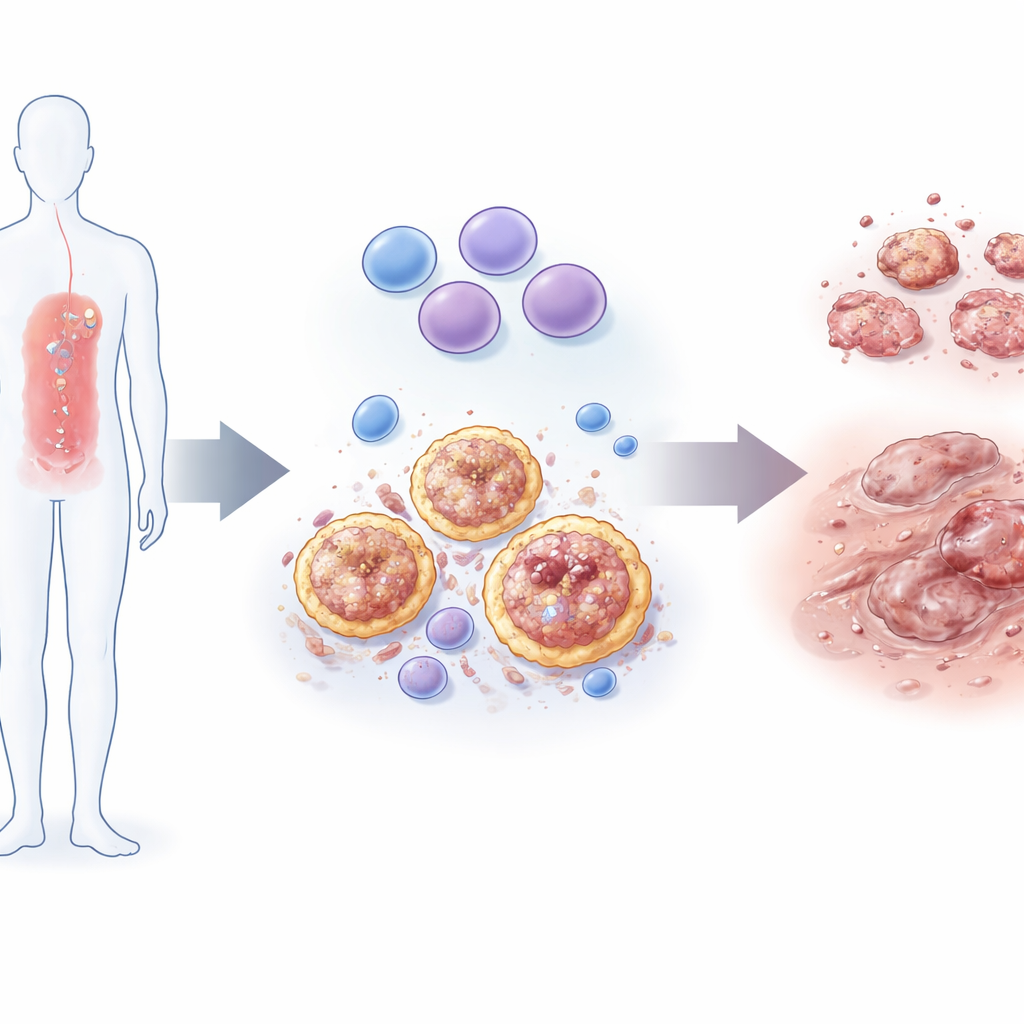
Cells Under Unexpected Strain
The researchers examined blood cells from people with DADA2 and compared them to cells from healthy volunteers, as well as to lab-grown immune cells engineered to lack the ADA2 protein. Across these different systems, one pattern stood out: cells missing ADA2 died more often, even when kept in calm laboratory conditions without obvious stress. This increased “background” loss affected several types of immune cells, including monocytes and T cells, and tended to be more pronounced in patients with more severe disease, regardless of whether their main problems were inflammation, infections, or bone marrow failure.
Not the Usual Paths to Cell Death
Inflammatory illnesses are often driven by specific, well-studied forms of regulated cell death. These include apoptosis (an orderly self-destruct program), necroptosis and pyroptosis (highly inflammatory forms of cell demise), and ferroptosis (cell death linked to iron and damaged fats). The team systematically blocked each of these pathways using targeted drugs in patient cells and ADA2-deficient cell lines. Surprisingly, none of these interventions improved cell survival. Even drugs that mimic current patient treatments—such as tumor necrosis factor (TNF) blockers, JAK inhibitors that dampen interferon signals, or inhibitors of the DNA-sensing STING pathway—failed to rescue the fragile cells. Bathing healthy cells in fluid taken from DADA2 cells also did not reproduce the problem, and simply adding back normal ADA2 protein did not reverse it, suggesting that the defect is built into the cells themselves rather than caused by their surroundings.
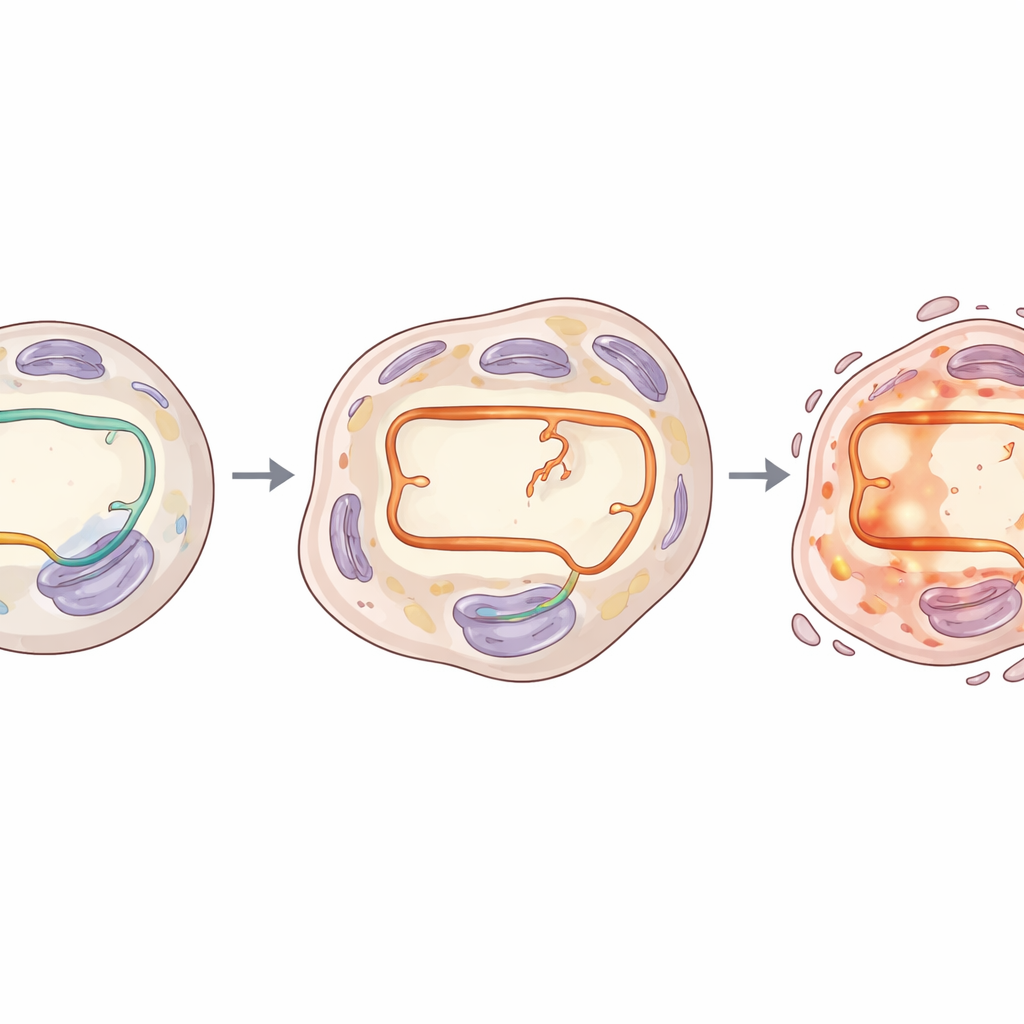
Hidden Problems in Cellular Fuel Use
Because ADA2-deficient cells grew slowly and appeared larger and more irregular under the microscope, the scientists probed their metabolism—the chemistry that turns nutrients into building blocks and defenses. Using labeled glucose, they tracked how sugar atoms flowed through cellular pathways. They found that cells lacking ADA2 had trouble feeding carbon into the pentose phosphate pathway, a side route of sugar breakdown that generates the “sugar backbones” of DNA and RNA and supplies reducing power to keep antioxidant systems running. Key molecules built from this pathway, such as nucleotides and related compounds, were both less labeled and less abundant in ADA2-deficient cells. Analyses of single-cell RNA data from earlier work supported this picture, showing reduced activity of an enzyme central to this pathway.
Oxidative Stress and a Hint of Reversibility
One important role of the pentose phosphate pathway is to maintain the cell’s defenses against reactive oxygen species—chemically aggressive by-products of metabolism. In cell lines lacking ADA2 and in blood cells from patients, the team measured higher levels of these reactive molecules at baseline, suggesting that antioxidant defenses were stretched thin. When they added external oxidants, differences between healthy and ADA2-deficient cells shrank, consistent with both groups being pushed to their limits. Strikingly, in a patient who had undergone a bone marrow transplant—replacing their blood-forming cells with donor cells—the reactive oxygen levels in immune cells returned close to normal, mirroring the clinical improvement.
What This Means for Patients and Beyond
In plain terms, this work shows that in DADA2, immune cells are fragile not because they are over-activating one of the well-known “suicide programs,” but because their internal chemistry—especially how they channel glucose into protective and building pathways—is off balance. Their weakened pentose phosphate pathway leaves them short on key molecular parts and less able to neutralize damaging oxygen species, making them more likely to die prematurely. For patients, this helps explain stubborn bone marrow failure and points toward metabolism and oxidative stress as new directions for therapy. More broadly, it illustrates how a subtle fault in a single enzyme can ripple through basic cell metabolism and survival, offering insights that may inform other inflammatory and bone marrow disorders.
Citation: Ehlers, L., Wouters, M., Pillay, B. et al. ADA2-deficient cells exhibit increased levels of cell death and metabolic disturbances. Cell Death Discov. 12, 167 (2026). https://doi.org/10.1038/s41420-026-03027-9
Keywords: DADA2, immune cell death, pentose phosphate pathway, oxidative stress, bone marrow failure