Clear Sky Science · en
CXCR4, CXCR7 and PBRM1 are responsible for everolimus and cabozantinib resistance in human renal cancer cells
Why cancer drugs sometimes stop working
Many people with advanced kidney cancer now live longer thanks to targeted drugs that slow tumor growth. Yet, over time, these medicines often lose their punch, and tumors start growing again. This study looks inside kidney cancer cells to uncover why two important drugs, everolimus and cabozantinib, can stop working, and it points to a trio of molecular switches that could be key to restoring treatment power.
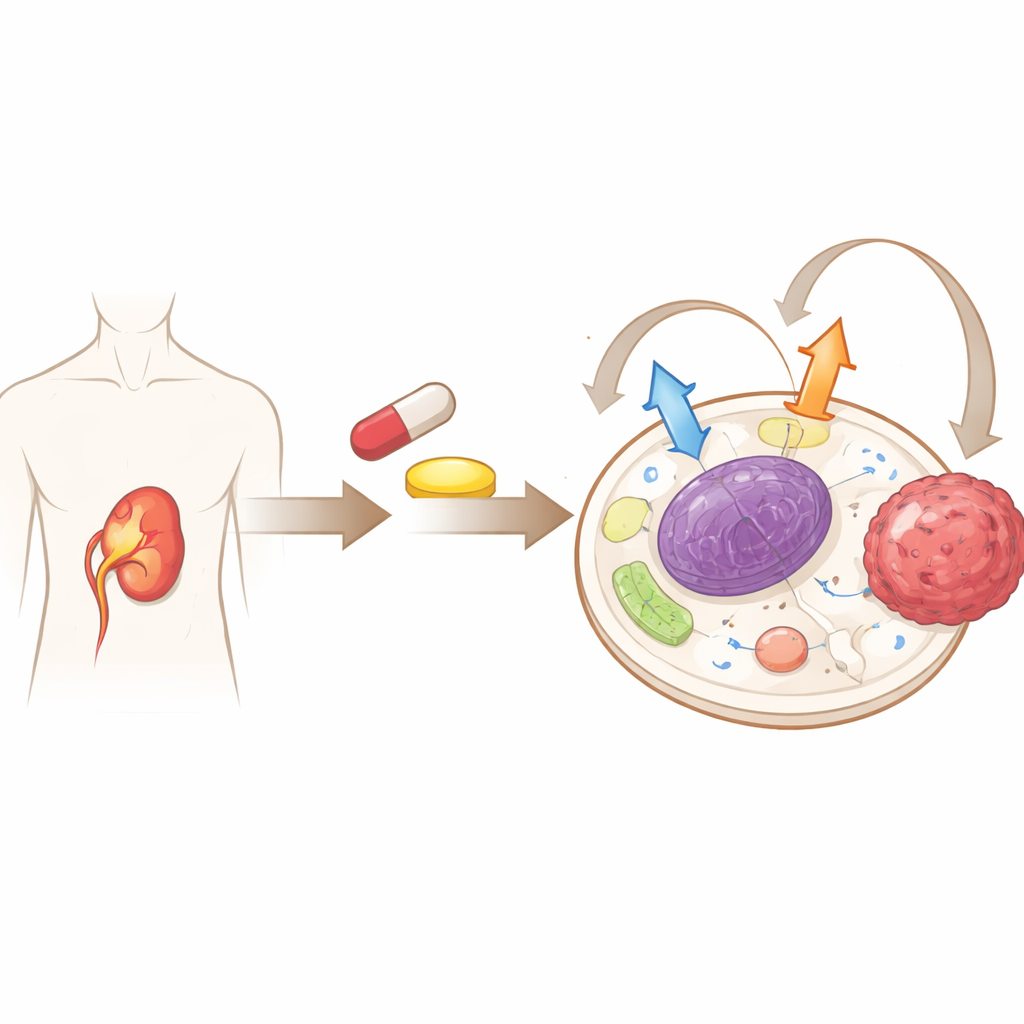
The problem of stubborn kidney tumors
Clear cell renal cell carcinoma is the most common form of kidney cancer. Modern treatments target growth signals that tumors use to feed themselves and divide. Everolimus blocks a growth-control hub inside cells called mTOR, while cabozantinib blocks several growth-stimulating receptors on the cell surface. Despite initial success, many patients eventually see their cancer progress, suggesting that tumor cells rewire their internal circuitry to dodge these drugs. Understanding that rewiring is crucial for designing the next generation of therapies.
How researchers modeled drug resistance in the lab
The team grew human kidney cancer cells (A498) in the presence of increasing doses of everolimus for many months, gradually selecting cells that could survive despite the drug. They then compared the genetic activity of these resistant cells with the original, sensitive cells. The resistant cells showed a clear pattern: they made much more of a chromatin-remodeling protein called PBRM1 and more mTOR, but much less of two surface receptors, CXCR4 and CXCR7, which normally sense chemical signals outside the cell. Similar changes appeared in cells made resistant to cabozantinib, hinting at a shared resistance program for the two drugs.
Flipping the switches to restore drug sensitivity
Next, the scientists tested whether reversing these molecular changes could make the cancer cells sensitive again. When they reduced PBRM1 levels in resistant cells, the cells became more vulnerable to everolimus, though not fully. This PBRM1 loss also revived CXCR7, one of the missing receptors, by weakening the action of a repressor protein called YY1. However, CXCR4, the other receptor, stayed low because it was held down by a different repressor, FOXP3, which worked independently of PBRM1. To probe CXCR4’s importance, the researchers forced resistant cells to produce more CXCR4. This single change fully restored everolimus sensitivity and also lowered PBRM1 and mTOR, revealing a feedback loop between the receptor at the surface and the growth machinery inside the cell.
Cross-resistance to another key drug
When the team exposed the everolimus-resistant cells to cabozantinib, the cells also withstood this second drug, showing “cross-resistance.” Strikingly, reducing PBRM1 or boosting CXCR4 made the cells sensitive to cabozantinib again, just as it did for everolimus. Cells made directly resistant to cabozantinib developed a similar profile: more PBRM1 and mTOR, less CXCR4 and CXCR7, and changes in other growth receptors such as AXL and MER. This suggests that kidney cancer cells can adopt a common survival strategy that protects them from both an internal growth blocker (everolimus) and an external receptor blocker (cabozantinib).
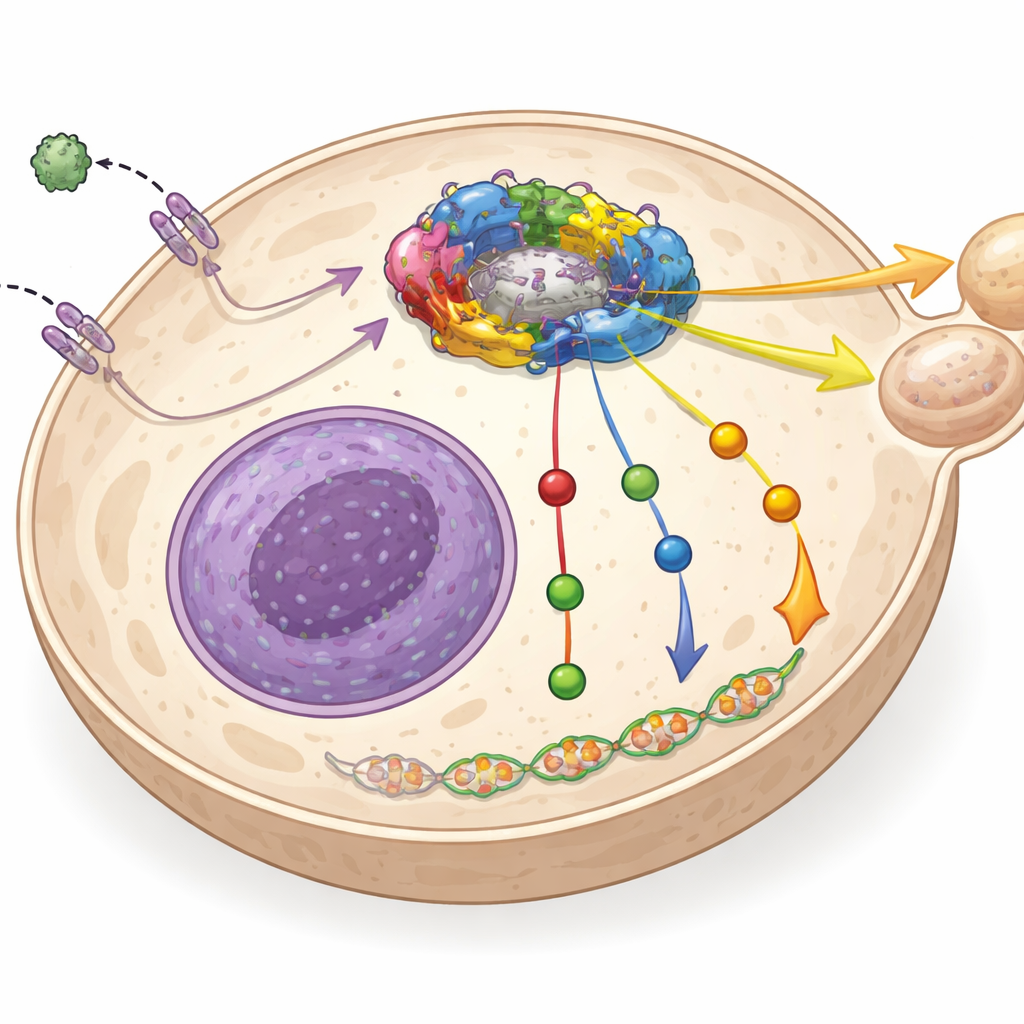
What these findings mean for patients
In patient tumor data, PBRM1 usually appears protective overall, but this study shows that in certain genetic settings, high PBRM1 can instead help tumors resist therapy. Together, the results highlight PBRM1 and the CXCR4/CXCR7 pair as central control knobs for how kidney cancer cells respond to everolimus and cabozantinib. For a layperson, the takeaway is that some tumors become drug-resistant by turning down “antennae” on their surface and turning up internal “volume knobs” that drive growth. By learning how to reset these knobs—through drugs that target PBRM1, FOXP3, YY1, or the receptors themselves—future treatments may re-sensitize resistant tumors and extend the benefits of existing kidney cancer therapies.
Citation: Auletta, F., Ieranò, C., Di Febbraro, D.G. et al. CXCR4, CXCR7 and PBRM1 are responsible for everolimus and cabozantinib resistance in human renal cancer cells. Cell Death Discov. 12, 202 (2026). https://doi.org/10.1038/s41420-026-03026-w
Keywords: kidney cancer, drug resistance, everolimus, cabozantinib, PBRM1