Clear Sky Science · en
Dapagliflozin regulates chondrocyte homeostasis and protects against osteoarthritis via targets AMPKα and SGLT2
New hope for aching joints
Osteoarthritis is a leading cause of pain and disability, yet most current treatments only dull the ache without slowing the wear and tear inside the joint. This study explores whether dapagliflozin, a pill already used for type 2 diabetes, can help protect the smooth cartilage that cushions our joints, and reveals how it acts on the very cells that build and maintain that tissue.
How joint cartilage wears down
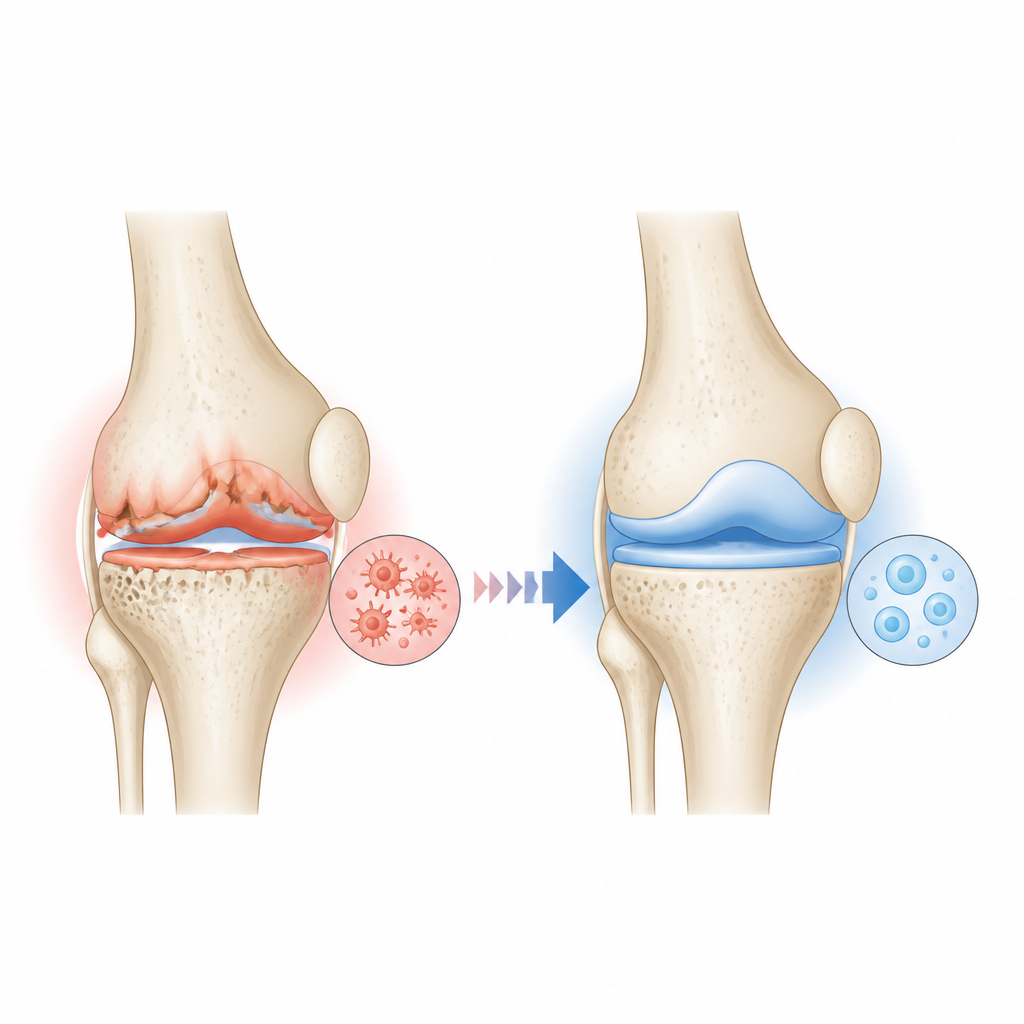
In healthy joints, cartilage cells constantly balance “building up” and “breaking down” of the cartilage matrix that gives knees and hips their smooth glide. In osteoarthritis this balance is lost: inflammatory signals and stress push cells toward an overactive breakdown mode, while new cartilage is made more slowly. Over time, the cartilage thins, the underlying bone stiffens, and painful bony outgrowths can appear. The authors focused on these cartilage cells, taken from people with and without osteoarthritis, and on a well-established mouse model of joint injury, to ask whether dapagliflozin could nudge the system back toward balance.
A diabetes drug that calms stressed cartilage cells
In dishes of human cartilage cells exposed to a strong inflammatory signal, dapagliflozin dialed down markers linked to breakdown and inflammation, while boosting genes and proteins tied to cartilage building. The same pattern appeared when cartilage cells and tissue were taken from people with osteoarthritis: higher doses of the drug reduced inflammatory and destructive molecules and increased key structural components of cartilage. Staining methods that color the cartilage matrix showed that cells treated with dapagliflozin held onto more of their protective material over days, suggesting a real shift in cell behavior rather than a short-lived effect.
Protection seen in injured mouse knees
The team then turned to mice whose knee ligaments had been surgically altered to trigger osteoarthritis-like damage. Animals given dapagliflozin by mouth after surgery kept thicker, more orderly cartilage with more cartilage cells, and developed fewer bony spurs compared with untreated mice. The underlying bone, which typically becomes abnormally thick and dense as disease progresses, also looked healthier in treated animals. Importantly, the drug did not significantly change body weight or blood sugar in these otherwise healthy mice, pointing toward a direct effect on the joint itself rather than an indirect benefit from changes in metabolism.
Rebalancing cell energy and cleanup systems
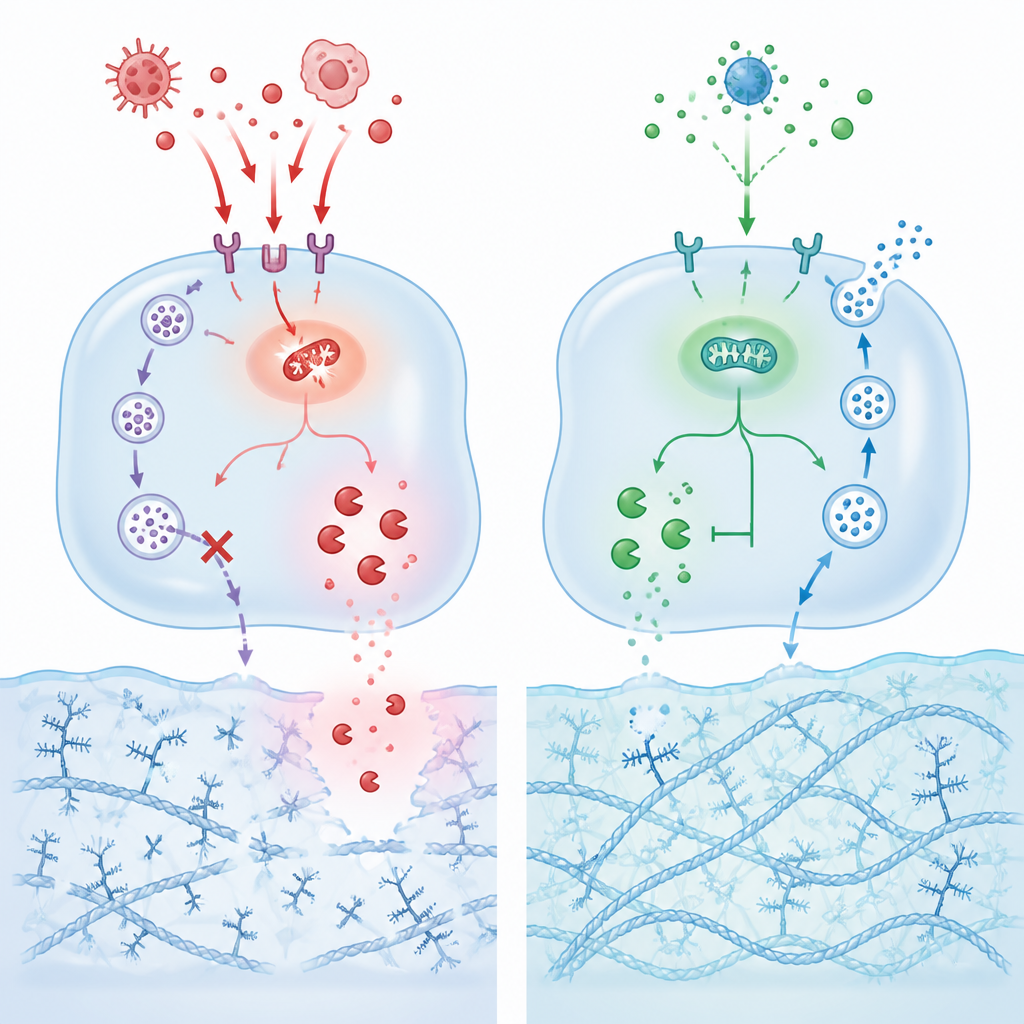
To uncover how dapagliflozin works inside cartilage cells, the researchers analyzed global gene activity and key signaling switches. They found that the drug activates AMPK, a master energy sensor inside cells, and quiets MAPK pathways that promote inflammation and damage. Unusually, dapagliflozin did not turn on AMPK by creating energy stress; instead, it bound directly to the AMPK alpha subunit and boosted its activity, revealing a new direct target. At the same time, the drug blocked the effects of SGLT2, a transporter protein that was found at higher levels in osteoarthritic cartilage and that, when overactive, promoted inflammation, blocked the cells’ recycling process (autophagy), and strengthened signals that shut this cleanup down.
Two targets that work together
By selectively reducing AMPK and SGLT2 in cartilage cells, the authors showed that dapagliflozin’s cartilage-protective actions rely on both. Its ability to help cells build cartilage required AMPK, while its calming effect on inflammation depended on both AMPK and SGLT2. Blocking SGLT2 or mimicking AMPK activation eased the harmful activation of MAPK and a growth pathway called mTORC1, and restored the recycling machinery that helps stressed cells survive. In this way, dapagliflozin acts like a coordinator, directly switching on a protective energy sensor while turning down a transporter that pushes cells toward damage.
What this could mean for people with arthritis
For people living with osteoarthritis, these findings suggest that a drug already in wide clinical use for diabetes might someday help protect joint cartilage, not just mask pain. In laboratory cells and mouse joints, dapagliflozin shifted cartilage cells back toward a healthier balance of building and breakdown, reduced harmful inflammation, and revived their internal cleanup systems by acting on AMPK and SGLT2 together. While human trials will be needed to test safety, dosing, and real-world benefit in people with sore knees and hips, the work points to a future in which targeting cell energy and recycling could become a new way to slow the grind of osteoarthritis.
Citation: Liu, K., Li, Z., Wang, C. et al. Dapagliflozin regulates chondrocyte homeostasis and protects against osteoarthritis via targets AMPKα and SGLT2. Cell Death Discov. 12, 217 (2026). https://doi.org/10.1038/s41420-026-03016-y
Keywords: osteoarthritis, cartilage, dapagliflozin, AMPK, SGLT2