Clear Sky Science · en
DCTPP1 orchestrates dCTP pool dynamics and mtDNA stability in quiescent cells
Keeping the Cell’s Power Plants Healthy
Every cell in our body relies on tiny internal “power plants” called mitochondria to produce energy. These structures carry their own small genome, mitochondrial DNA (mtDNA), which must be copied and repaired throughout life, even in cells that have stopped dividing. This study uncovers how a little-known enzyme, DCTPP1, helps control the chemical building blocks needed for mtDNA and shows that tuning this enzyme could help treat rare diseases where mitochondrial DNA is dangerously depleted.
The Building Blocks of Life in Balance
DNA is built from four chemical bricks known as deoxynucleotides, and cells must keep these bricks in the right proportions. Too much or too little of any one type can damage DNA and threaten cell survival. In non-dividing, or quiescent, cells the nucleus is largely “off duty” for DNA copying, but mitochondria still need a steady supply of these bricks to maintain their own DNA. The researchers focused on DCTPP1, an enzyme that breaks down one specific brick, dCTP, and asked how it behaves in resting human lung fibroblasts, a standard model for studying mitochondrial homeostasis.
When Cells Rest, DCTPP1 Moves to the Power Plants
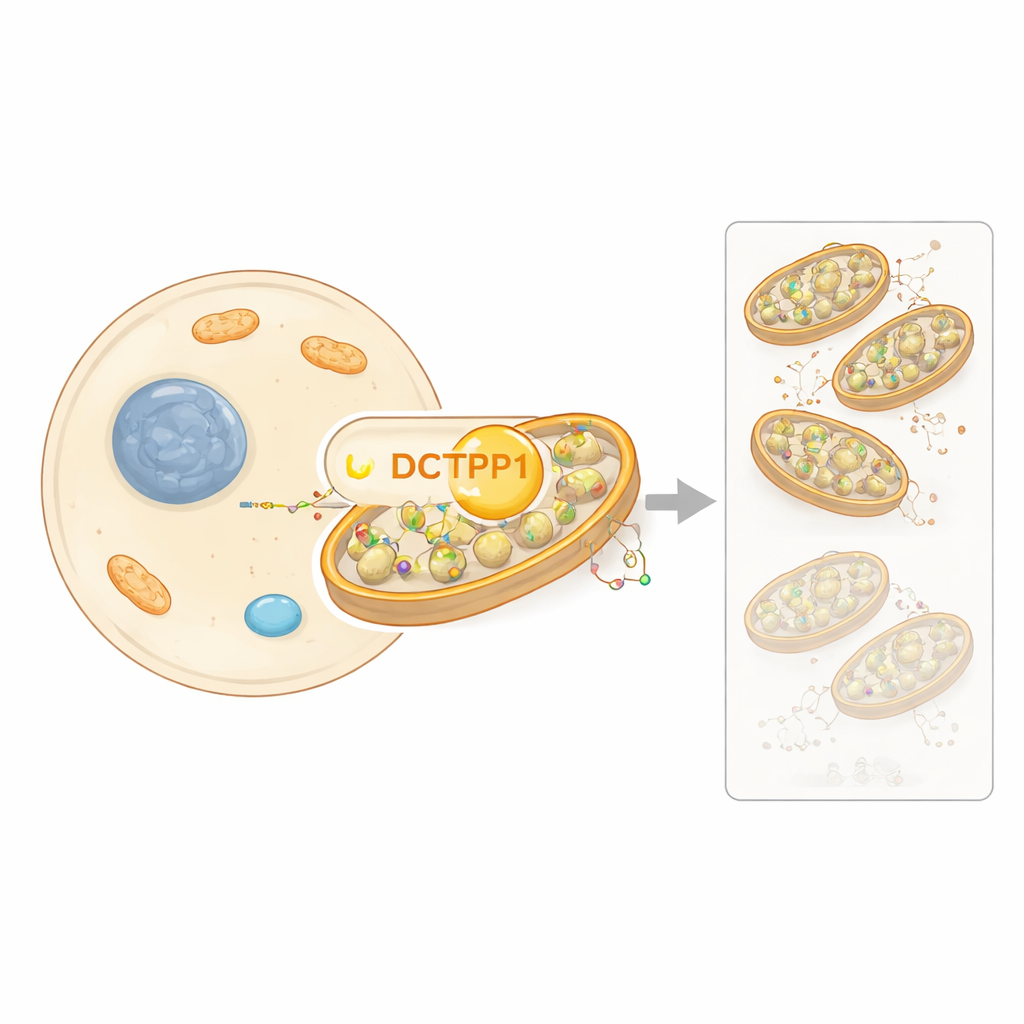
By starving the cells of growth serum, the team pushed them into a long-lasting resting state without killing them. They then measured a panel of enzymes that make, recycle, or destroy DNA building blocks. Many enzymes tied to bulk DNA synthesis were dialed down, as expected. Strikingly, they found that the DCTPP1 that remained shifted its location: instead of being spread across the nucleus and cytosol, most of it now sat inside mitochondria. This suggested that, in resting cells, DCTPP1 might specialize in managing the local pool of dCTP right where mtDNA replication occurs.
Removing a Brake Changes the Chemical Pools
To test DCTPP1’s role, the scientists used small interfering RNAs to drastically lower its levels in both dividing and resting cells. In dividing cells, this led to slower growth and a rise in both dCTP and another building block, dTTP. In quiescent cells, DCTPP1 loss caused an even more dramatic reshaping of the chemical pools: dCTP and dGTP became especially abundant, with dGTP dominating the overall mixture. These shifts confirmed that DCTPP1 normally acts as a brake on certain nucleotides and hinted that loosening this brake could influence how well mitochondria maintain their DNA.
Protecting Mitochondrial DNA Under Stress
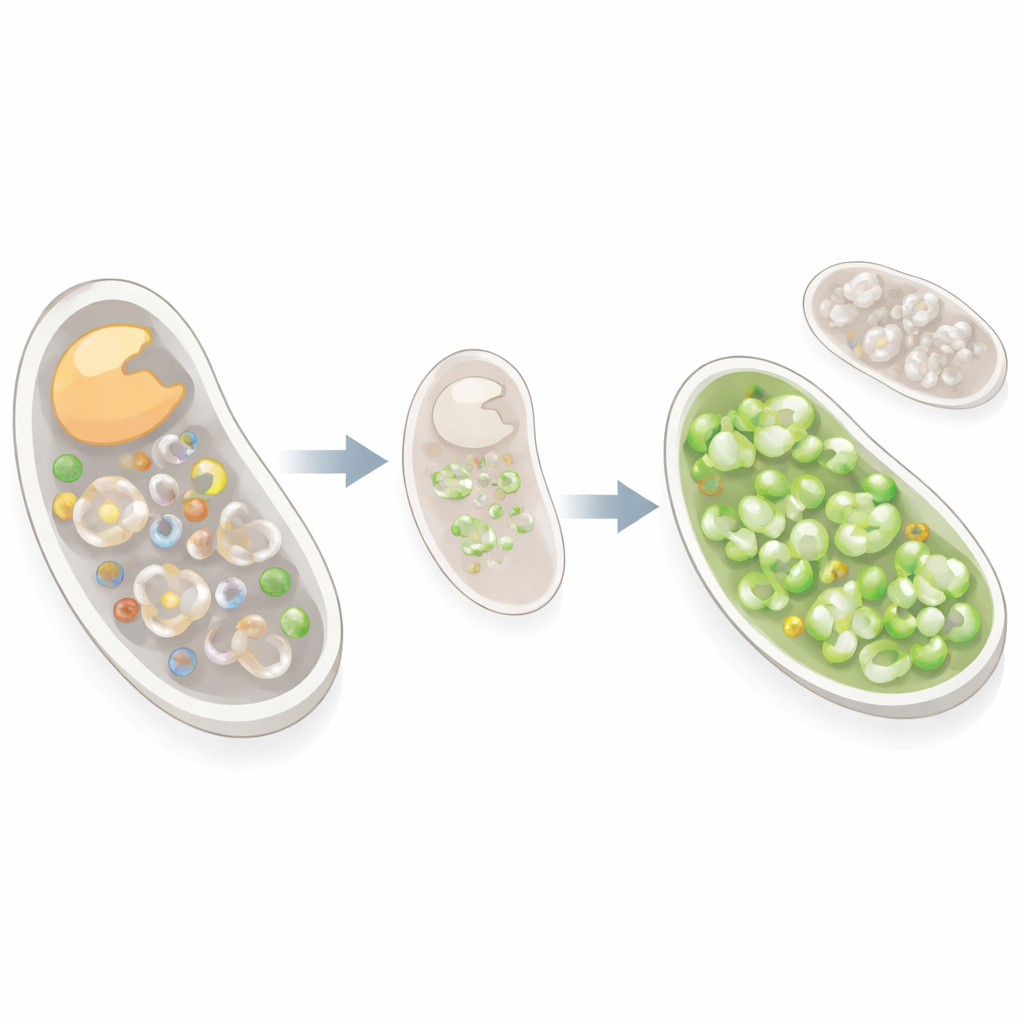
The team next looked directly at mitochondrial function and genome stability. Using fluorescent dyes and DNA-labeling techniques, they showed that, in resting cells, reducing DCTPP1 actually preserved mitochondrial performance and increased mtDNA copy number. They then turned to a lab model of a severe human disease, mitochondrial neurogastrointestinal encephalomyopathy (MNGIE), in which a defect in breaking down thymidine skews the balance of DNA building blocks and leads to mtDNA depletion. By overloading cells with thymidine, the researchers reproduced this imbalance: mtDNA levels fell, but could be restored either by adding deoxycytidine or by knocking down DCTPP1, which expanded the dCTP pool and rescued mtDNA.
A Drug Target with Therapeutic Promise
Finally, the scientists tested a small-molecule inhibitor of DCTPP1, TH1217, in resting cells. At low doses, this compound was only mildly toxic but increased mtDNA copy number, particularly under thymidine overload that mimics MNGIE. Biochemical measurements showed that TH1217 boosted dCTP levels in line with its protective effect on mitochondrial DNA. Together, these findings suggest that carefully dampening DCTPP1 activity can rebalance the mitochondrial nucleotide mix and help guard mtDNA against depletion.
What This Means for Patients
In simple terms, this work identifies DCTPP1 as a molecular knob that cells use to fine-tune the supply of DNA building blocks inside mitochondria, especially in long-lived, non-dividing tissues such as brain and muscle. When dCTP is in short supply, as in mitochondrial DNA depletion syndromes like MNGIE, easing off this knob allows the cell to rebuild its stock and better maintain mitochondrial DNA. While more research is needed, including animal studies and safety testing, targeting DCTPP1 could become a new therapeutic strategy to stabilize the cell’s power plants in diseases driven by mtDNA loss.
Citation: Fernández, B., Pérez-Moreno, G., Martínez-Arribas, B. et al. DCTPP1 orchestrates dCTP pool dynamics and mtDNA stability in quiescent cells. Cell Death Dis 17, 404 (2026). https://doi.org/10.1038/s41419-026-08632-1
Keywords: mitochondrial DNA, nucleotide metabolism, DCTPP1, MNGIE, mitochondrial disease