Clear Sky Science · en
Declined RTN3 stabilizes DHCR7 to induce cholesterol-dependent tumor progression and MEK inhibitors insensitivity in thyroid cancer
Why this matters for patients
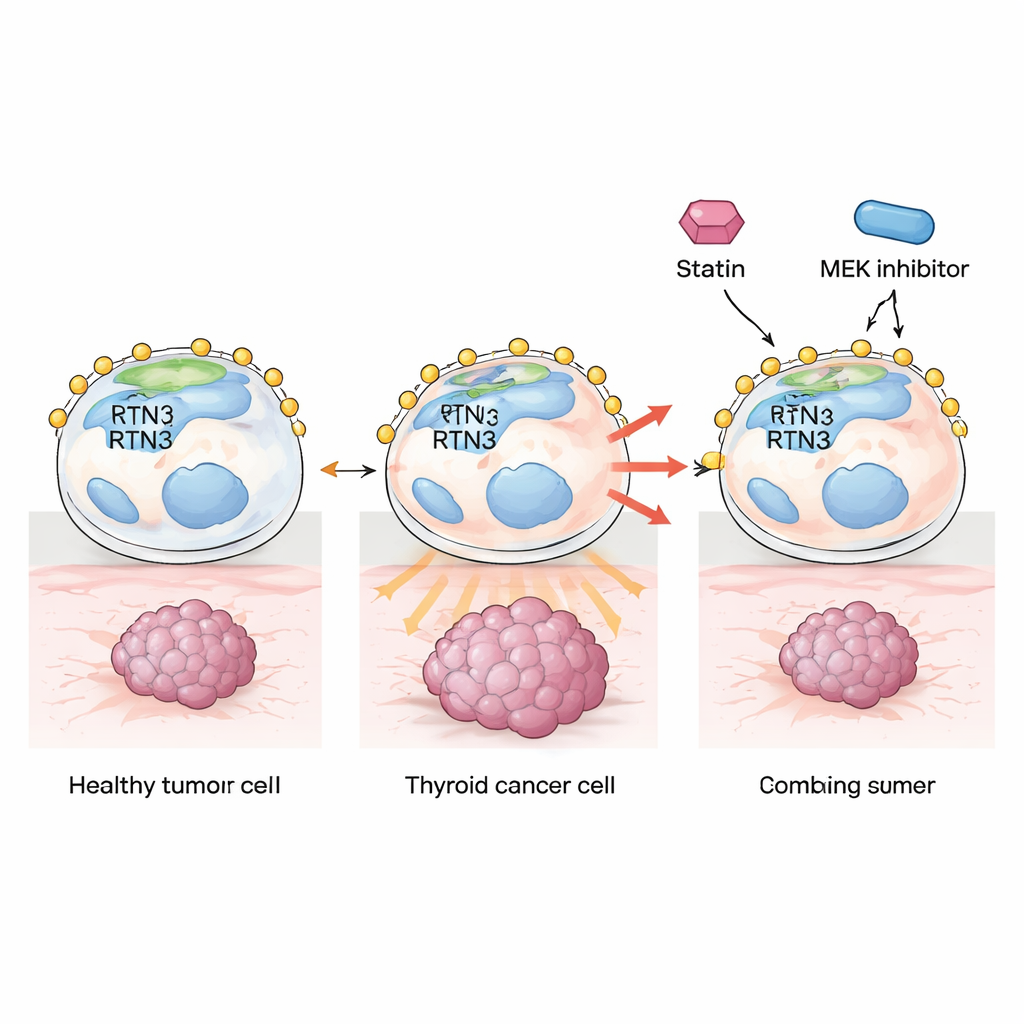
Thyroid cancer is usually highly treatable, yet a stubborn fraction of tumors learn to ignore modern targeted drugs and keep growing. This study uncovers how a little-known protein inside cells, RTN3, helps keep tumor growth and drug resistance in check by restraining cholesterol production. The findings suggest that an inexpensive class of heart medicines, statins, could be repurposed to boost the power of a key cancer drug in patients whose tumors have low RTN3 levels.
A hidden brake inside thyroid cells
Thyroid cancer is the most common cancer of the hormone system, and most patients do well with surgery, radioactive iodine, and targeted medicines. Still, 5–15% develop aggressive disease that returns, spreads, or stops responding to treatment. The authors focused on proteins in the endoplasmic reticulum, a membrane network inside cells where many building blocks, including fats and cholesterol, are made. One such protein, RTN3, was suspected to influence cancer behavior but had not been studied in thyroid tumors. By analyzing patient databases and tumor samples, the researchers found that RTN3 levels are markedly lower in thyroid cancers than in normal thyroid tissue, and especially low in more advanced tumors. Patients with low RTN3 had poorer progression-free survival, pointing to RTN3 as a natural brake on disease worsening.
When the brake fails, tumors speed up
To see what RTN3 does, the team removed it from thyroid cancer cell lines using gene-editing tools and also created cells that produce extra RTN3. Cells lacking RTN3 formed more colonies, divided faster, and migrated more readily in standard lab tests, while cells with added RTN3 did the opposite and slowed down. In mice, tumors built from RTN3-deficient cells grew larger and were less controlled by treatment than tumors with normal RTN3. Together, these experiments show that RTN3 behaves like a tumor suppressor: when it is lost, cancer cells gain a growth and spread advantage.
Cholesterol as fuel for growth signals
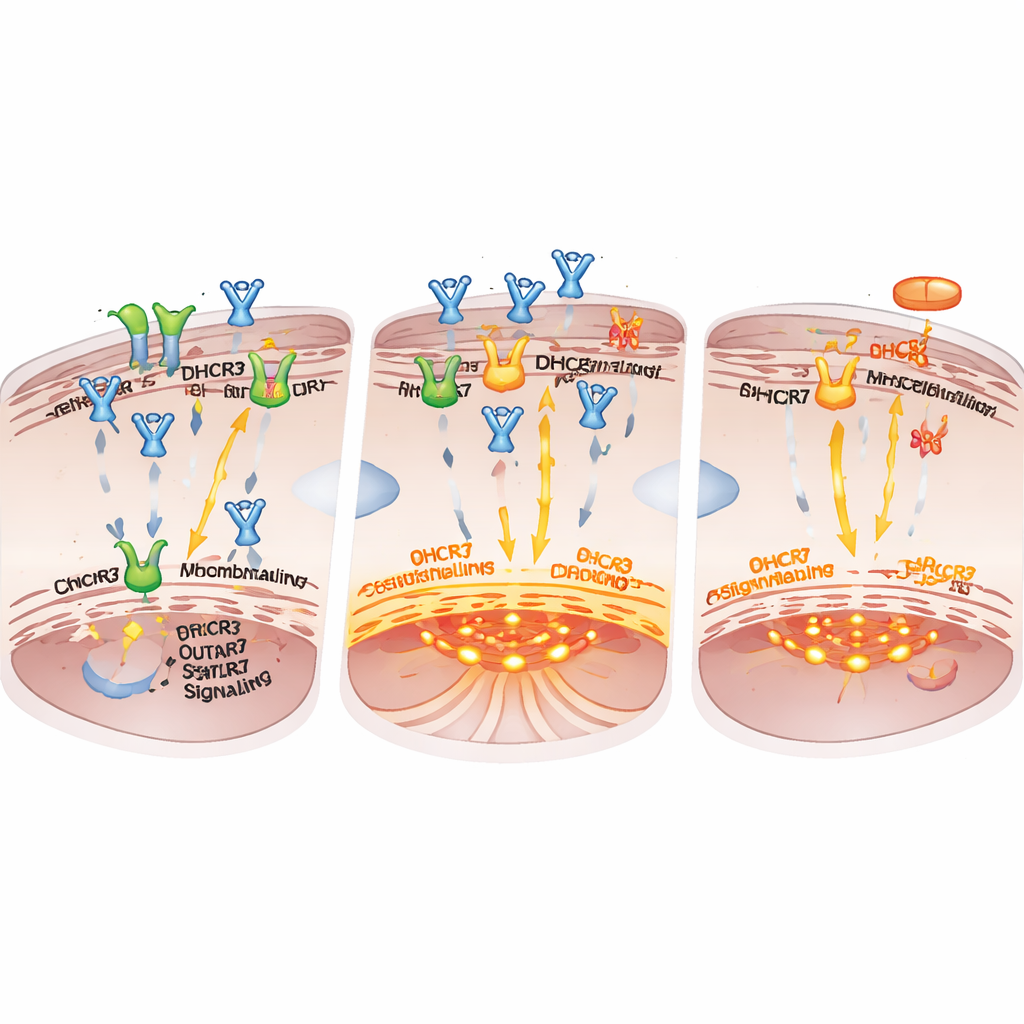
The next question was how RTN3 exerts this control. Using protein fishing techniques, the researchers discovered that RTN3 binds to DHCR7, a key enzyme near the end of the cholesterol-making pathway. RTN3 promotes the tagging of DHCR7 for destruction, lowering its levels. When RTN3 is reduced, DHCR7 becomes more stable, cholesterol production rises, and more cholesterol accumulates in cell membranes. This enriched membrane environment favors strong signaling through the EGFR–ERK pathway, a major route that tells cancer cells to grow and divide. The team showed that lowering DHCR7, or blocking cholesterol production with the statin drug Simvastatin, could reverse the extra growth and migration seen when RTN3 was missing.
Why some tumors shrug off MEK inhibitors
Many thyroid cancers are treated with drugs that block MEK, a key relay in the same ERK growth pathway. The authors tested three such drugs and found that removing RTN3 made cancer cells less sensitive to all of them, with the strongest effect seen for the MEK inhibitor Mirdametinib. In cells and in mouse tumors, Mirdametinib normally lowered ERK activity and slowed proliferation, but this benefit was sharply blunted when RTN3 was absent. Importantly, dialing down DHCR7 or adding Simvastatin restored much of the lost drug sensitivity, both in cell cultures and in mice. Tumors with low RTN3 that had been resistant to Mirdametinib shrank more when Simvastatin was added, and showed fewer cells actively dividing.
What this could mean for future care
For non-specialists, the key message is that some thyroid cancers become more dangerous and drug-resistant by ramping up cholesterol inside their cells, and that this is driven by loss of an internal safeguard protein, RTN3. By keeping the cholesterol-making enzyme DHCR7 in check, RTN3 normally helps dampen growth signals. When RTN3 is scarce, extra cholesterol boosts those signals and weakens the effect of MEK-blocking drugs like Mirdametinib. Because statins already safely lower cholesterol in millions of people, combining a statin such as Simvastatin with a MEK inhibitor could offer a practical new strategy for patients whose tumors have low RTN3 and are hard to treat.
Citation: Ren, A., Feng, N., Yang, T. et al. Declined RTN3 stabilizes DHCR7 to induce cholesterol-dependent tumor progression and MEK inhibitors insensitivity in thyroid cancer. Cell Death Dis 17, 306 (2026). https://doi.org/10.1038/s41419-026-08538-y
Keywords: thyroid cancer, cholesterol metabolism, drug resistance, statins, MEK inhibitors