Clear Sky Science · en
Donor-derived del[20q] following allogeneic-hematopoietic cell transplantation: a case with 26-year follow-up and literature review
Hidden Quirks in Donated Bone Marrow
Bone marrow transplants can be lifesaving for people with blood cancers, but what happens when the donor’s cells quietly carry their own genetic oddities? This article explores a rare situation in which a subtle DNA change in a donor’s blood-forming cells was passed to a transplant recipient and then followed for more than a quarter of a century. The story sheds light on how some genetic changes can remain harmless for decades, while others may pave the way to serious disease.
A Long-Term Story of Shared Blood
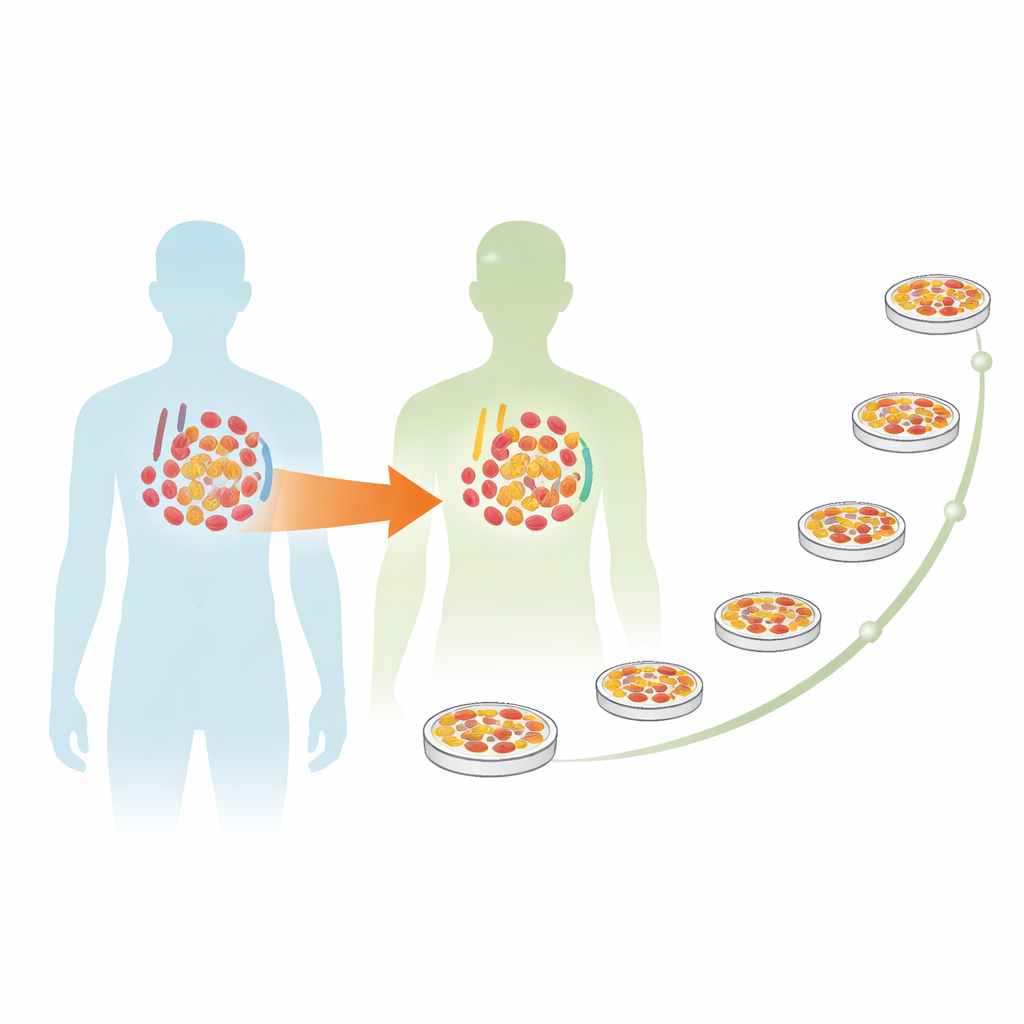
The centerpiece of the study is a woman who received a bone marrow transplant from her sister to treat a difficult type of lymphoma. The sister’s marrow, unknowingly, contained a small population of cells missing a chunk of DNA on one arm of chromosome 20, a defect called a 20q deletion. After the transplant, these donor cells took over the recipient’s blood system. Over time, tests showed that cells with this deletion became dominant in the recipient’s blood, especially in white blood cells that fight infection. Yet, remarkably, the recipient stayed healthy, with normal blood counts and no signs of blood cancer for 26 years.
Following a Genetic Footprint Over Decades
To understand this unusual case, the researchers used detailed laboratory tools to track the donor-derived cells. A technique called fluorescence in situ hybridization allowed them to count how many blood cells carried the missing piece of chromosome 20 in different cell types, such as infection-fighting cells and antibody-producing cells. Later, they applied modern gene sequencing to stored donor marrow and to the recipient’s blood collected 20 and 26 years after the transplant. These tests revealed very low-level changes in two well-known cancer-related genes, DNMT3A and TP53, in both donor and recipient samples, confirming that the same abnormal clone had been passed from sister to sister at the time of transplant.
When Donor Cells Become Dangerous
The researchers then asked a wider question: how often does this kind of donor-derived 20q deletion lead to trouble? They combed through the medical literature and identified 20 known transplant recipients whose donor cells carried this same chromosomal change. Most had received transplants from matched siblings, often for leukemia. In this combined group, the 20q deletion was usually discovered about a year and a half after transplant, and follow-up typically lasted three years. About one-third of these recipients eventually developed serious donor-derived blood disorders, such as myelodysplastic syndrome or acute leukemia, often around the same time the chromosome change was noticed.
Why Outcomes Diverge
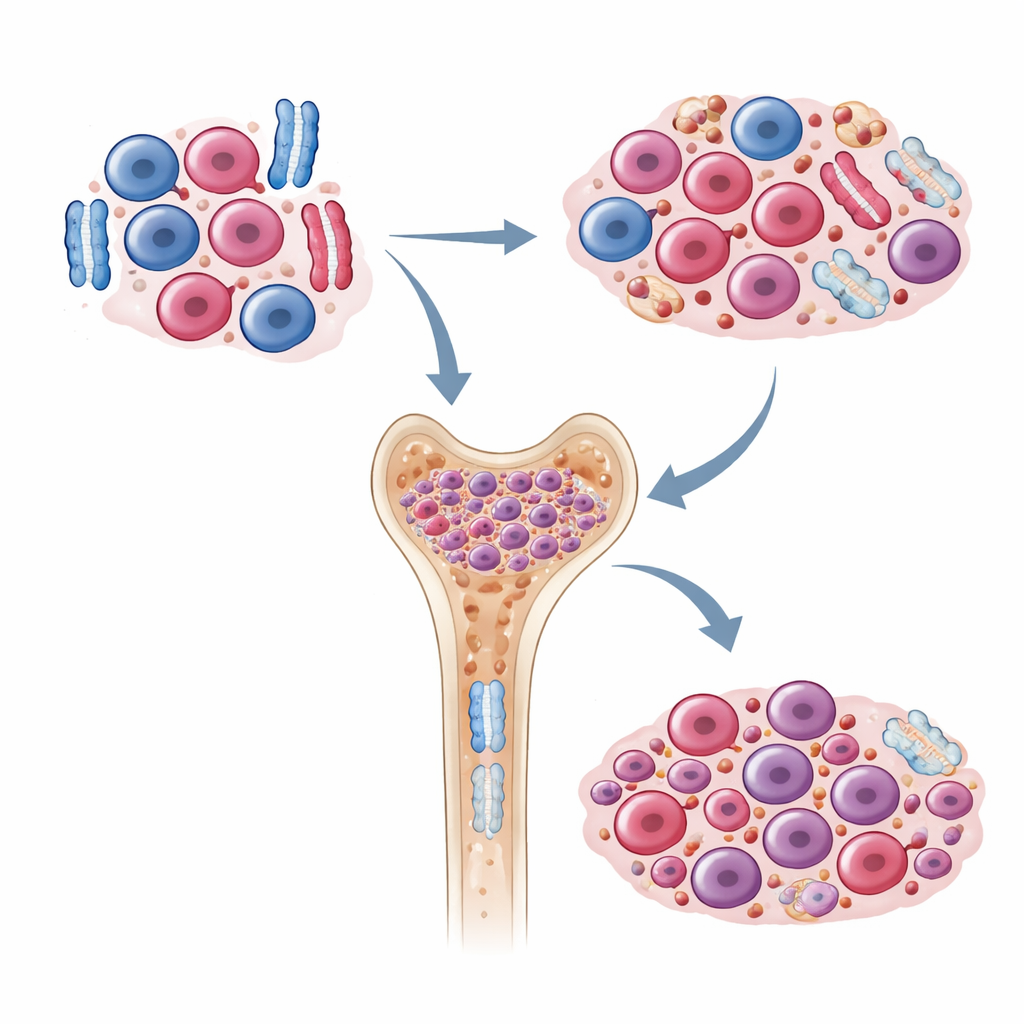
This side-by-side look at patients revealed striking variation. Some people, like the main case in this report, lived for decades with a dominant population of genetically altered donor cells yet never developed disease. Others, with seemingly similar chromosomal changes, progressed to aggressive blood cancers. In a handful of cases where additional genetic testing was done, some patients carried extra harmful mutations in genes involved in blood cell growth and control, while others showed no such changes. The authors suggest that environmental exposures, immune responses, the bone marrow environment, and the specific mix of genetic alterations likely all influence whether a donor-derived clone stays quiet or turns dangerous.
Rethinking Donor Screening and Follow-Up
The findings raise practical questions for transplant programs. Today, most donors are screened by medical history and routine blood tests, not by detailed chromosome analysis or deep gene sequencing. Yet studies now show that subtle age-related mutations in donor blood cells are common, especially in older adults. Some of these changes may be harmless or even helpful, while others may carry higher risk. The authors argue that rather than automatically excluding all donors with detectable clones, doctors should balance the urgency of the recipient’s disease, the availability of alternative donors, and the specific genetic changes present. Just as importantly, recipients of such grafts may benefit from long-term, structured monitoring to detect any warning signs early.
What This Means for Patients and Donors
In simple terms, this work shows that a donor’s mildly abnormal blood cells can take over a recipient’s marrow and remain peaceful for decades, even when they carry DNA changes often linked to cancer. At the same time, roughly one in three similar cases in the medical literature did progress to serious disease. The lesson is not to fear bone marrow transplantation, which remains a critical and often curative therapy, but to appreciate the genetic complexity behind it. With better genetic profiling of donors and long-term follow-up of recipients, doctors hope to distinguish harmless genetic quirks from truly risky ones and to tailor monitoring and treatment accordingly.
Citation: Bouley, C., Fang, M., Radich, J. et al. Donor-derived del[20q] following allogeneic-hematopoietic cell transplantation: a case with 26-year follow-up and literature review. Bone Marrow Transplant 61, 445–451 (2026). https://doi.org/10.1038/s41409-026-02801-8
Keywords: bone marrow transplantation, clonal hematopoiesis, chromosome 20q deletion, donor-derived leukemia, myelodysplastic syndrome