Clear Sky Science · en
Influence factors of early childhood caries risk among children aged 1–2 years in Beijing: a prospective cohort study
Why Baby Teeth Matter More Than You Think
To many parents, the tiny teeth that appear in a baby’s first years can seem temporary and unimportant. Yet those early teeth set the stage for a child’s health, comfort, and even confidence. This study from Beijing followed nearly a thousand toddlers to see which everyday habits—like snacking, bottle use, and toothbrushing—tip the balance toward healthy smiles or painful cavities. Its findings help parents, caregivers, and health workers understand which simple changes can have the biggest impact in the earliest years of life.
Following Young Children Over Time
Researchers tracked 919 children who were around two years old at the start of the study and followed them for about a year and a half. Parents answered questions about family dental history, feeding and snacking patterns, toothbrushing routines, and whether children saw a dentist. Dentists in community clinics examined each child’s teeth at the beginning and end of the study, counting how many baby teeth were decayed, missing because of decay, or filled. This allowed the team to see not only how common tooth decay was, but also how quickly new cavities appeared and which children were most likely to develop them.
Everyday Habits That Raise Cavity Risk
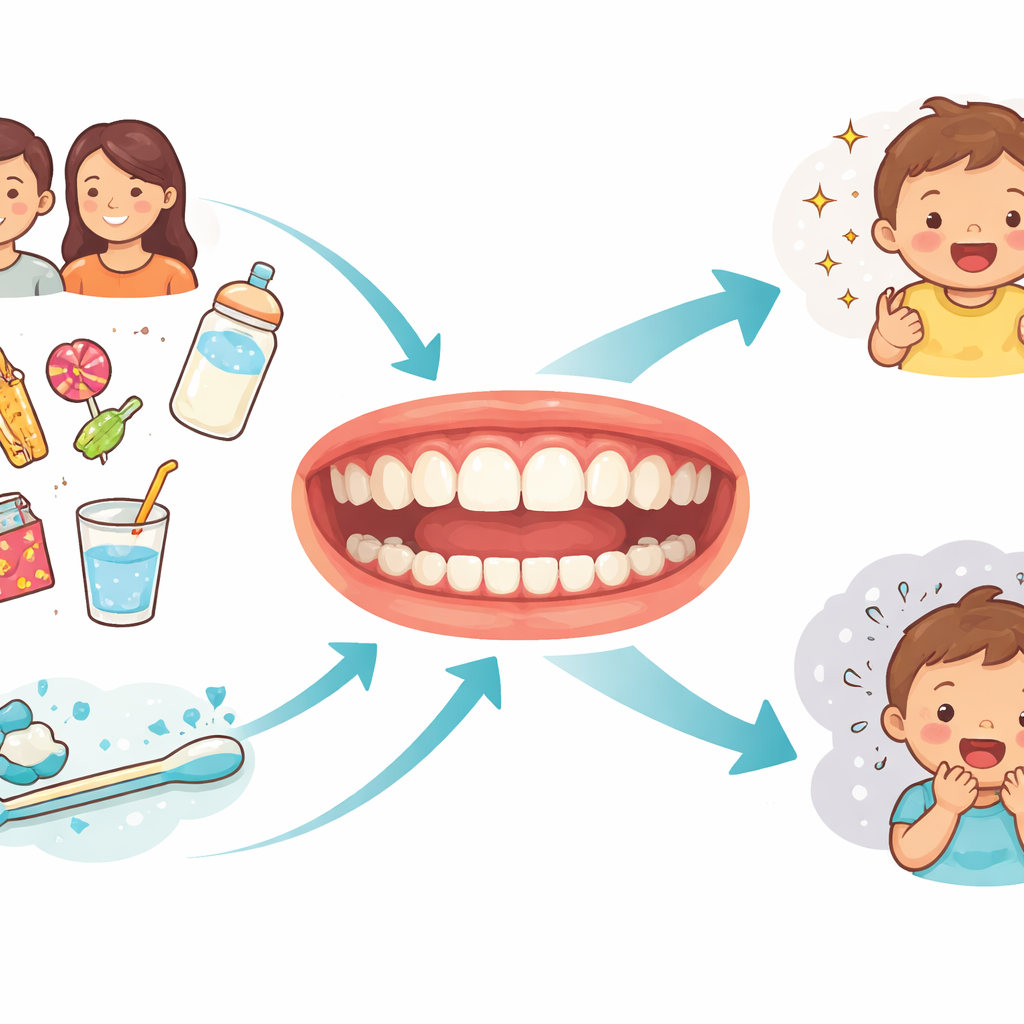
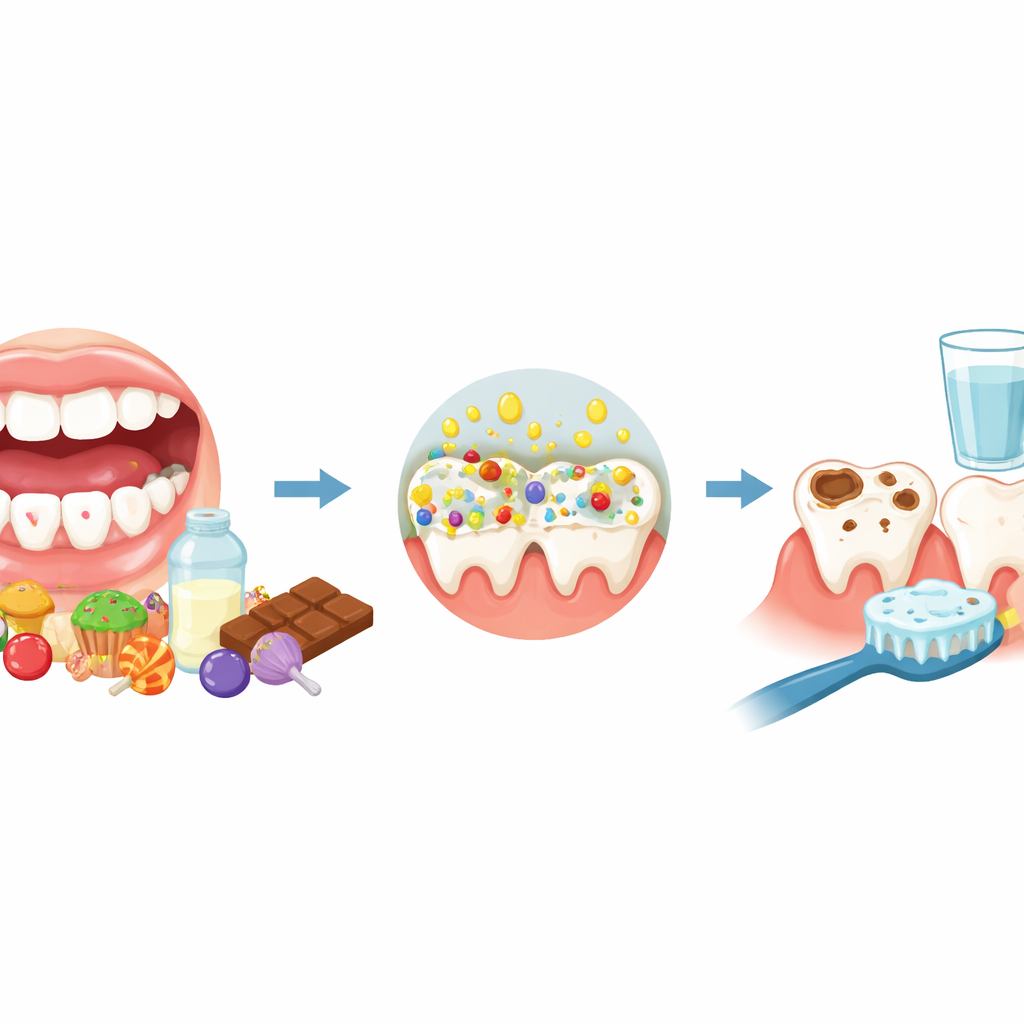
By the end of the study, nearly one in three children had developed at least one new cavity. Several familiar habits clearly raised the risk. Children who ate snacks two or more times a day or had candy daily were more likely to get cavities and to have larger increases in damaged teeth. Falling asleep with a bottle—especially when it contained milk or sweet drinks—was linked to more decay, as was brushing less often at bedtime. Children who rarely rinsed their mouths after meals, and those whose drinking water often contained added ingredients beyond plain boiled water, also faced more problems. Together, these patterns point to frequent sugar exposure and poor cleaning before sleep as key drivers of early childhood tooth decay.
Family Influence and Germ Sharing
The study also highlighted the powerful role of the family environment. When at least one parent had a history of cavities, their child was more likely to develop new decay, even when the child had been cavity-free at the start. Behaviors that share saliva—such as using the same spoon or cleaning a pacifier in an adult’s mouth—were linked to greater cavity risk in children who began the study with healthy teeth. These findings fit with what is known about cavity-causing germs: they are often passed from adults to children early in life, then thrive when sugary foods and poor cleaning give them a friendly home.
Why Starting Status Changes What Matters Most
A unique insight from this research is that a child’s starting point strongly changes how these risk factors play out. Children who already had cavities at the beginning of the study were much more likely to develop further decay than those who started with healthy teeth. For these children, the harmful effects of poor habits were still present but seemed less dramatic—possibly because their teeth were already badly affected, leaving limited room for the damage to get much worse during the study period. In contrast, for children whose teeth were initially sound, family dental history, saliva-sharing, rinsing after meals, drinking-water habits, and bedtime brushing made a clear difference in whether new cavities appeared.
What This Means for Parents and Health Programs
For families and health planners, the message is clear: early baby teeth deserve serious attention. The study shows that checking a child’s mouth for early cavities is one of the strongest clues to future trouble. It also shows that simple steps—limiting sugary snacks and candy, stopping bedtime bottle use, brushing carefully before sleep, encouraging rinsing after meals, and avoiding unnecessary saliva-sharing—can be especially powerful for children whose teeth are still cavity-free. For those who already have decay, improved habits remain important, but they should be combined with professional care such as fluoride treatments. By tailoring advice and care to a child’s starting dental health, communities can better protect young children from pain and long-term damage, giving them a healthier foundation for their permanent teeth.
Citation: Miao, S., Zhao, M., Ren, W. et al. Influence factors of early childhood caries risk among children aged 1–2 years in Beijing: a prospective cohort study. BDJ Open 12, 44 (2026). https://doi.org/10.1038/s41405-026-00432-1
Keywords: early childhood caries, toddler oral health, snacking and tooth decay, bedtime bottle use, family cavity risk