Clear Sky Science · en
Establishing a postgraduate programme in orthodontics in the Caribbean: governance, collaborations and challenges, at the University of the West Indies
Why this new dental training matters
For many people across the Caribbean, getting braces or other orthodontic care has meant long waiting lists, expensive private treatment, or even flying to another country. This article tells the story of how the University of the West Indies (UWI) created the region’s first home-grown specialist training program in orthodontics. By showing how the program was planned, funded, and linked to international standards, the paper explains how small countries can build their own expert health workforce instead of relying on training abroad.
Uneven access to straighter smiles
Orthodontic care is about more than straight teeth; it influences facial appearance, chewing, speech, confidence and overall quality of life. In the Caribbean, research shows that bite problems and dental anomalies are common, and one particular pattern—bimaxillary protrusion, where both jaws and front teeth jut forward—is especially frequent. Yet there are only 21 orthodontists serving more than six million people in the English-speaking Caribbean and Guyana, and most islands have none at all. Historically, every orthodontist in the region had to train overseas, a pathway that is costly, rigid, and often poorly suited to the realities of small-island health systems. This dependence on foreign training also fuels “brain drain”, as some specialists never return home to practice.
Building a regional solution
To tackle this gap, UWI’s dental school in Trinidad, which already had the strongest undergraduate base and new clinical facilities, set out to create a three-year full-time postgraduate program in orthodontics. The effort began with a regional needs assessment that mapped population size, existing orthodontists, and patterns of patient travel. A survey of dentists in 13 countries revealed strong demand for local specialty training. These findings helped secure institutional support and laid the groundwork for future accreditation. UWI chose to anchor the program in its wider Faculty of Medical Sciences, which includes medicine, dentistry, nursing and other health professions, so that orthodontic trainees could learn in an interdisciplinary environment.

Designing training that fits the region
Rather than simply copying a foreign course, the team blended global standards with local realities. They used established competency frameworks from the UK and European orthodontic guidelines to define what graduates should know and be able to do, then mapped these expectations onto a curriculum tailored to Caribbean needs. Trainees will complete about 3,000 or more hours of supervised clinical work over three years, managing at least 80 comprehensive cases including fixed braces, early intervention, jaw growth modification and complex surgical cases. Around 900–1,000 hours of structured teaching cover topics such as growth and development, modern brace and aligner systems, craniofacial conditions, ethics, and practice management in Caribbean health systems. A mandatory research dissertation, often focused on regional oral health problems, reinforces critical thinking and evidence-based practice.
Partnerships, technology and checks and balances
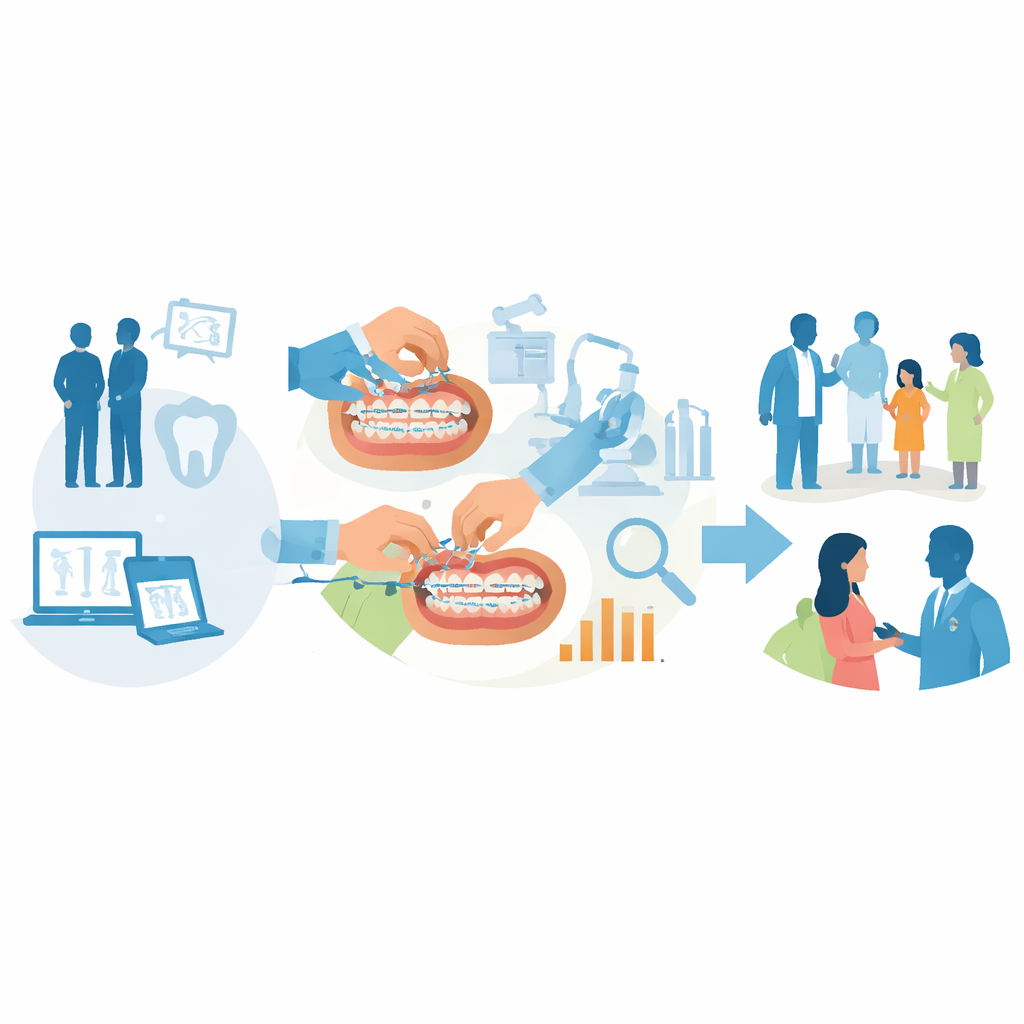
Staffing such a program in a small market is difficult, especially when private practice pays far more than university salaries. To overcome this, UWI combined one full-time local orthodontist with visiting “flying faculty” and extensive online teaching from experts linked to the Royal College of Surgeons of Edinburgh and other universities. Hybrid delivery through video platforms allows international input without permanent relocation, while donations of equipment from industry partners helped equip the new clinic and laboratory. At the same time, the program was steered through a multi-layered university approval system that scrutinized academic content, finances, facilities and patient safety. External examiners and planned accreditation from the Royal College offer additional quality checks and international recognition of the qualification.
Overcoming hurdles and looking ahead
Launching the program required navigating financial constraints, recruiting and retaining specialists, and convincing stakeholders that a regional course could match overseas options. Intake is intentionally small—two trainees every other year—to maintain safe supervision ratios and ensure enough suitable patients. Tuition and income from supervised clinical care are used to keep the program viable, while long-term plans include training graduates to return as academic staff. The authors argue that what might look like bureaucratic layers of governance actually functioned as a safety net, checking that resources, staffing and assessment systems would protect patients and students alike.
What this means for patients and professionals
In plain terms, this new program means that more Caribbean patients should eventually be able to receive high-quality orthodontic care closer to home, shaped by local disease patterns, cultures and health systems. It also offers young dentists a realistic pathway to specialize without the high costs and disruptions of migrating for training. By carefully adapting international standards to a resource-limited, small-island context, UWI’s initiative provides a blueprint for other regions that struggle with shortages of specialist health professionals. If it continues to receive investment and regional backing, the program could help turn the Caribbean from a consumer of overseas expertise into a producer of its own, better-balanced oral health workforce.
Citation: Hoyte, T. Establishing a postgraduate programme in orthodontics in the Caribbean: governance, collaborations and challenges, at the University of the West Indies. BDJ Open 12, 31 (2026). https://doi.org/10.1038/s41405-026-00424-1
Keywords: orthodontic education, Caribbean dentistry, health workforce, postgraduate training, brain drain