Clear Sky Science · en
Effect of enamel surface treatment via Er, Cr: YSGG laser and nano-hydroxyapatite toothpaste on mineral content of primary teeth via x-ray diffractometer: an in-vitro study
Stronger Baby Teeth for Healthier Smiles
Tooth decay in young children is more than a cavity problem—it can affect eating, sleep, speech, and overall comfort. Dentists are always looking for safer, more child‑friendly ways to protect baby teeth, especially when parents worry about too much fluoride. This study explores whether a special dental laser and a toothpaste packed with tiny mineral particles, used alone or together, can actually rebuild weakened enamel on children’s teeth in the lab.
Why Baby Teeth Lose Their Shield
Tooth enamel is the hard outer shell that protects teeth. In everyday life, bacteria in dental plaque feed on sugary foods and release acids that slowly dissolve this shell in a process called demineralization. If the balance between loss and repair tips the wrong way, early childhood cavities appear. Fluoride has long been the main tool for hardening enamel, but concerns about fluorosis in very young children have pushed researchers to investigate alternatives that mimic the tooth’s own mineral, rather than simply coating it.
Tiny Minerals and Gentle Light
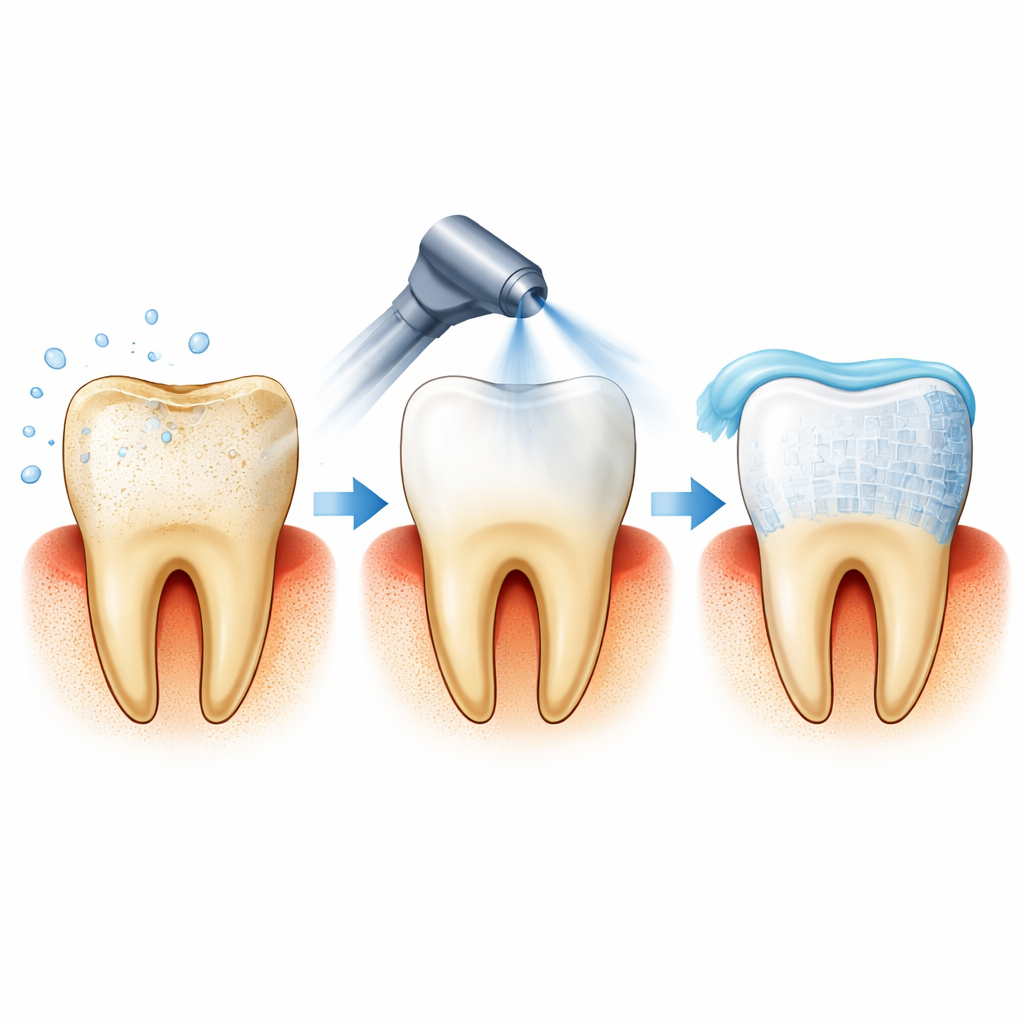
One promising approach uses nano‑hydroxyapatite toothpaste. Hydroxyapatite is the main mineral in enamel; when ground down to nanoscale particles, it can slip into tiny pores created by early decay and act as building blocks for new crystals. Another approach uses an erbium‑based dental laser (Er,Cr:YSGG). At carefully controlled settings, this laser does not drill the tooth; instead, it briefly heats the surface, causing microscopic melting and re‑hardening that can make the enamel more resistant to future acid attacks.
How the Lab Test Was Done
To test these ideas, the researchers collected 33 healthy baby front teeth that had been removed for normal reasons. They cut out small enamel blocks and soaked them in an acidic solution for four days to mimic early decay. The blocks were then randomly divided into three groups: one treated with nano‑hydroxyapatite toothpaste alone, one treated with the Er,Cr:YSGG laser alone, and one that received both laser and toothpaste. Treatments were repeated over a short period while the samples rested in artificial saliva between sessions. Before and after treatment, the team used X‑ray diffraction, a technique that reads the internal crystal structure of materials, to measure how much of the enamel was made up of tough, stable “apatite” minerals versus weaker mineral forms.
What Changed Inside the Enamel
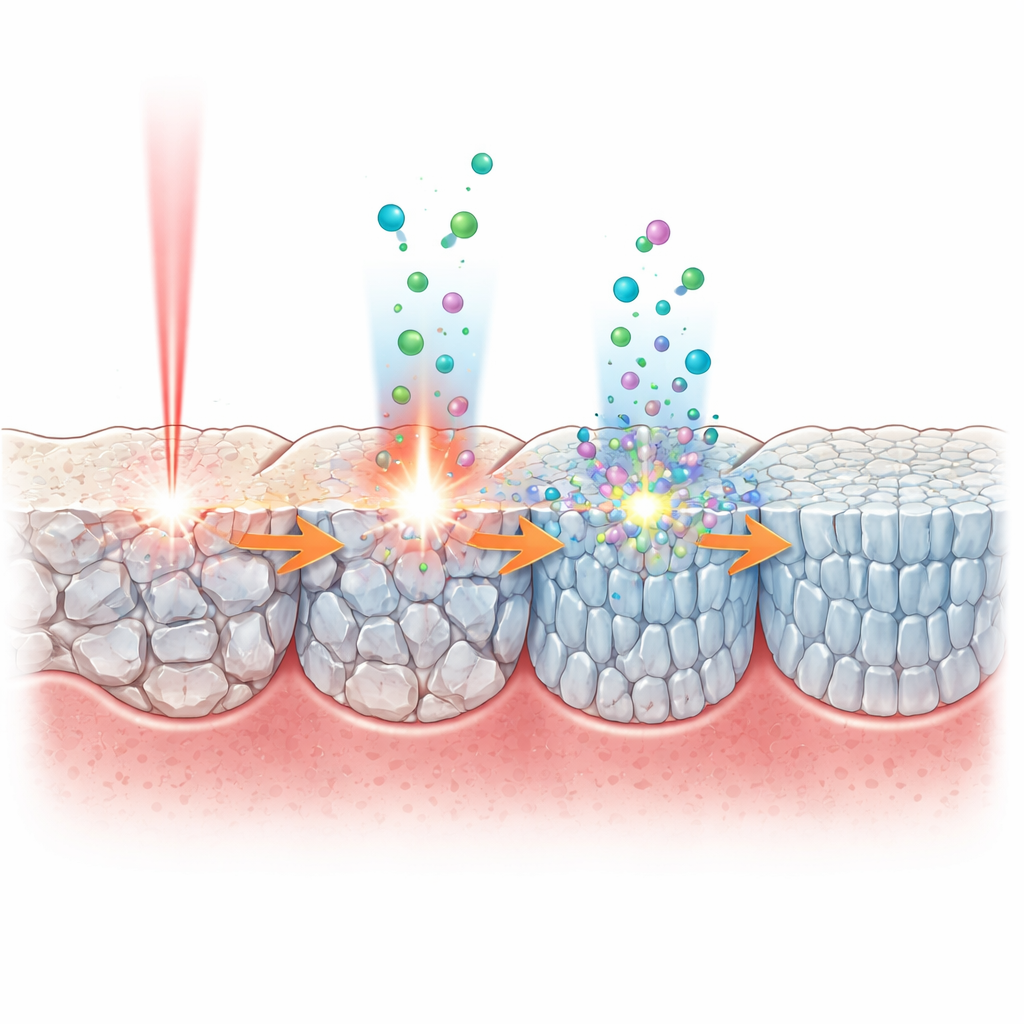
All three treatments increased the amount of apatite crystals in the previously softened enamel, meaning that mineral content and order improved in every group. The toothpaste alone boosted the share of hydroxyapatite and fluorapatite and reduced less stable calcium phosphate, suggesting that the tiny mineral particles were filling pores and helping crystals grow. The laser alone also increased apatite and appeared to reorganize the crystals into a more orderly pattern, likely by briefly melting and then re‑crystallizing the surface while helping fluoride move into the outer layer. The most striking changes, however, appeared when laser and toothpaste were combined: weaker mineral phases disappeared, and the enamel surface became fully composed of stronger apatite forms, with the largest overall rise in crystal content.
What This Could Mean for Children’s Teeth
For parents and dentists, the key message is that both nano‑hydroxyapatite toothpaste and the Er,Cr:YSGG laser can help rebuild weakened baby‑tooth enamel in a controlled lab setting, but using them together works best. The combined treatment created a more stable, crystal‑rich outer layer that should, in principle, better resist future acid attacks. Because this was an in‑vitro study, real mouths—with chewing forces, saliva flow, and daily habits—may respond differently, and long‑term durability was not tested. Still, the results suggest that pairing gentle laser treatment with enamel‑mimicking toothpaste could one day offer a child‑friendly way to strengthen young teeth and reduce the burden of early childhood cavities.
Citation: Elhussini, F.M., Hamdy, D., Abodouh, A.H. et al. Effect of enamel surface treatment via Er, Cr: YSGG laser and nano-hydroxyapatite toothpaste on mineral content of primary teeth via x-ray diffractometer: an in-vitro study. BDJ Open 12, 34 (2026). https://doi.org/10.1038/s41405-026-00418-z
Keywords: early childhood caries, enamel remineralization, nano-hydroxyapatite, dental lasers, primary teeth