Clear Sky Science · en
Not only gut feelings: pancreatic hormone, amylin, controls emotionality and sociability, in a sex divergent manner
Why a food hormone matters to mood
Most people know hormones like insulin for their role in blood sugar, but fewer realize that some “gut” signals also talk directly to the brain. This study looks at amylin, a hormone released from the pancreas after we eat, and asks a simple yet important question: does it quietly shape how anxious, depressed, aggressive, or social we feel, and does this differ between males and females? The answers could influence how future weight-loss drugs are designed and how safely they are used.
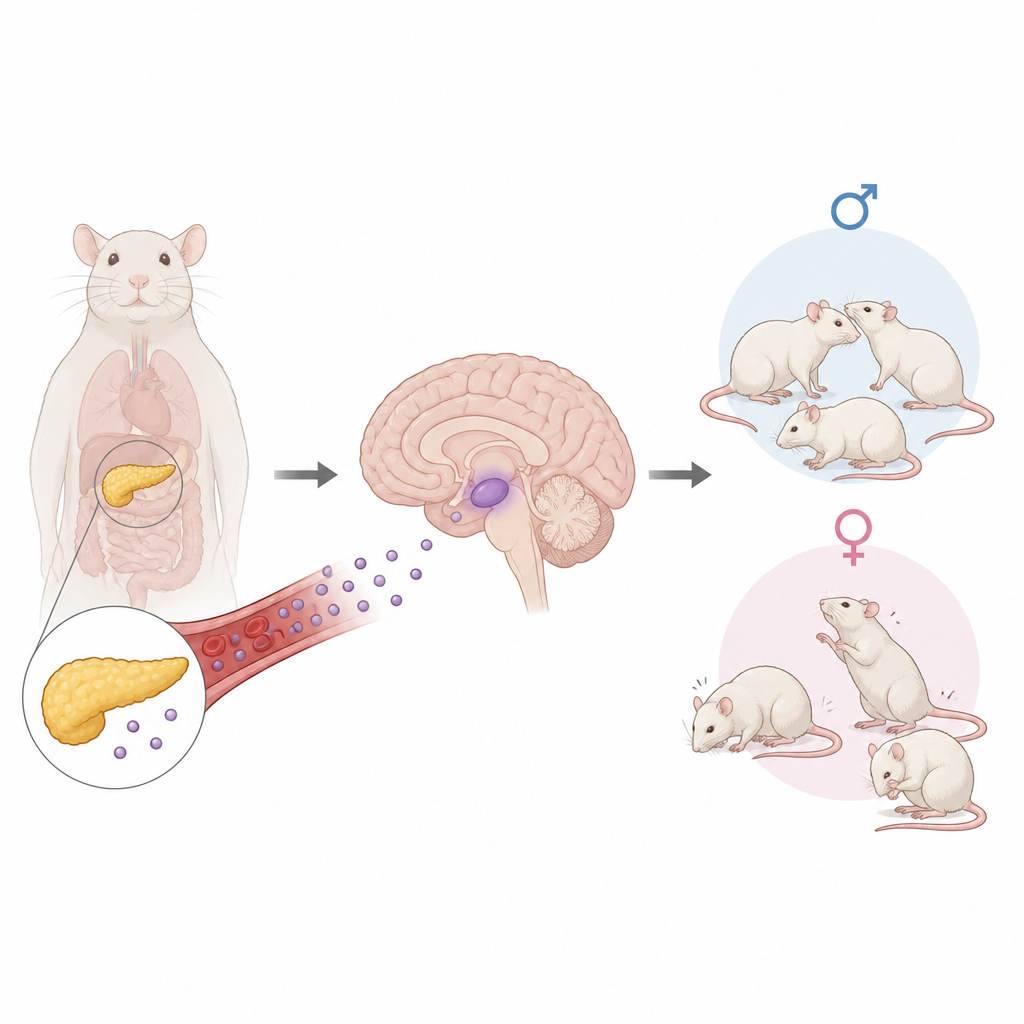
A hunger signal that reaches the emotional brain
Amylin is released from the pancreas together with insulin after meals and helps curb appetite and control blood sugar. Drug versions of amylin are already used in diabetes care and are being tested for obesity treatment. Because many appetite signals also act in brain areas that process feelings, the researchers focused on a small region called the central amygdala, which is strongly tied to fear, anxiety, and social behavior. Earlier work had shown that amylin can enter the brain, that its receptors are present in this region, and that activating them reduces both home-driven and reward-driven eating in rats.
Putting amylin to the test in male and female rats
To see how amylin affects emotionality, the team gave male and female rats either an injection into the body, mimicking how patients would receive a drug, or a tiny dose directly into the central amygdala. They then ran a suite of well-established behavioral tests. These included tests of anxiety-like behavior in a raised maze and a loud-sound startle setup, a forced swim test that is often used as a measure of depression-like behavior, a resident–intruder encounter to assess aggression, and a test of how much time rats chose to spend interacting with a stranger rat versus an object. In females, the researchers also tracked the reproductive cycle to see whether hormone shifts changed the response to amylin.
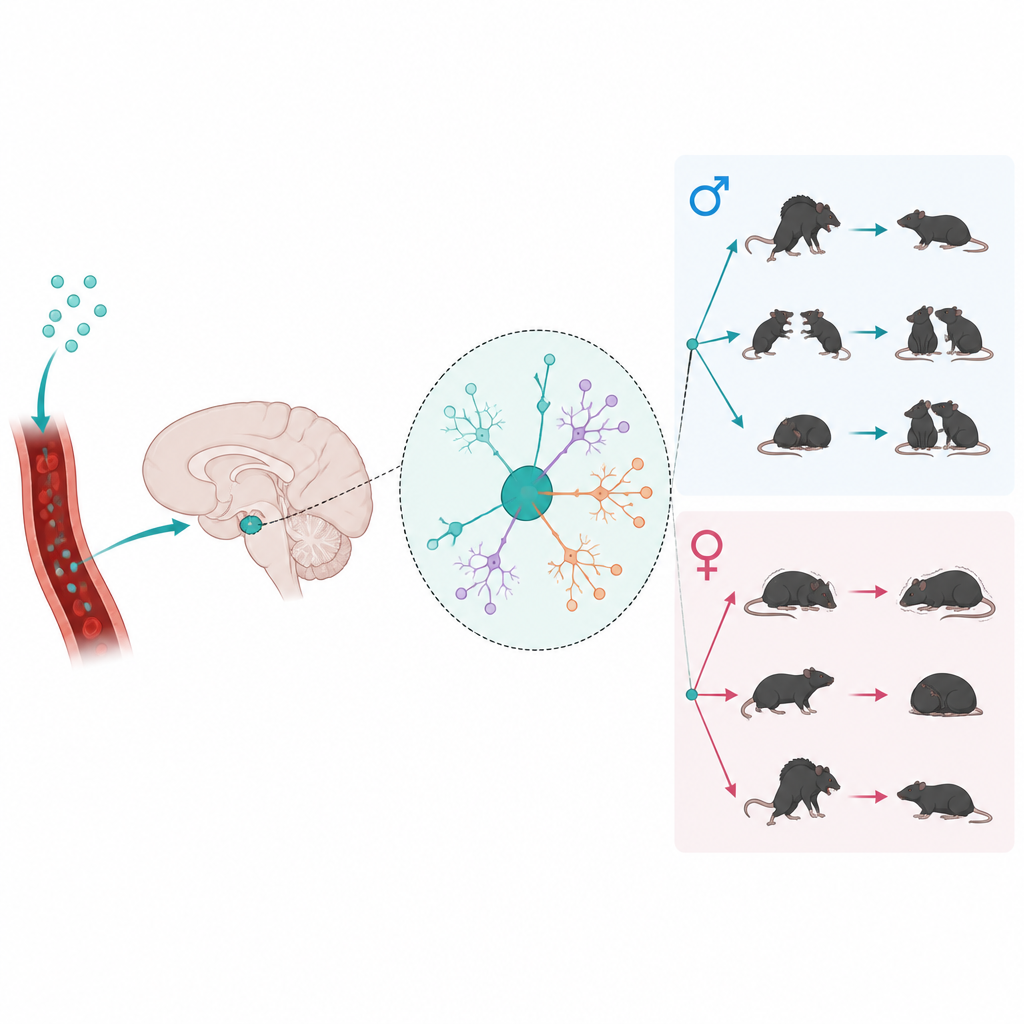
Different emotional effects in males and females
The results revealed a striking split between the sexes. When amylin was given into the body or directly into the central amygdala, male rats tended to show less anxiety-like behavior, spending more time or making more entries into exposed arms of the maze, while females tended toward more anxious responses, with stronger startle reactions and less exploration of open arms. Amylin did not change depression-like behavior in males, but when it was delivered straight into the central amygdala, females spent more time immobile in the swim test, a pattern interpreted as more depression-like behavior. The female response also depended on the phase of the reproductive cycle, suggesting that ovarian hormones such as estrogen may shape how amylin’s signal is read in the brain.
Shared changes in aggression and social contact
Not all effects differed between males and females. In aggressive encounters where a stranger rat entered the home cage, amylin consistently lowered aggression in both sexes, cutting down the time spent in threatening postures and other offensive acts. In a calmer social test where the rat could freely approach or avoid a stranger, body-wide amylin injections increased friendly social exploration, such as sniffing, again in both males and females. However, when amylin was placed only into the central amygdala, these social boosts disappeared, pointing to other brain regions, such as parts of the hypothalamus or nearby amygdala areas, as likely hubs for amylin’s prosocial effects.
What this means for future weight-loss therapies
Together, the findings show that a hormone best known for taming appetite can also shift anxiety, mood-like behavior, aggression, and sociability, and that some of these shifts run in opposite directions in males and females. The central amygdala is sufficient to drive many of these emotional changes, especially the sex-specific anxiety and depression-like patterns, while other circuits appear to handle social behavior. For anyone considering amylin-based obesity drugs, this work underscores the need to monitor emotional side effects in both men and women, and to design trials that are large and careful enough to detect sex differences before such treatments are widely used.
Citation: Byun, S., Sotzen, M.R., Knappenberger, M.A. et al. Not only gut feelings: pancreatic hormone, amylin, controls emotionality and sociability, in a sex divergent manner. Transl Psychiatry 16, 259 (2026). https://doi.org/10.1038/s41398-026-04011-8
Keywords: amylin, anxiety, sex differences, social behavior, obesity treatments