Clear Sky Science · en
Borderline personality disorder and other psychiatric, somatic, and behavioral conditions: a nationwide family study
Why this family study matters
Borderline personality disorder is often portrayed as an individual struggle, but this large Swedish study shows that it is also closely tied to family patterns of mental and physical health. By following millions of people across generations, the researchers explored how borderline personality disorder clusters with other conditions in individuals and their relatives, and how much of that overlap may be due to shared genes versus shared life experiences.
Looking at millions of lives
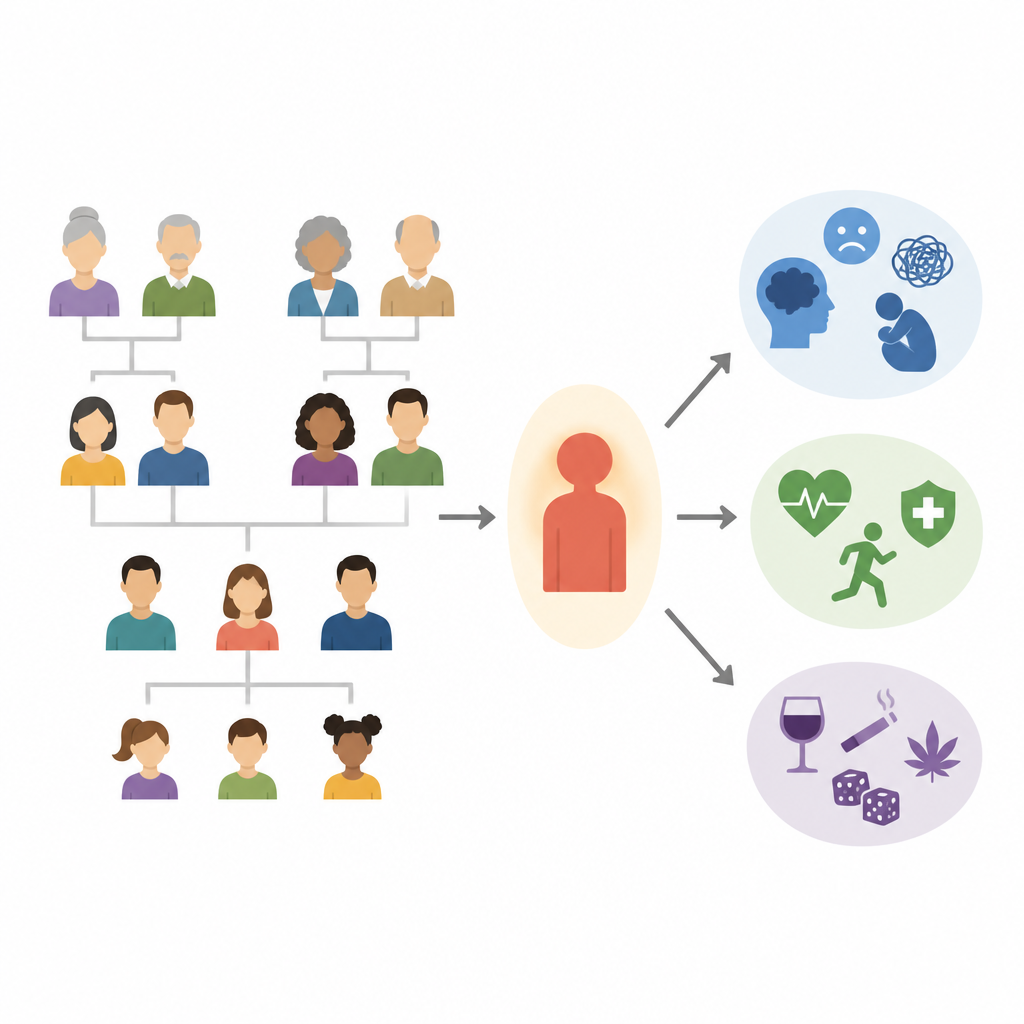
The team used Swedish national health and population registers to build a birth cohort of about 2.7 million people born between 1973 and 2001. They identified over 24,000 who had received a diagnosis of borderline personality disorder in specialist care. For each of these individuals, the researchers also included twins, siblings, parents, aunts and uncles, and cousins. They then tracked 44 other conditions, including common mental disorders like depression and anxiety, long term physical problems like diabetes, and behaviors or injuries such as self-harm, accidents, and suicide.
Borderline and other mental health conditions
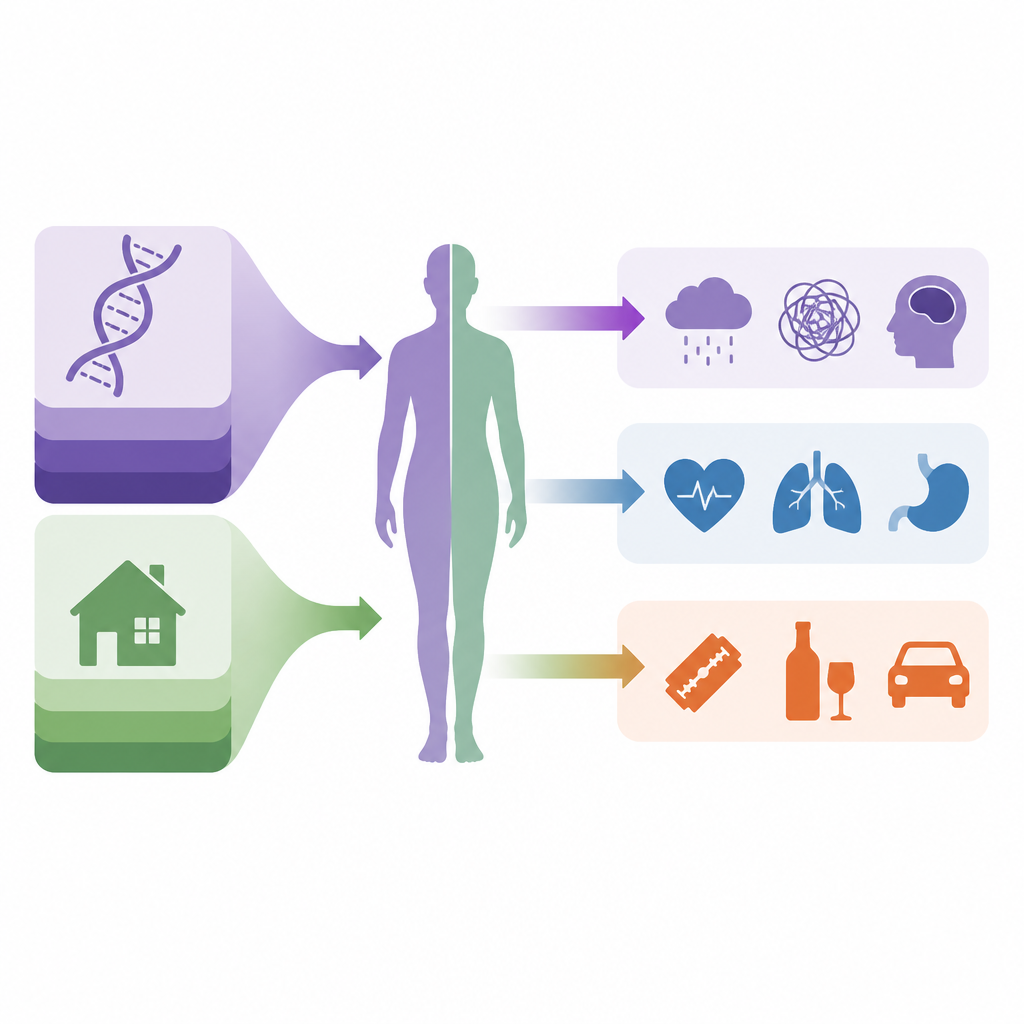
Within the same person, borderline personality disorder was very strongly linked to a wide range of other psychiatric diagnoses, especially depression, other personality disorders, post traumatic stress, and attention difficulties. Family members of people with borderline personality disorder were also more likely to have many of these conditions, and the risk generally grew with closer biological relatedness. For example, identical twins and full siblings showed higher odds than half siblings and cousins. Using statistical models that compare different types of siblings, the authors estimated that roughly half of the overlap between borderline personality disorder and most other psychiatric conditions reflects shared genetic influences, while the other half reflects experiences unique to each person, such as individual life events.
Physical health and sleep problems
The picture for physical health problems was more mixed. People with borderline personality disorder were more likely than others to have many somatic diagnoses, including migraines, cardiovascular disease, chronic pain, and infections. However, these conditions did not always cluster in families in the same way as the psychiatric disorders. One striking exception was sleep disorders, which showed both a strong personal link and notable co-occurrence in relatives. For sleep problems, the genetic overlap with borderline personality disorder appeared particularly strong, suggesting that inherited factors may predispose some families to both difficulties with mood regulation and disrupted sleep.
Self-harm, victimization, and accidents
Behavioral and injury related outcomes told yet another story. As expected, people with borderline personality disorder had very high rates of self-harm and death by suicide, and these risks were also elevated among their relatives. Experiences of assault or victimization, which often involve physical or sexual violence, showed strong family clustering and a sizable shared genetic contribution, echoing earlier work linking childhood trauma and borderline traits. In contrast, accidents such as falls or traffic incidents showed weaker and more variable patterns, suggesting that they are influenced more by situational factors and less by the same inherited vulnerabilities that shape borderline personality disorder.
What this means for families and care
Overall, the study indicates that borderline personality disorder tends to run in families alongside many other mental health conditions, largely through a blend of shared genes and individual life experiences, while shared household environment plays a relatively small role. Physical illnesses and injuries show more varied connections, with sleep problems and some pain or infection related conditions sharing more with borderline personality disorder than others. For lay readers, the key message is that the difficulties faced by people with borderline personality disorder are rarely isolated: they are part of a broader web of risks that can touch relatives as well. Recognizing these patterns can help clinicians and families pay attention not only to emotional symptoms, but also to sleep, physical health, and safety, and can guide future research into more targeted ways of preventing and treating these interconnected problems.
Citation: Hall, A.S.M., Musliner, K.L., Debost, JC.P. et al. Borderline personality disorder and other psychiatric, somatic, and behavioral conditions: a nationwide family study. Transl Psychiatry 16, 257 (2026). https://doi.org/10.1038/s41398-026-04001-w
Keywords: borderline personality disorder, family study, comorbidity, genetic overlap, sleep problems