Clear Sky Science · en
Role of neural oscillations in depression: highlights on gamma oscillations
Why brain waves matter for low mood
Depression is often described as a chemical imbalance, but that story leaves out how billions of brain cells work together in time. This review article argues that the timing of brain activity, especially fast “gamma” brain waves, may be a missing piece in understanding why depression affects thinking, feelings, and response to treatment. By looking at these rhythms, scientists hope to find more objective ways to diagnose depression and design therapies that act faster and more precisely than current drugs.
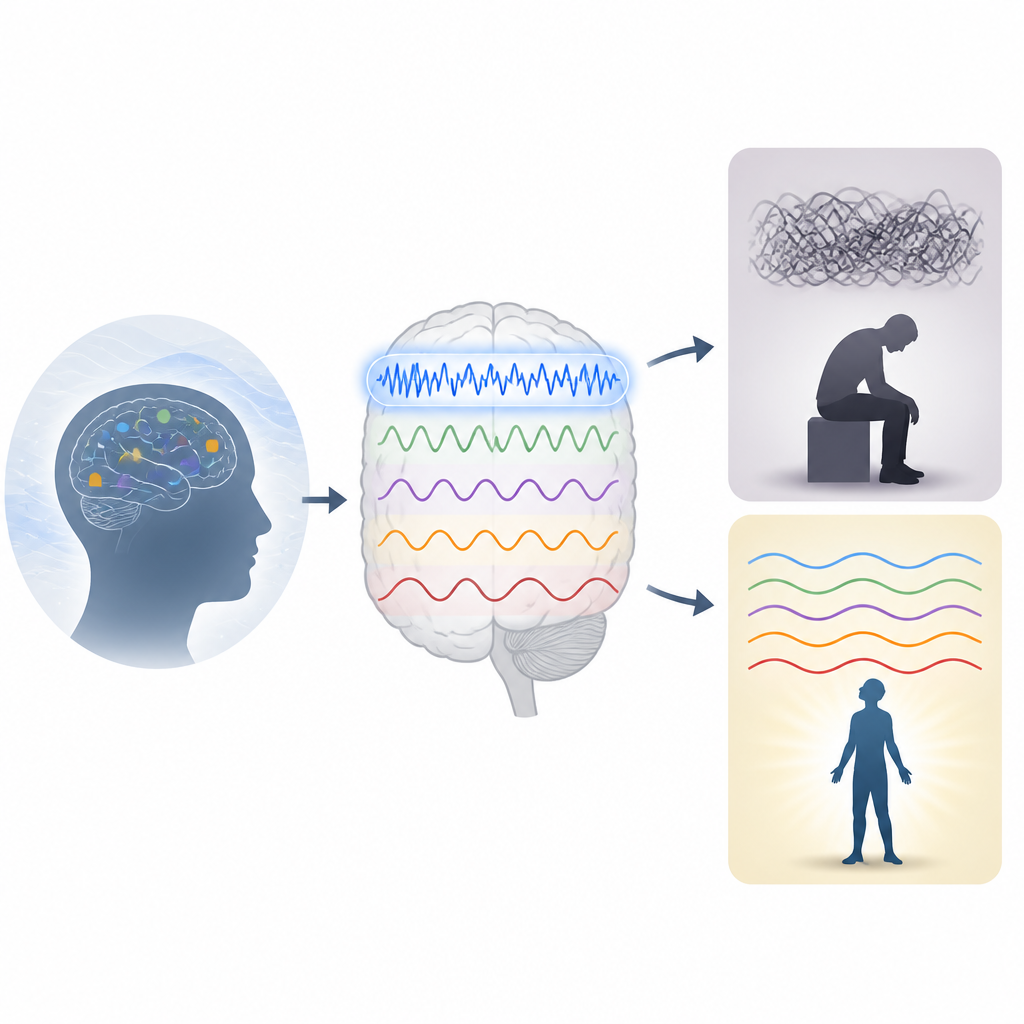
From brain chemistry to brain rhythms
Traditional antidepressants were built around the idea that low levels of certain brain chemicals, such as serotonin and dopamine, cause depression. These medicines help many people but often take weeks to work and fail for a large share of patients. The authors highlight a newer view that focuses on large-scale brain networks and how regions communicate using rhythmic electrical activity. Neural oscillations are regular patterns of electrical firing that can be grouped into bands, from slow delta waves to fast gamma waves. Gamma waves, which cycle dozens of times per second, appear closely tied to attention, memory, and mood, making them a natural target in depression research.
What studies reveal about gamma waves in depression
Animal and human studies both show that gamma activity is disrupted in depression, but in complex ways. In rodent models exposed to chronic stress, inflammation, or experimental lesions, gamma power often drops in key mood regions such as the prefrontal cortex and hippocampus, while sometimes rising in reward areas like the nucleus accumbens. In people with depression, some experiments find unusually strong gamma activity at rest or during emotional tasks, while others find weakened gamma responses and poorer connectivity between brain regions. Despite these mixed directions, the common theme is that the brain has trouble generating and coordinating normal gamma rhythms, which may underlie problems with motivation, decision-making, and suicidal thinking.
Links between gamma waves, brain cells, and key transmitters
Gamma rhythms arise from a delicate balance between excitatory cells that drive activity and inhibitory cells that keep it in check. Two types of fast inhibitory cells, marked by proteins called parvalbumin and somatostatin, are especially important for producing clean gamma waves and are often altered in depression. The review explains how serotonin and dopamine systems, long central to antidepressant research, shape gamma activity by acting on different receptor types scattered across these cells. Serotonin usually tones down gamma rhythms, while specific dopamine receptors can either weaken or strengthen them depending on timing and location. These findings place gamma waves at the crossroads between individual molecules and whole-brain networks.
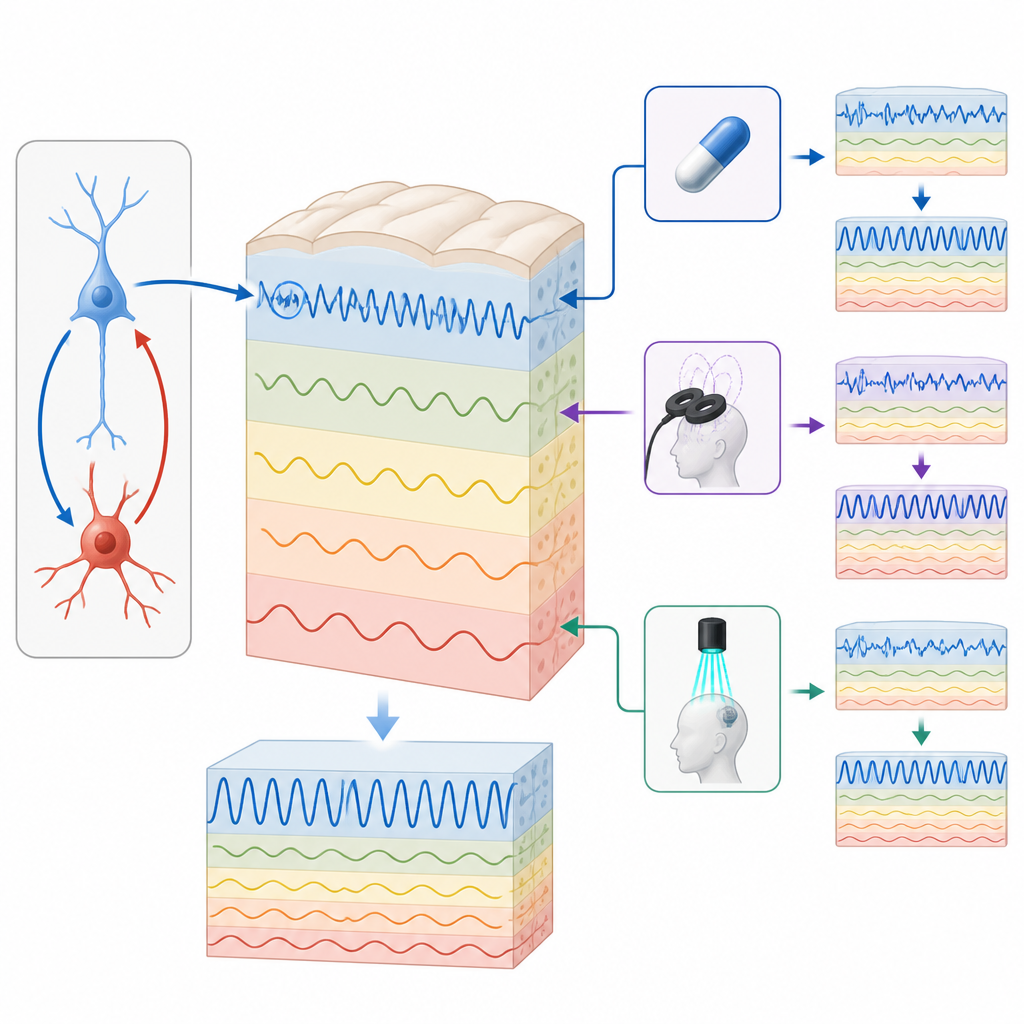
How treatments reshape gamma activity
The authors survey a wide range of treatments and show that many of them, from classic antidepressants to cutting-edge brain stimulation, influence gamma waves. Selective serotonin reuptake inhibitors and related drugs can dampen gamma activity in the short term but often enhance it after weeks of treatment, in parallel with symptom relief. Rapid-acting drugs like ketamine quickly boost gamma power in animals and humans, with larger changes often seen in patients who respond clinically. Non-drug approaches, including repetitive magnetic stimulation and deep brain stimulation, also shift gamma power and coupling between brain regions, and these shifts often track improvements in mood. Even sensory stimulation with 40 Hz flickering light, tuned to the gamma range, can restore aspects of brain connectivity, reduce markers of inflammation, and improve memory and stress-related behavior in animal studies.
What this means for people with depression
Overall, the review proposes that gamma brain waves are not a side effect of depression but part of its core machinery. Abnormal gamma activity appears to link changes in brain chemistry, faulty connections between regions, and the symptoms people feel. Because gamma rhythms can be measured noninvasively, they may serve as future “vital signs” for depression, helping doctors identify subtypes of the illness and match people to therapies more likely to work for them. While more work is needed to standardize measurements and test cause and effect, treating depression through the lens of brain rhythms may eventually lead to faster, more tailored, and more reliable care.
Citation: Yin, YY., Li, YF. Role of neural oscillations in depression: highlights on gamma oscillations. Transl Psychiatry 16, 258 (2026). https://doi.org/10.1038/s41398-026-03991-x
Keywords: depression, gamma oscillations, brain networks, antidepressant treatments, neural rhythms