Clear Sky Science · en
rTMS for rapid relief of sleep disorders induced by influenza virus infection: a clinical retrospective study
Why the Flu Can Keep You Awake
Most people think of influenza as a fever, cough, and a few days in bed. Yet many adults notice that even after their temperature falls, they still cannot sleep. This study from a Chinese medical team asks a simple, practical question: can a non‑drug brain stimulation technique, already used for depression, quickly ease flu‑related insomnia—and what does that reveal about how infection, the immune system, and the brain interact?
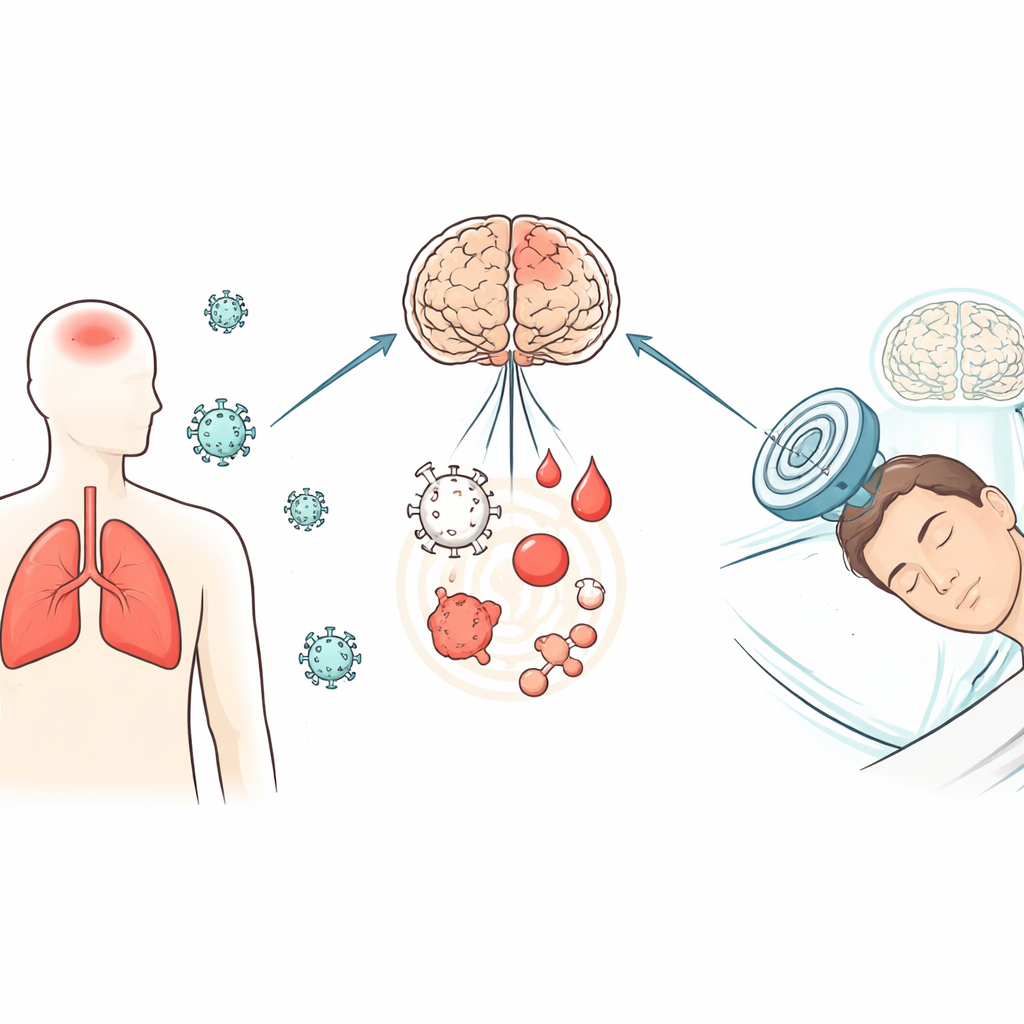
From a Simple Virus to Sleepless Nights
Influenza viruses infect the airways but their effects ripple throughout the body. Each year, millions of people worldwide develop severe flu, and many struggle with headaches, fatigue, and disturbed sleep that can last for weeks. Poor sleep is more than a nuisance: it slows recovery, hurts work performance, and is dangerous for people in precision jobs such as drivers or healthcare workers. Existing flu treatments focus on shortening illness and preventing lung complications. They do little for these lingering, brain‑related symptoms, leaving a treatment gap for patients whose main complaint is, “I just can’t sleep.”
A Gentle Magnet for the Brain
The researchers focused on repetitive transcranial magnetic stimulation, or rTMS. This non‑invasive technique uses a magnetic coil placed on the scalp to nudge activity in underlying brain regions. It is already approved to treat depression and has shown promise for chronic insomnia. In this real‑world hospital study, 55 young and otherwise healthy adults with confirmed acute flu were analyzed. All received standard medical care; 16 also had three days of daily rTMS sessions aimed at the front of the brain, while 20 similar patients formed a comparison group without rTMS. Another 20 healthy adults without flu served as a negative control group.
Tracking Sleep, Brain Activity, and Blood Signals
To understand what was happening, the team did far more than ask people how they slept. They recorded overnight sleep with polysomnography, the laboratory standard that measures brain waves, breathing, and sleep stages. They used a simple visual analog scale so patients could rate how bad their sleep felt. They also shone harmless near‑infrared light through the forehead to track blood oxygen changes in key frontal brain areas, a sign of how active those neurons were. At the same time, they tested blood for immune markers such as antibodies and white blood cells. Using large genetic databases, they ran so‑called Mendelian randomization analyses, which use natural genetic variation to probe whether flu, immune changes, and brain structure are likely to be causally linked to insomnia rather than just coincidental.
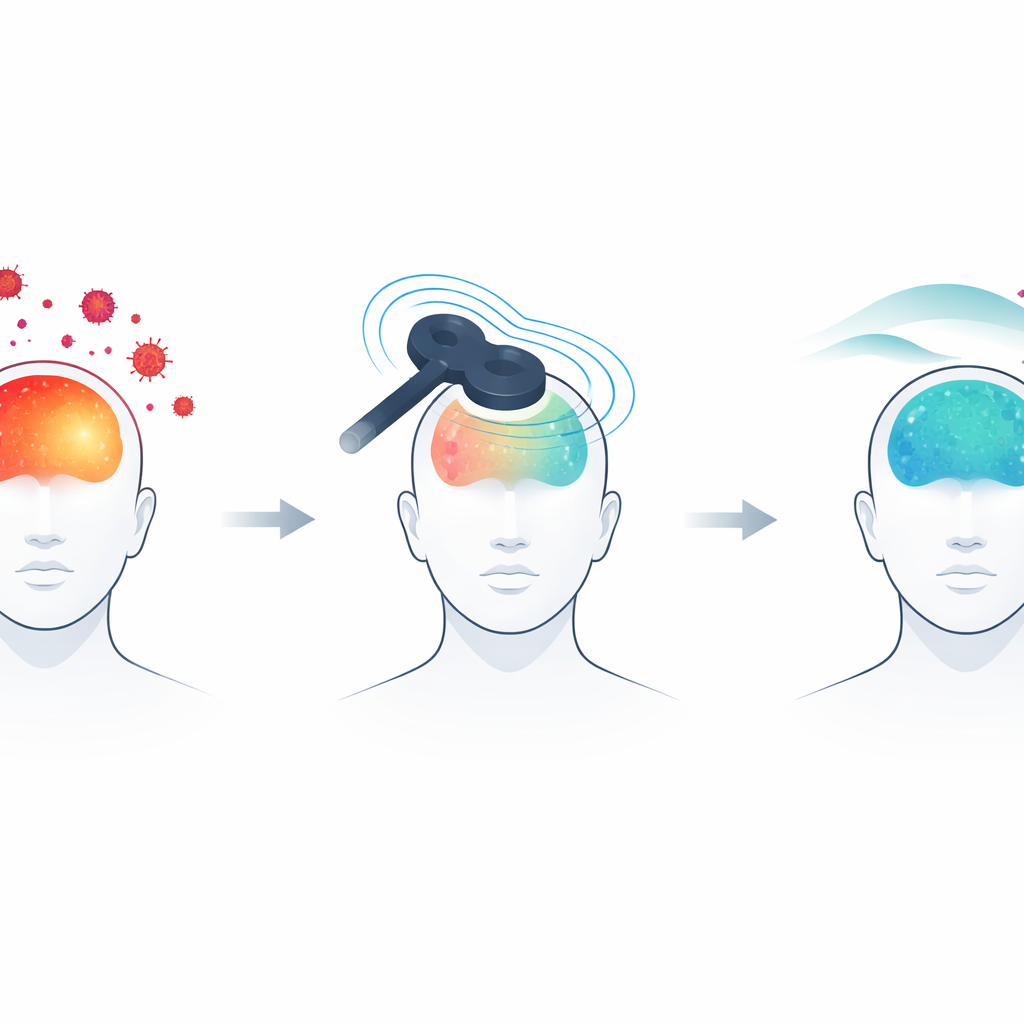
When the Immune System Agitates the Brain
The genetic analyses suggested that having flu raises the risk of insomnia and is tied to structural changes in several brain regions, especially in the frontal lobes, which help regulate mood and the sleep–wake cycle. Two blood measures stood out: immunoglobulin M (IgM), an early antibody, and neutrophils, a type of white blood cell. Higher levels of both were strongly associated with worse sleep scores and with subtle changes in frontal gray matter volume. In flu patients who had not yet received rTMS, near‑infrared scans showed that specific frontal areas—the right orbitofrontal cortex and the left ventrolateral prefrontal cortex—were unusually overactive compared with healthy controls. Together, these findings fit an “infection–immune–brain–sleep” chain: the virus stirs up the immune system, the resulting inflammation disturbs frontal brain function, and that disruption shows up as insomnia.
Calming the Frontal Lobes to Restore Rest
Adding rTMS made a noticeable difference over just a few days. Compared with patients on standard treatment alone, those who also received rTMS slept more efficiently and showed a healthier balance of sleep stages on overnight monitoring. Their frontal brain regions, previously overactive, now showed reduced oxygenated blood signals, suggesting that stimulation had quieted these circuits toward a more normal level. A prediction model built from seven blood markers discriminated which flu patients were likely to have significant insomnia with good accuracy, hinting at a future in which simple blood tests could flag who might benefit most from neuromodulation. Importantly, the short rTMS course was well tolerated, with no serious side effects reported.
What This Means for People With the Flu
For lay readers, the takeaway is that flu‑related sleeplessness is not “all in your head” in the casual sense—it reflects a real, temporary disturbance in the way your immune system and frontal brain regions talk to each other. This study suggests that gently damping down overactive frontal circuits with targeted magnetic pulses can rapidly improve sleep, at least in young, otherwise healthy adults. While larger, randomized trials are still needed, the work points to a future where treating flu might include not just antivirals and rest, but also safe, non‑drug brain stimulation to help patients reclaim restorative sleep and return more quickly to their daily lives.
Citation: Du, H., Meng, X., Zhang, C. et al. rTMS for rapid relief of sleep disorders induced by influenza virus infection: a clinical retrospective study. Transl Psychiatry 16, 218 (2026). https://doi.org/10.1038/s41398-026-03988-6
Keywords: influenza, sleep disorders, rTMS, brain–immune interaction, neuromodulation