Clear Sky Science · en
Economic effectiveness of pharmacogenomics-guided prescribing for psychiatric disorders: a systematic review and meta-analysis
Why Your Genes Might Matter for Mental Health Medicine
Many people living with depression, schizophrenia, or other mental health conditions struggle to find a medicine that truly helps without causing troublesome side effects. This trial‑and‑error process is frustrating for patients and expensive for health systems. The article reviewed here asks a simple but important question: if doctors used genetic information to match patients to psychiatric drugs, would the health benefits be worth the extra cost of testing?
From One-Size-Fits-All to Tailored Treatment
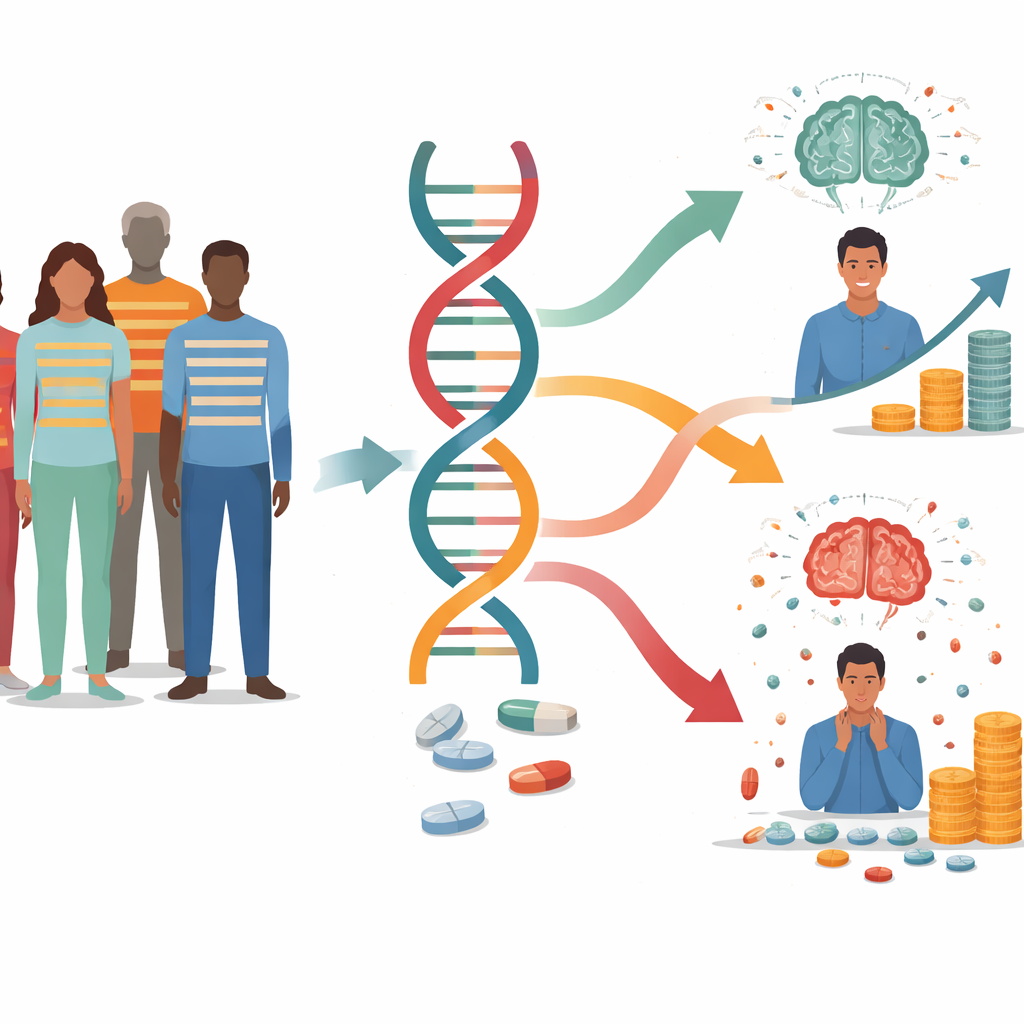
Standard psychiatric prescribing largely assumes that most people will respond similarly to the same drug and dose. In reality, up to 60% of patients may not respond well, and some experience severe adverse reactions. Pharmacogenomics—using information about a person’s genes to guide drug choice and dosing—offers a more tailored approach. Certain genes influence how quickly the body processes medications or how sensitive brain receptors are to them. By testing these genes in advance, doctors can adjust treatment to reduce side effects, shorten the trial‑and‑error period, and potentially improve quality of life.
How the Researchers Looked at the Numbers
The authors carried out a systematic review and meta‑analysis, meaning they carefully searched several medical databases and pooled evidence from the best available economic studies. They included 17 studies of adults with psychiatric diagnoses such as major depression, schizophrenia, and alcohol use disorder. Each study compared usual care with prescribing guided by genetic tests and reported both health outcomes and costs. Most of the studies used computer models to simulate long‑term outcomes, and many took a “societal” view that tried to capture not only medical spending but also broader impacts, like lost productivity.
What the Evidence Shows About Costs and Benefits
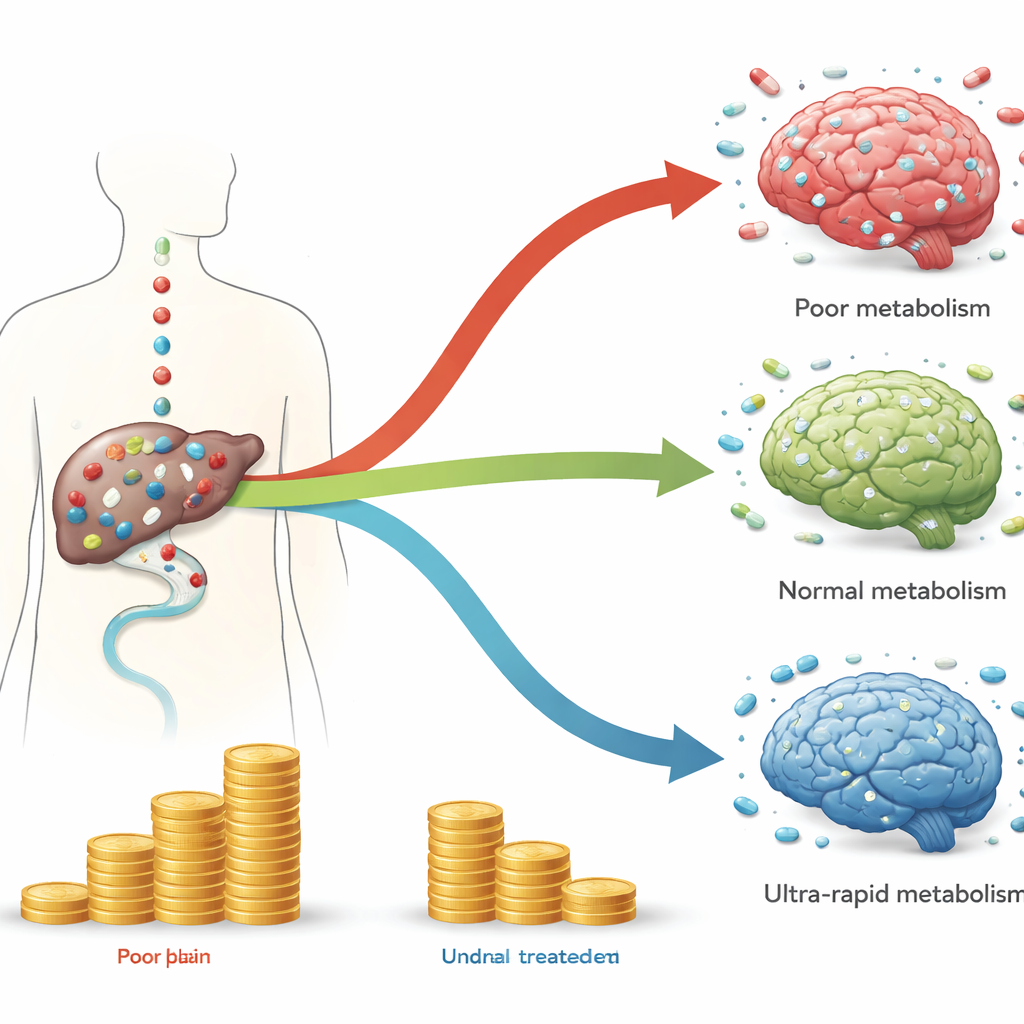
Across the 17 studies, about 88% concluded that pharmacogenomics‑guided prescribing was either clearly cost‑effective or even saved money compared with standard care. This was especially true for multi‑gene tests used in depression, where several analyses suggested that testing could reduce overall costs while improving health. In schizophrenia, studies focused on using genetic tests to identify who is at high or low risk of a rare but dangerous blood complication from clozapine, a powerful antipsychotic. The models suggested that adjusting how closely different patients are monitored, based on their genetic risk, could also be a good use of resources.
Why the Answer Is Still Not Definitive
To go beyond individual studies, the authors combined data from eight model‑based studies in a statistical meta‑analysis. They converted each study’s results into an “incremental net benefit,” a measure that expresses health gains and costs in monetary terms. The combined result was positive—suggesting genetic‑guided prescribing may be cost‑effective—but the confidence intervals crossed zero, meaning the finding was not statistically certain. There was also substantial variation between studies in methods, time frames, test types, funding sources, and patient populations, which makes firm conclusions difficult. Some of the most optimistic results came from industry‑linked studies using broad genetic panels and long time horizons, raising questions about how universally those findings apply.
What This Could Mean for Patients and Health Systems
For people with depression or schizophrenia, the overall message is cautiously hopeful. The existing evidence suggests that using genetic tests to help choose psychiatric medicines can, in many settings, lead to better outcomes without driving up overall costs—and may even save money by preventing serious side effects and reducing wasted treatment. However, because the studies vary widely and real‑world trials with long follow‑up are still scarce, policymakers and clinicians should view pharmacogenomics as a promising tool rather than a guaranteed solution. More consistent methods, broader testing across different drugs, and studies that follow patients over years—not just weeks—will be needed to show clearly when and where gene‑guided prescribing delivers good value for both patients and healthcare budgets.
Citation: Mason, E.R., Ali, M.Y., Gibson, D.S. et al. Economic effectiveness of pharmacogenomics-guided prescribing for psychiatric disorders: a systematic review and meta-analysis. Pharmacogenomics J 26, 12 (2026). https://doi.org/10.1038/s41397-026-00408-2
Keywords: pharmacogenomics, psychiatric medications, personalized medicine, cost-effectiveness, depression treatment