Clear Sky Science · en
Metastasis suppressing properties of the cell-surface anchored serine protease prostasin: new functional and mechanistic insights from breast cancer
Why this hidden cell guardian matters
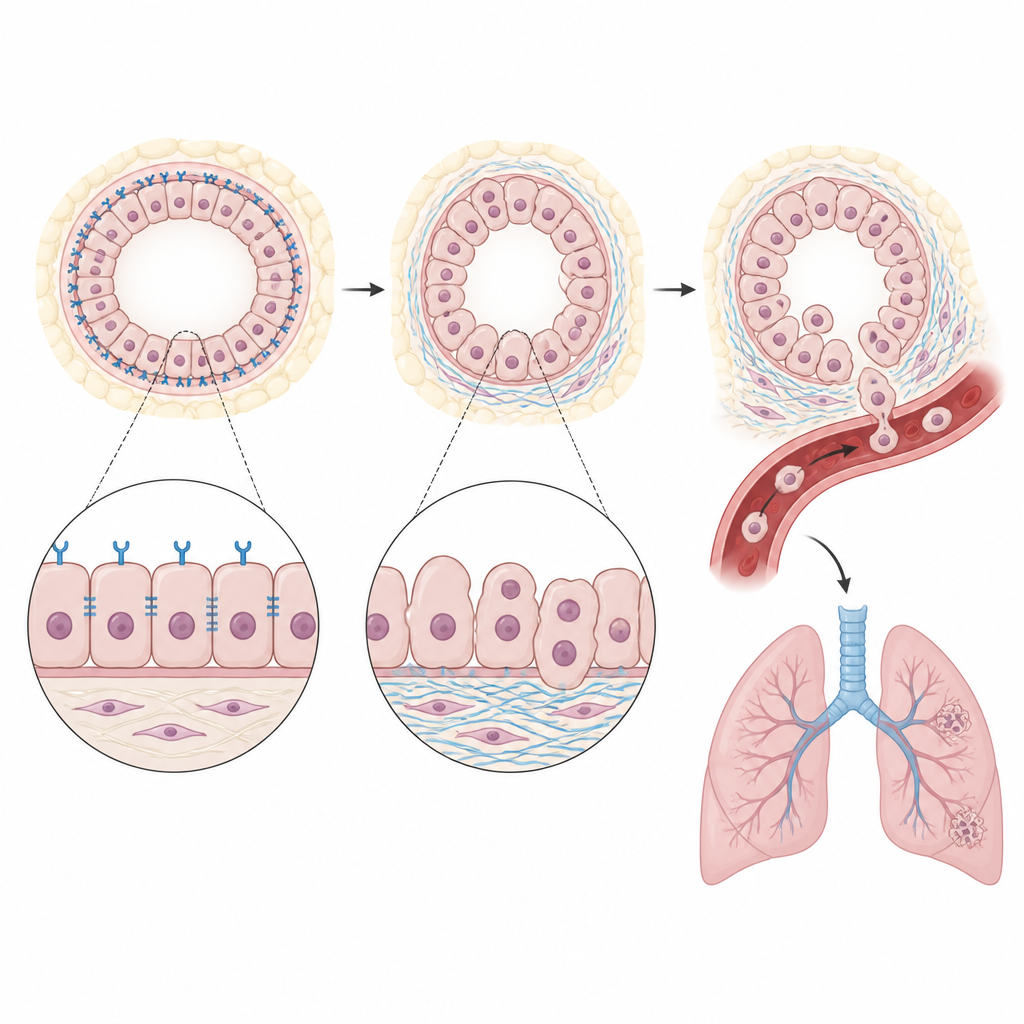
Breast cancer becomes life threatening when tumor cells break away from the breast and travel to distant organs such as the lungs. This study uncovers how a little known protein, called prostasin, helps keep breast cells tightly connected and less likely to spread. By looking at patient samples, mouse models, and human cells in the lab, the researchers show that losing prostasin weakens the structural “glue” between cells and makes it easier for cancer to metastasize.
A cell surface guardian goes missing
Prostasin sits on the outer surface of many epithelial cells, including those lining the ducts of the breast. In healthy breast tissue, the authors found prostasin strongly present on these duct cells. In early, well organized tumors, prostasin was still detectable, mostly on the cell surface. But in higher grade, poorly organized breast cancers, prostasin levels dropped sharply or disappeared. Similar patterns were seen in a mouse model that closely mimics human invasive ductal breast cancer, suggesting that the loss of prostasin is linked to tumor cells becoming less differentiated and more aggressive.
Mouse studies connect loss of prostasin to lung spread
To test whether prostasin loss simply accompanies cancer progression or actively helps drive it, the team used genetically altered mice whose mammary tumors develop with greatly reduced prostasin activity. These animals formed primary breast tumors at about the same time and size as normal control mice. However, when the researchers examined the lungs, mice with low prostasin showed a much higher rate of spontaneous lung metastases, even when only animals with smaller primary tumors were compared. This points to a specific role for prostasin in holding back the spread of cancer cells, rather than in limiting the initial tumor growth.
Restoring prostasin tames invasive cancer cells
The researchers then turned to aggressive human breast cancer cell lines that naturally lack prostasin and behave in a highly invasive manner. They engineered these cells so that prostasin could be switched back on with a drug. When prostasin was reintroduced and placed on the cell surface, the cells became much less able to move through a layer that mimics the body’s supporting tissue. This effect was not seen in control cells treated in the same way without prostasin, indicating that the presence of prostasin directly dampens the invasive behavior of these cancer cells.
How prostasin helps cells stay tightly sealed
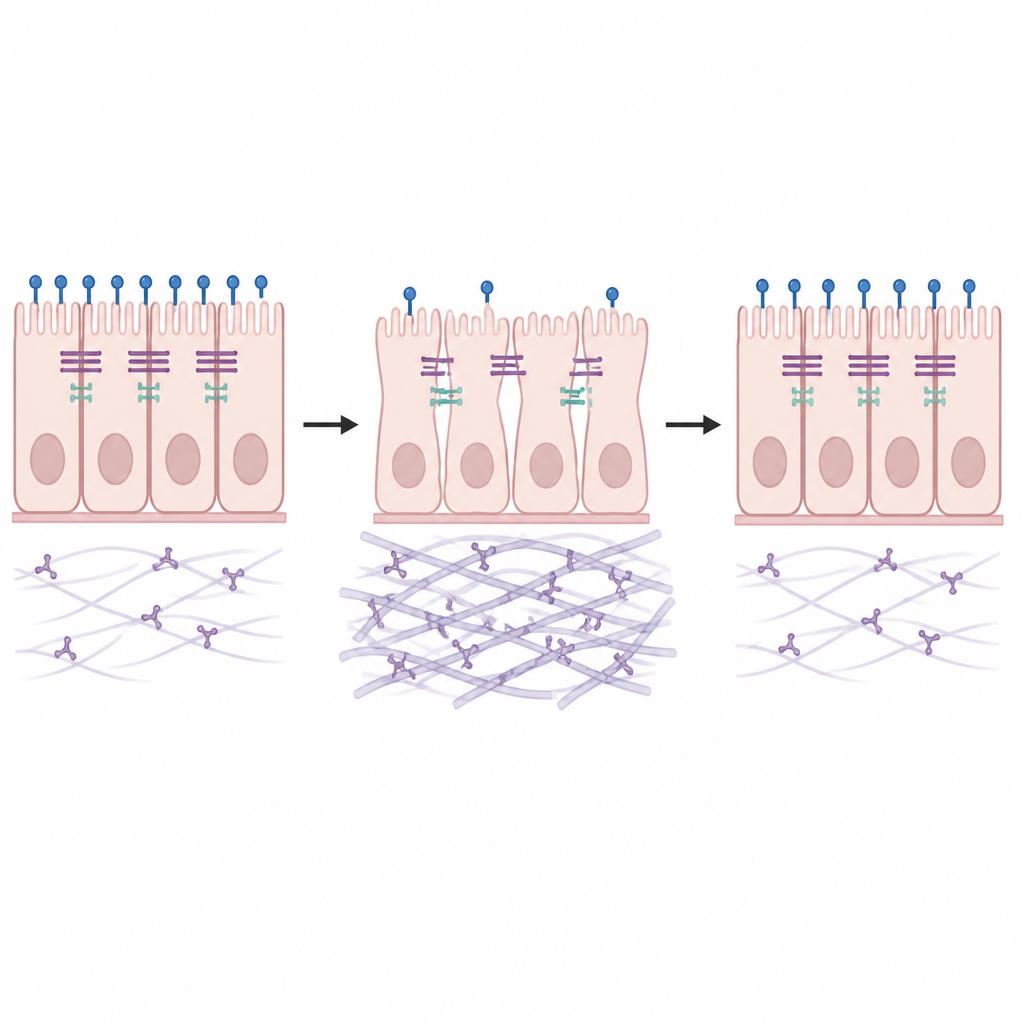
In noncancerous breast epithelial cells, the team studied tight junctions, which act like zipper-like seals between neighboring cells and are marked by a protein called ZO-1. When prostasin was silenced, the normally crisp honeycomb pattern of ZO-1 around each cell became fragmented and fuzzy, signaling a loss of tight junction integrity. A broad protein survey then revealed that fibronectin, a large adhesive protein often linked to aggressive cancers, rose sharply when prostasin was reduced. In these cells, high fibronectin and strong ZO-1 signals rarely appeared in the same cell, suggesting that fibronectin buildup works against tight, orderly junctions.
A push and pull between fibronectin and prostasin
Further experiments showed a two way relationship: lowering prostasin increased fibronectin protein inside epithelial cells, while lowering fibronectin boosted prostasin levels. When both prostasin and fibronectin were silenced together, the previously disrupted tight junction patterns largely recovered, and ZO-1 again outlined cell borders more continuously. This indicates that prostasin helps maintain strong cell to cell seals in part by keeping fibronectin in check, and that excess fibronectin contributes directly to the breakdown of these seals.
What this means for patients
Overall, this work identifies prostasin as a natural brake on breast cancer metastasis. It does not shrink primary tumors, but it helps stop cells from loosening their connections, acquiring invasive traits, and spreading to the lungs. By showing that prostasin controls tight junctions through balancing fibronectin, the study suggests new ways to think about therapies: instead of only blocking pro tumor proteins, future strategies might aim to restore or mimic protective proteins like prostasin, or carefully target harmful forms of fibronectin, to keep breast cancer cells locked in place.
Citation: Lundgren, J.G., Flynn, M.G., Winkler, A.R. et al. Metastasis suppressing properties of the cell-surface anchored serine protease prostasin: new functional and mechanistic insights from breast cancer. Oncogenesis 15, 24 (2026). https://doi.org/10.1038/s41389-026-00615-3
Keywords: breast cancer, metastasis, prostasin, tight junctions, fibronectin