Clear Sky Science · en
SREBP2 regulates CCDC25 expression and promotes tumor metastasis in Triple-Negative Breast Cancer
Why this research matters
Triple negative breast cancer is one of the hardest forms of breast cancer to treat, largely because it spreads quickly and lacks well defined drug targets. This study uncovers a hidden chain of events that links the way cancer cells handle cholesterol to how they escape into the lungs, suggesting new ways to slow or block this deadly spread.
A hidden link between fats and cancer spread
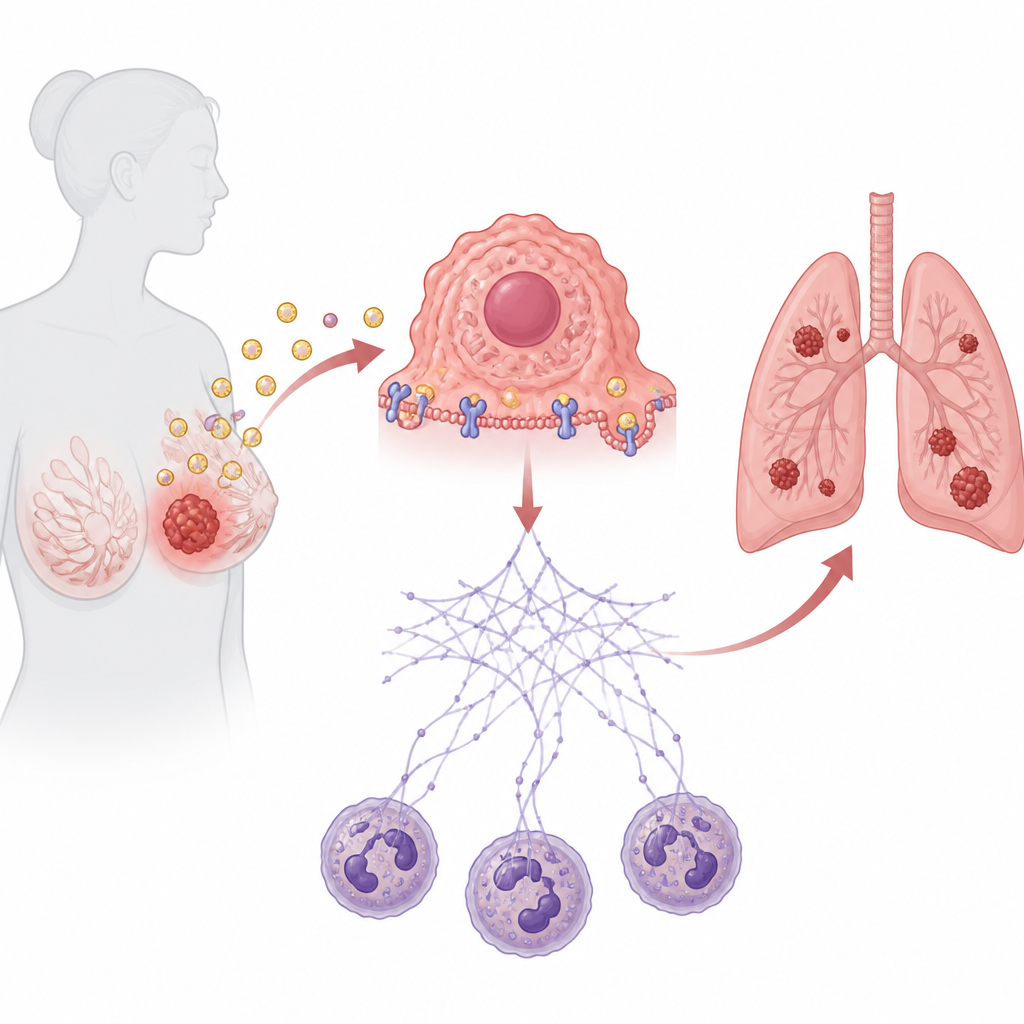
Doctors have long known that most breast cancer deaths occur when tumor cells travel to distant organs such as the lungs. Triple negative breast cancer, which does not respond to common hormone or HER2 targeted drugs, is especially prone to early and aggressive metastasis. At the same time, many tumors rewire how they use fats and cholesterol to fuel growth. By digging into large public genetic databases and patient records, the authors found that high activity of a cholesterol related controller called SREBP2 tends to travel together with high levels of a cell surface protein named CCDC25 in breast cancers, especially in the triple negative type. Patients whose tumors had high amounts of both molecules had poorer survival, pointing to a harmful partnership.
How cancer cells sense sticky traps
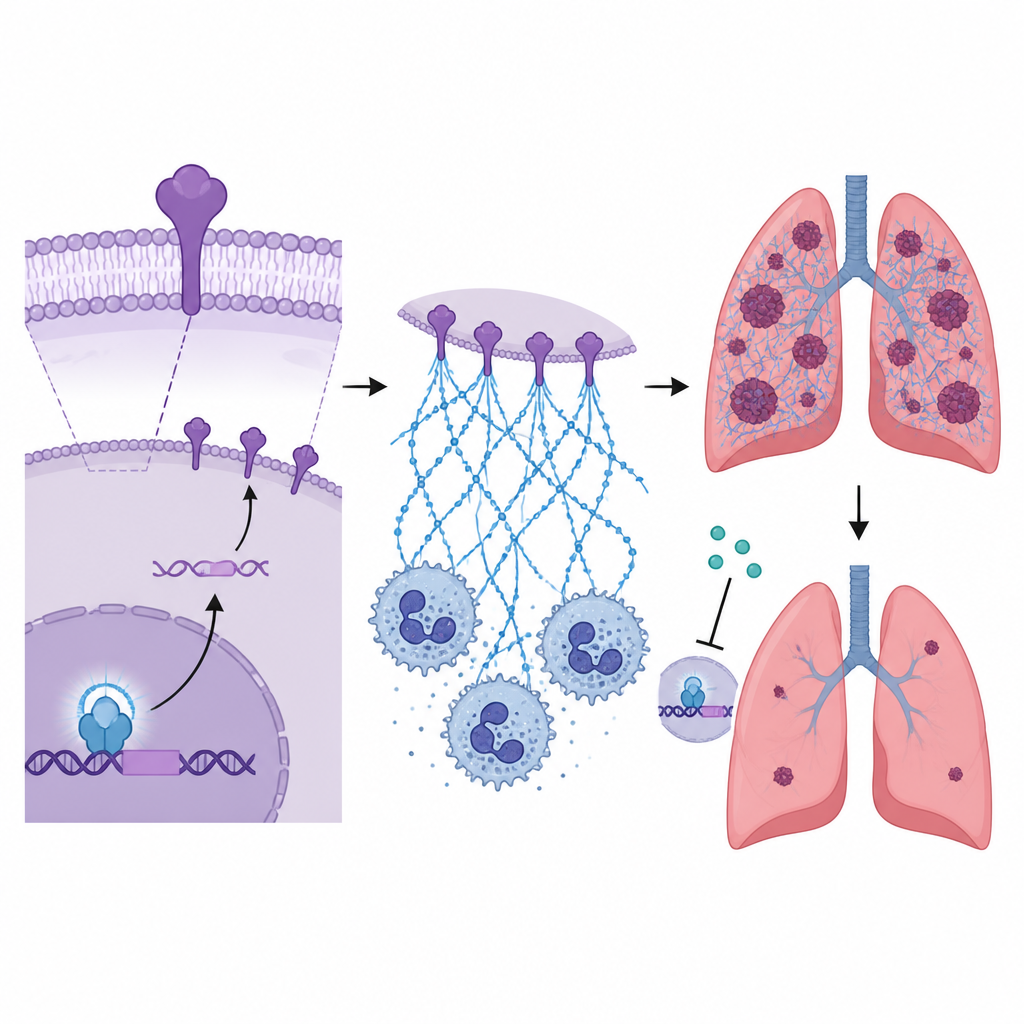
To understand why this pair matters, the researchers focused on neutrophil extracellular traps, or NETs. NETs are web like strands of DNA and proteins released by immune cells called neutrophils as part of the body’s defense. In cancer, however, these sticky nets can act like fishing lines that catch circulating tumor cells and help them settle in new organs. Earlier work had shown that CCDC25 on the tumor cell surface can sense NET DNA and trigger changes in the internal skeleton of the cell that make it more mobile and invasive. The current study shows that when the cholesterol program inside triple negative breast cancer cells is switched on, SREBP2 goes to the cell nucleus and physically latches onto the starting region of the CCDC25 gene, boosting its production.
From cholesterol switch to lung colonies
The team used several cell models to prove this chain of events. When they reduced levels of ASPP2, a natural brake on cholesterol production, tumor cells ramped up their cholesterol making machinery. This in turn increased active SREBP2 and raised CCDC25 levels, along with other cholesterol pathway genes. When SREBP2 was blocked with small genetic tools, CCDC25 levels dropped; when an active form of SREBP2 was added, CCDC25 rose again. In dishes, cells with a more active SREBP2–CCDC25 pathway moved faster, invaded through barriers more easily, and were better able to work with neutrophils to form denser NETs, all behaviors linked to metastatic potential.
Drugs that cut the chain
Because SREBP2 depends on a helper protein called SCAP to become active, the researchers tested two small molecules, Fatostatin and Lycorine, that interfere with this partnership. In cancer cells, both compounds lowered SCAP levels, reduced cholesterol content, weakened the SREBP2 signal, and sharply decreased CCDC25. They also reduced the formation of NETs and slowed cell migration and invasion. In mice injected with triple negative breast cancer cells, activating the cholesterol pathway led to higher blood cholesterol, more NET markers in the circulation, stronger NET signals in lung tissue, and more numerous lung tumor nodules. Treating animals with Fatostatin or Lycorine lessened NET formation and cut down the burden of lung metastases, suggesting that this biochemical axis can be targeted in living systems.
What this means for patients
Taken together, the findings outline a clear story that links three processes: cholesterol handling inside cancer cells, production of the CCDC25 receptor on their surface, and the formation of sticky immune cell nets that help tumors seed the lungs. By mapping this SCAP–SREBP2–CCDC25–NETs chain, the study suggests that drugs which dampen SREBP2 activity or block the contact between CCDC25 and NET DNA could help reduce the spread of triple negative breast cancer. While further work is needed to test safety, dosing, and combinations with existing therapies, this cholesterol driven pathway now stands out as a promising target to make a highly aggressive cancer less able to travel.
Citation: Lv, X., Wang, H., Liang, B. et al. SREBP2 regulates CCDC25 expression and promotes tumor metastasis in Triple-Negative Breast Cancer. Oncogenesis 15, 23 (2026). https://doi.org/10.1038/s41389-026-00614-4
Keywords: triple negative breast cancer, cholesterol metabolism, SREBP2, CCDC25, neutrophil extracellular traps