Clear Sky Science · en
Risk calculation circuit abnormalities plus psychosocial risk variables predict problematic substance use in youth with externalizing disorders
Why some kids struggle more with substances
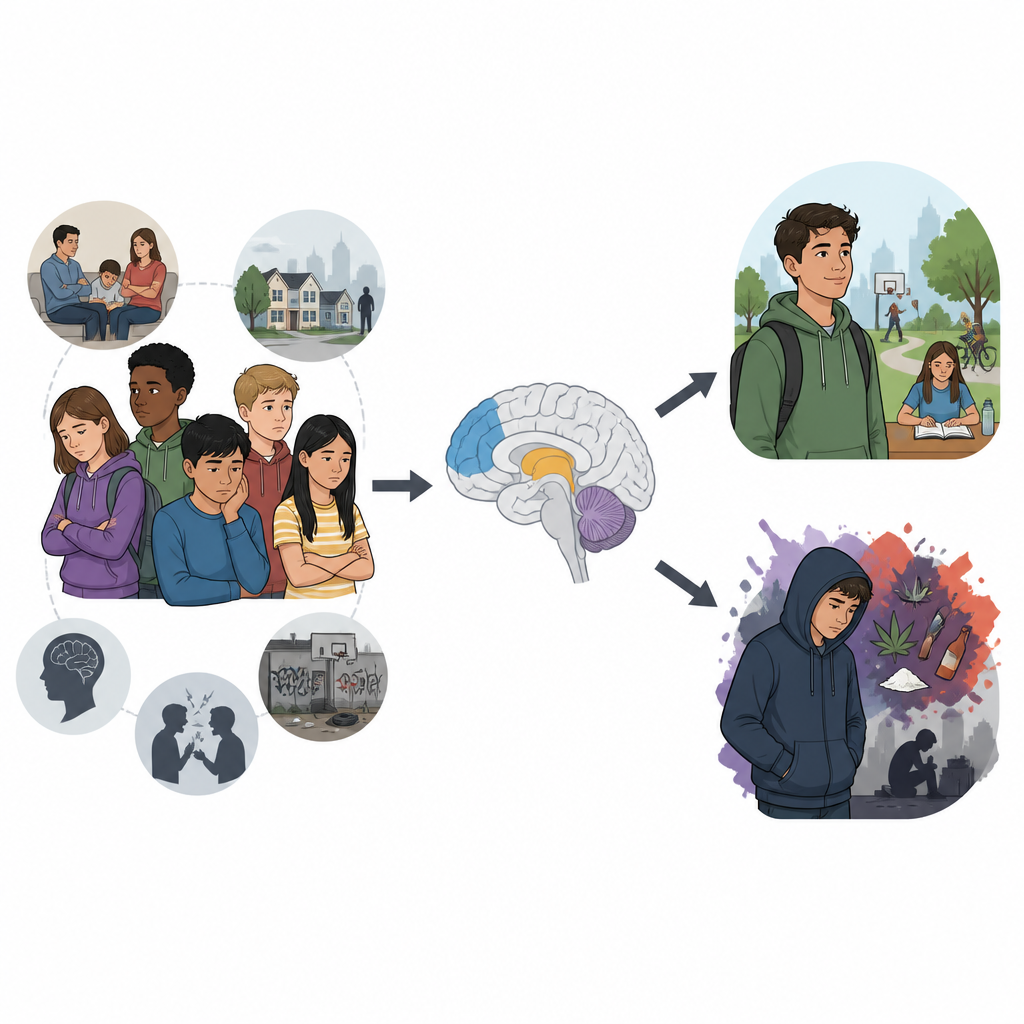
Many parents worry about which teens will go on to have serious problems with drugs or alcohol. This study followed children who already showed behavior challenges to see whether patterns in their brains, together with life circumstances at home and in their neighborhoods, could help flag who is most likely to develop harmful substance use in adolescence.
Kids at higher risk from the start
The researchers focused on 95 children around age 11 or 12 who had externalizing disorders such as attention and behavior problems. None had used drugs or alcohol yet, but many had family members with substance use disorders and lived with varying levels of parental supervision and exposure to violence. These youth were part of a larger, ongoing project and were followed for several years into mid adolescence to see which ones later developed patterns of substance use that caused real life trouble.
A game that tests real world risk taking
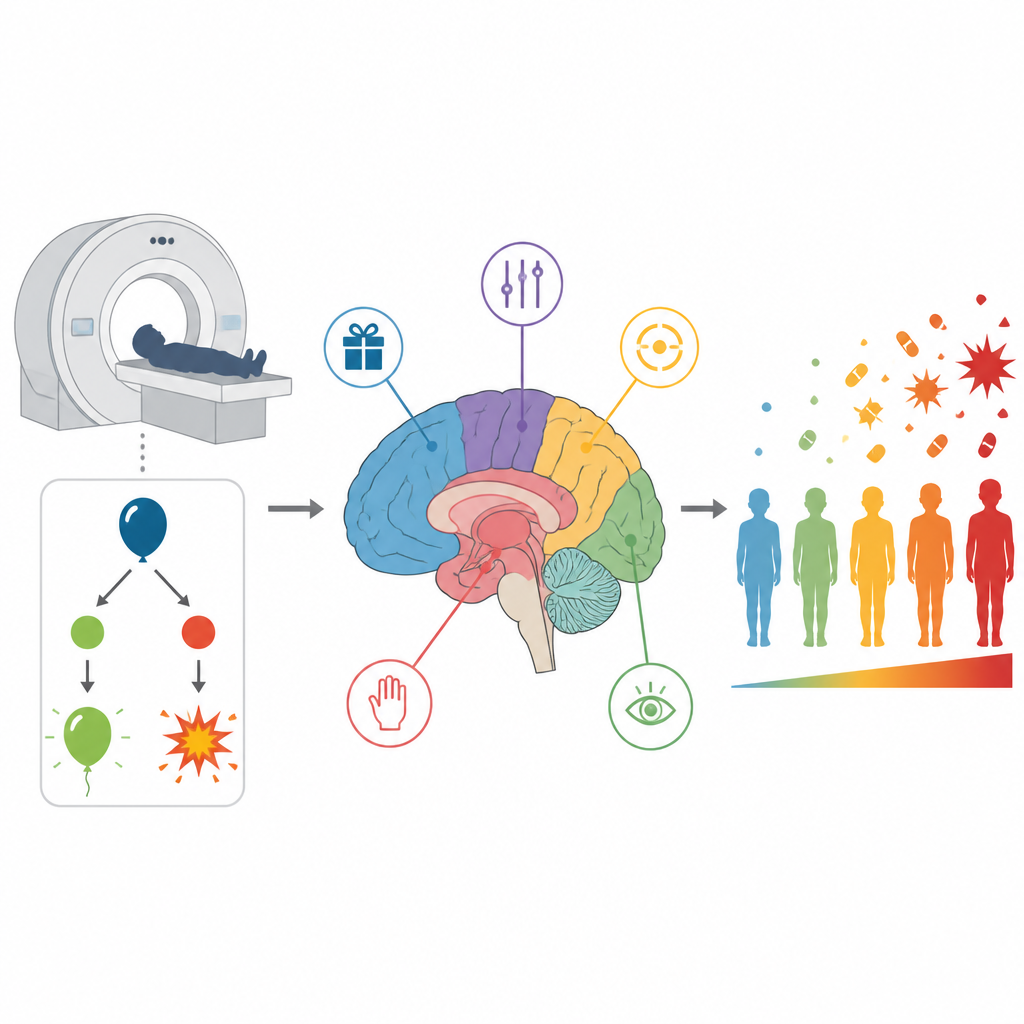
At the beginning of the study, each child lay in an MRI scanner while playing a computerized balloon game that mimics everyday risk taking. On each trial they could choose to “inflate” a balloon for more potential reward or stop and settle for a smaller but safe outcome. Sometimes the balloon suddenly exploded, wiping out their gains. As children decided whether to keep going or cash out, and as they won or lost, the scanner recorded activity in many parts of the brain involved in weighing danger and reward, controlling impulses, and processing sights and bodily signals.
Life experiences add to brain signals
The team also gathered detailed information on each child’s environment. They measured how closely parents monitored their child’s activities, whether there was a family history of substance use disorders, and how often the child had witnessed or experienced violence. Over the next few years, the children and their parents regularly reported on substance use, and urine tests and breath tests were used when possible. Youth were classified as having problematic substance use if they used a substance frequently, had multiple serious consequences, used in unsafe situations, or used especially dangerous drugs.
Combining clues gives a clearer picture
On their own, brain activity patterns during the balloon game were only modestly helpful at telling apart teens who later developed problematic use from those who did not. Psychosocial factors like family history, low parental monitoring, and violence exposure performed a bit better, but still missed many youth who would go on to struggle. When the researchers combined both sets of information, however, their models became more accurate. Patterns of activity in regions tied to reward sensitivity, self control, attention, touch, and vision, together with the psychosocial measures, predicted later problematic use with around 80 percent overall accuracy and good ability to correctly identify teens who would not develop serious problems.
What this means for prevention and care
For families and clinicians, the takeaway is that no single test or life circumstance neatly predicts who will develop substance problems. Instead, risk appears to grow out of an interplay between how a child’s brain handles risky choices and the stresses and supports in their everyday world. While brain scans are not practical as a routine screening tool, understanding these combined pathways may help refine prevention programs for youth with behavior disorders, highlighting the importance of strong parental monitoring and safer environments for children who already show differences in how they judge risk and reward.
Citation: Mattey-Mora, P.P., Murray, O.K., Aloi, J. et al. Risk calculation circuit abnormalities plus psychosocial risk variables predict problematic substance use in youth with externalizing disorders. Neuropsychopharmacol. 51, 1335–1344 (2026). https://doi.org/10.1038/s41386-026-02367-5
Keywords: adolescent substance use, risk taking, brain imaging, externalizing disorders, family environment