Clear Sky Science · en
Urinary tract infection in the neonatal intensive care unit
Why tiny babies and short treatments matter
Babies in neonatal intensive care units are especially fragile, and even a common infection like a urinary tract infection can be frightening for families and doctors. At the same time, antibiotics that save lives can also disrupt a baby’s early development if used for too long. This study asks a simple but important question: can very young, high-risk infants with urinary infections be safely treated with a short course of antibiotics instead of the longer courses that have been common in the past?
How the care team tried a new approach
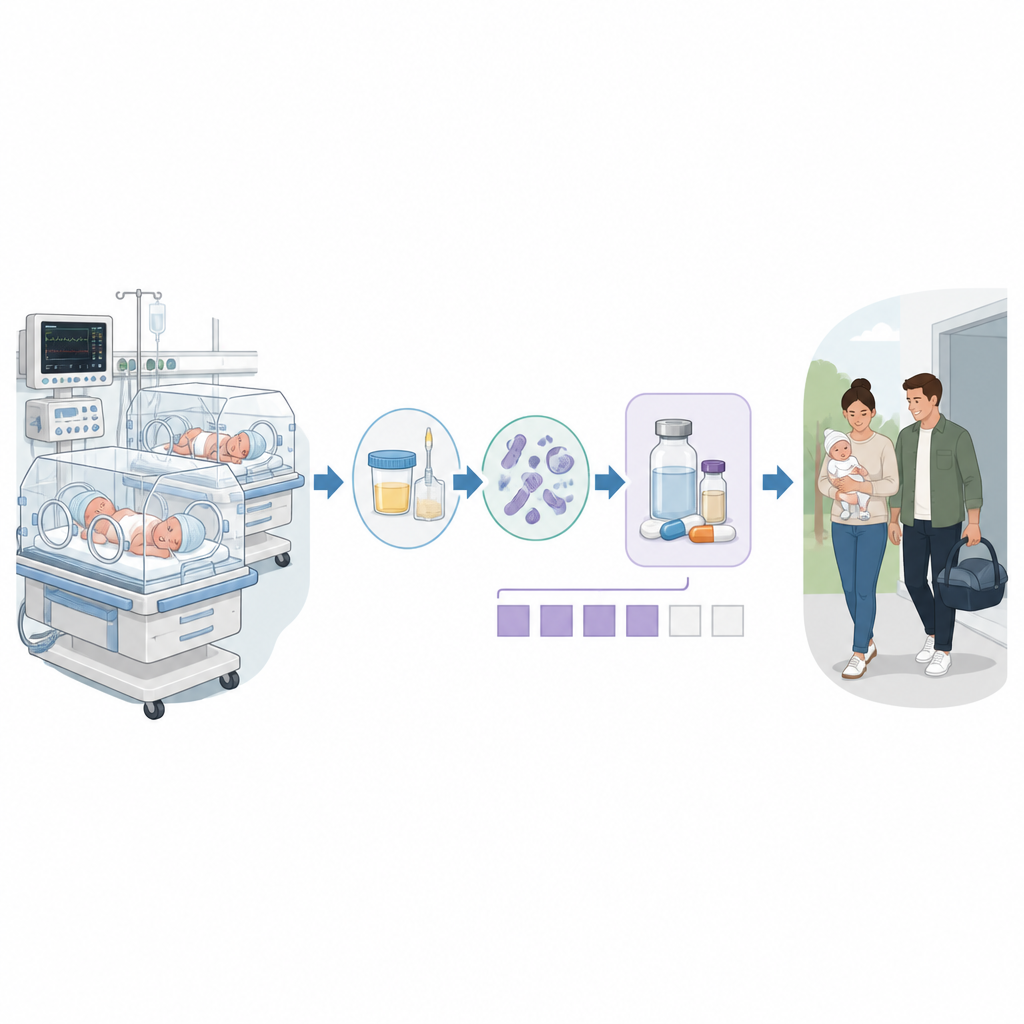
Doctors, pharmacists, and nurses at a network of seven neonatal intensive care units agreed on a shared plan for handling urinary infections. For any infant older than three days who might have a late-onset infection, they recommended taking a carefully collected urine sample and checking not just for bacteria, but also for signs of white blood cells that suggest true infection rather than contamination. If tests showed a urinary infection without bacteria in the bloodstream or in the fluid around the brain, the plan called for a five-day course of antibiotics, followed by a deliberate “time-out” on day five to decide whether treatment really needed to continue.
Who the babies were and what infections they had
Over just over two years, 77 infants in these units were treated for 93 bacterial urinary infections. Many of these babies were born early, with a typical birth at about 30 weeks of pregnancy and a low birth weight. Most first infections appeared when babies were a little over six weeks old. The study team checked how closely real-world care matched their guidelines. About three-quarters of the infection episodes met the agreed standards for diagnosis, meaning that enough bacteria grew from a properly collected urine sample and, when expected, there were also white blood cells in the urine. The most common germs were familiar culprits such as Escherichia coli and Enterococcus faecalis, which often cause urinary infections in older children and adults as well.
What happened with shorter antibiotic courses
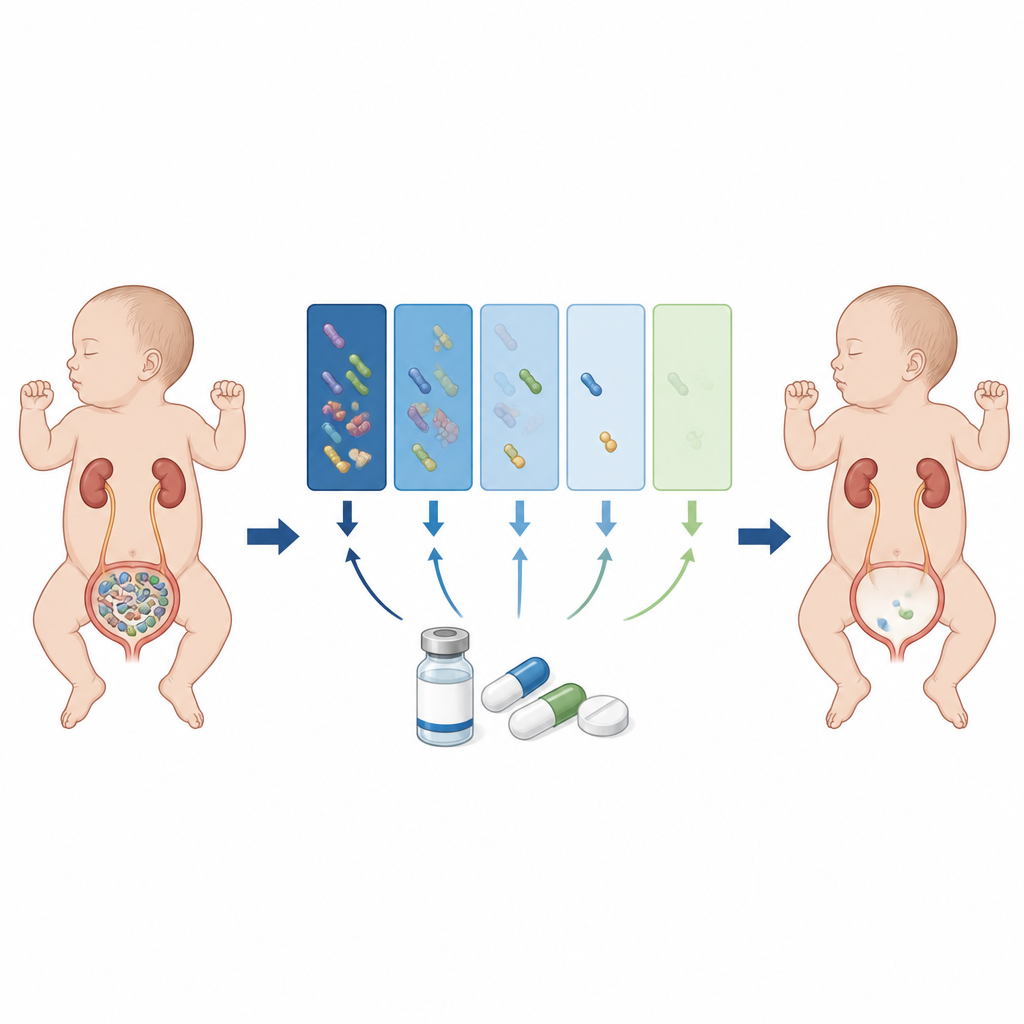
In practice, nearly all babies received a short course of treatment. The middle value for treatment length was five days, and 9 in 10 infection episodes were treated for six days or fewer. Doctors often started antibiotics through a vein and then switched many babies to medicine by mouth after a few days, once they were stable. The research team watched closely for warning signs that treatment might have been too short, including whether antibiotics had to be restarted within a week because the same germ came back, and whether any deaths could be linked to the urinary infection.
Relapses, repeat infections, and safety
A small group of infants experienced more than one urinary infection during their stay, giving the team a chance to see how often problems returned. Among 91 treated infections with complete follow-up, only one case clearly counted as a failure of the five-day plan: antibiotics had to be restarted within seven days for a new infection caused by the same germ. Overall, that is a failure rate of about 1 percent. Several other repeat infections involved different germs or occurred weeks later, suggesting new infections rather than a short course that did not work. Four infants died after having had a urinary infection, but none of these deaths were linked to that infection.
What this means for families and future care
For parents, the main takeaway is that a carefully diagnosed urinary infection in the neonatal intensive care unit does not always require a long stretch of antibiotics. In this study, most fragile newborns did well with about five days of treatment, and the risk of the same infection quickly returning was very low. Using shorter courses when it is safe to do so may help protect babies from the downsides of heavy antibiotic exposure during a critical time in their development. The authors note that larger, more diverse studies are still needed, but their results support the idea that smarter, not longer, antibiotic use can be both effective and safer for some of the smallest patients.
Citation: Magers, J., Burton, A., Prusakov, P. et al. Urinary tract infection in the neonatal intensive care unit. J Perinatol 46, 754–760 (2026). https://doi.org/10.1038/s41372-026-02690-1
Keywords: neonatal urinary tract infection, short course antibiotics, NICU infections, antimicrobial stewardship, preterm infants