Clear Sky Science · en
Regional variation in rice domestication pathways in prehistoric lower Yangtze, China, revealed by archaeobotanical evidence
How Rice Became a Staple Food
Rice is at the heart of meals for billions of people today, but its path from wild grass to dependable crop was long and surprisingly complicated. This study looks deep into that story in one key birthplace of rice farming, the lower reaches of China’s Yangtze River. By examining microscopic plant remains from ancient soils, the authors show that rice was not domesticated in a single, smooth line. Instead, different communities in neighboring landscapes followed distinct routes toward the same goal: reliable, high-yield rice fields that could support growing and increasingly complex societies.
A New Window into Ancient Rice
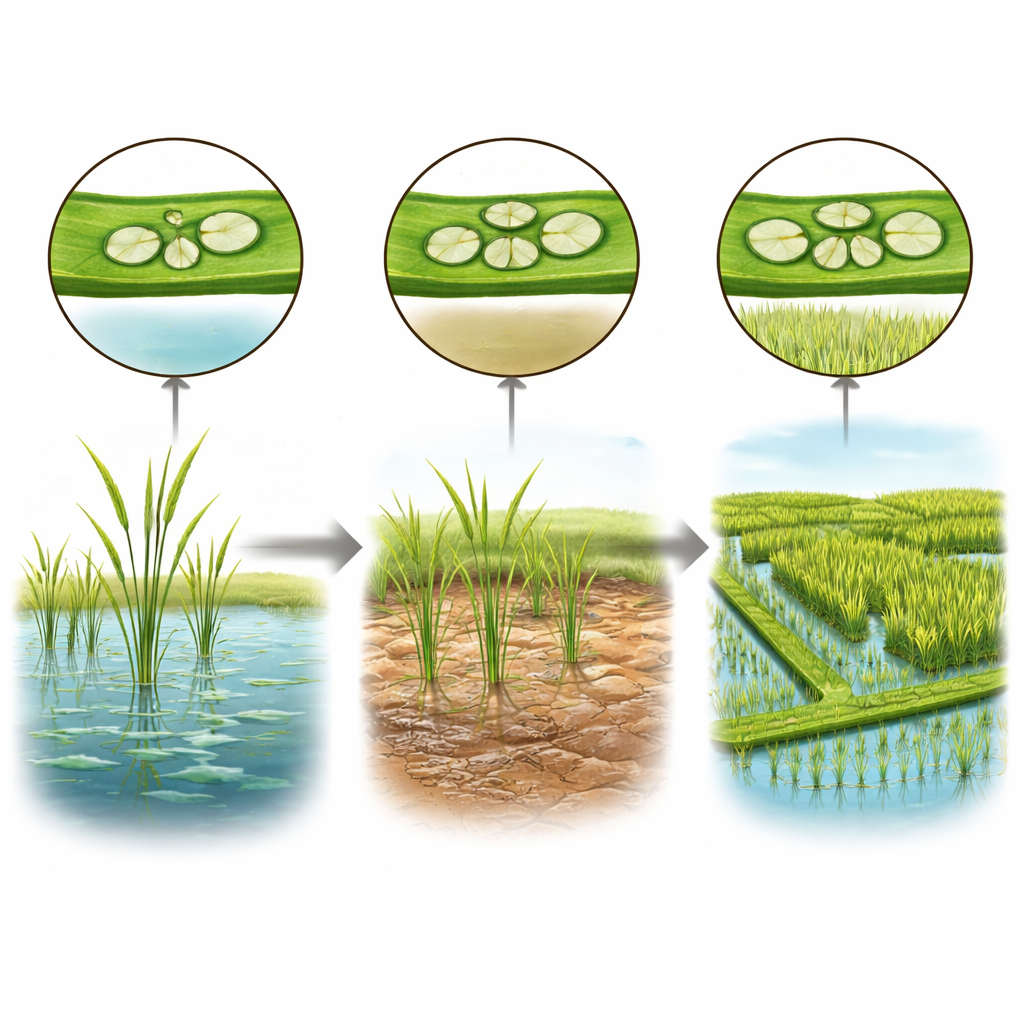
To piece together this history, the researchers focused on a site called Shenjiali, near today’s Hangzhou, sitting between two important lowland regions: the Ningshao Plain along the coast and the Taihu Plain around Lake Tai. Archaeological layers at Shenjiali neatly stack two major Neolithic cultures—early Hemudu and late Majiabang—right across a crucial turning point about 6500 years ago, when rice farming and social complexity in the region accelerated. The team analyzed tiny silica bodies called phytoliths, which form in rice leaves and survive long after the plant decays. One special type, the “bulliform” phytolith, changes in size and in the number of small scale-like ridges on its edge as rice shifts from wild to fully farmed varieties in managed paddies.
Reading Clues Locked in Plant Dust
At Shenjiali, the researchers collected over forty soil samples from different layers and positions in an excavation trench. They carefully extracted and counted hundreds of phytoliths from each sample under a microscope, then measured the length and width of rice bulliform forms and tallied how many had nine or more of the tiny scale-like decorations along their edges. Modern comparison fields show that wild rice has low values for this feature, while domesticated paddy rice has much higher ones. At Shenjiali, layers dating from about 7000 to 6500 years ago already show high proportions—around 60–70 percent—of bulliform phytoliths with abundant scales, and their sizes are stable over time. This means that by this point, people at the site were cultivating well-domesticated rice rather than experimenting with mostly wild stands.
Three Different Paths to the Same Crop
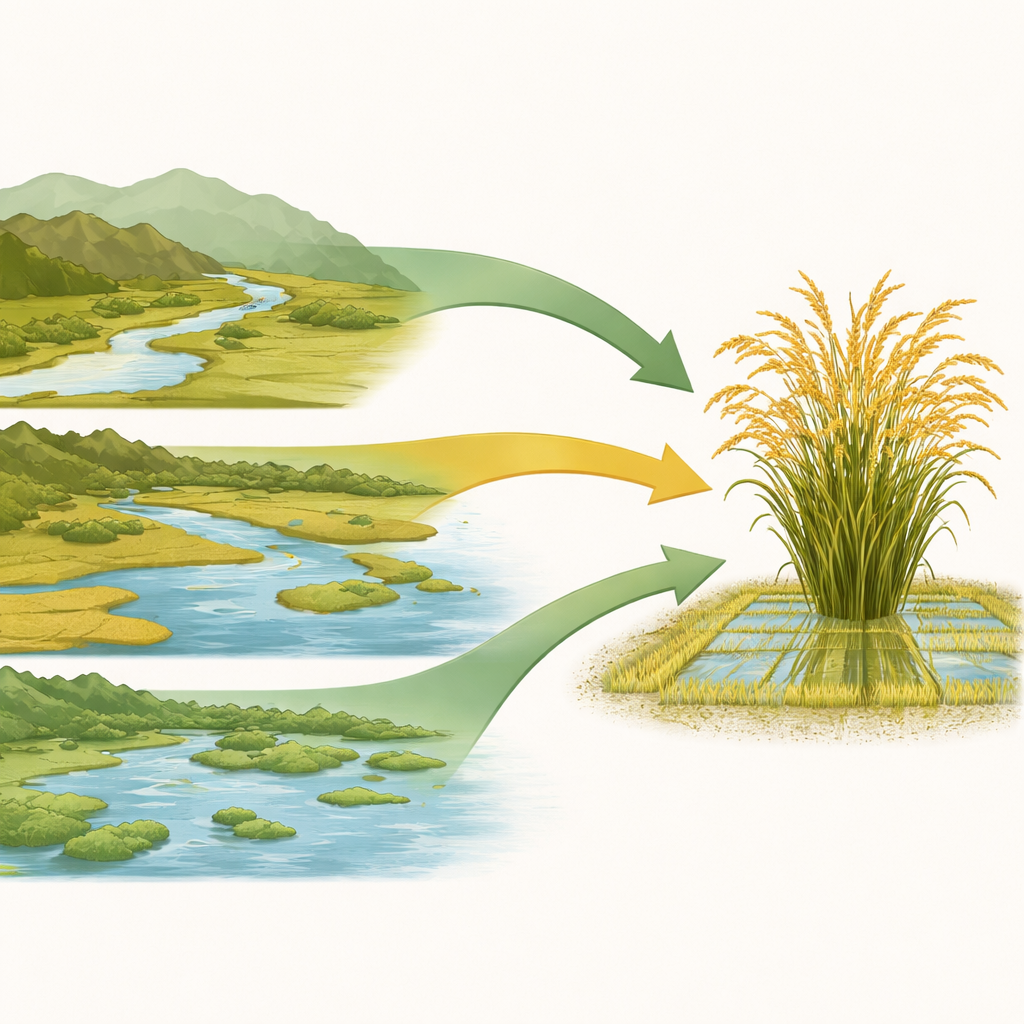
The Shenjiali results were then combined with published phytolith and rice spikelet data from fifteen other sites across the lower Yangtze, grouped into three natural sub-regions: the inland Jinqu Basin, the coastal Ningshao Plain, and the wetter Taihu Plain. In the Jinqu Basin, some sites show domesticated signals as early as 9000 years ago, while others nearby still relied largely on wild rice. Along the Ningshao coast, rice traits changed more slowly, with clear domestication not completed until roughly 5000 years ago, likely influenced by shifting shorelines and sea-level changes. In the Taihu Plain, by contrast, evidence points to already well-domesticated rice by about 8000–7000 years ago, followed by the gradual refinement of field systems and farming tools rather than big jumps in plant traits.
Rice Fields, Tools, and Rising Societies
Beyond the plants themselves, the Taihu Plain communities appear to have pushed rice farming to a new level. Archaeologists there uncover early paddy fields that evolve from irregular small plots to large, well-organized fields with dikes and channels, along with specialized stone ploughs and sickles. By the time of the Liangzhu culture, around 5000 years ago, this intensive wet-rice system had spread back into neighboring areas such as the Ningshao Plain, improving drainage and soil handling and helping support the rise of complex settlements and large-scale public works. In this view, some regions contributed more to shaping the rice plant, while others excelled at building the landscape-scale farming systems that made rice a dependable foundation for society.
Why This Story Matters Today
To a non-specialist, the main message is that rice domestication was not a simple story of one group inventing farming and everyone else copying it. Instead, different communities in different environments—from inland basins to changing coasts to lake-dotted plains—each played a role. Some led in transforming the wild plant; others led in perfecting fields and water management. Together, they forged the temperate rice that still feeds much of East Asia and helped fuel the rise of early civilizations along the Yangtze. This study shows how even tiny plant particles invisible to the naked eye can reveal a rich, multi-threaded history of human ingenuity, adaptation, and cooperation with the landscape.
Citation: Ma, Y., Li, Z., Yang, X. et al. Regional variation in rice domestication pathways in prehistoric lower Yangtze, China, revealed by archaeobotanical evidence. npj Herit. Sci. 14, 230 (2026). https://doi.org/10.1038/s40494-026-02510-x
Keywords: rice domestication, Neolithic China, Yangtze River archaeology, phytolith analysis, early agriculture