Clear Sky Science · en
Text, tradition, and technology: rediscovering the first printed book for Finland, Missale Aboense, through interdisciplinary analysis
A Medieval Book with a Modern Story
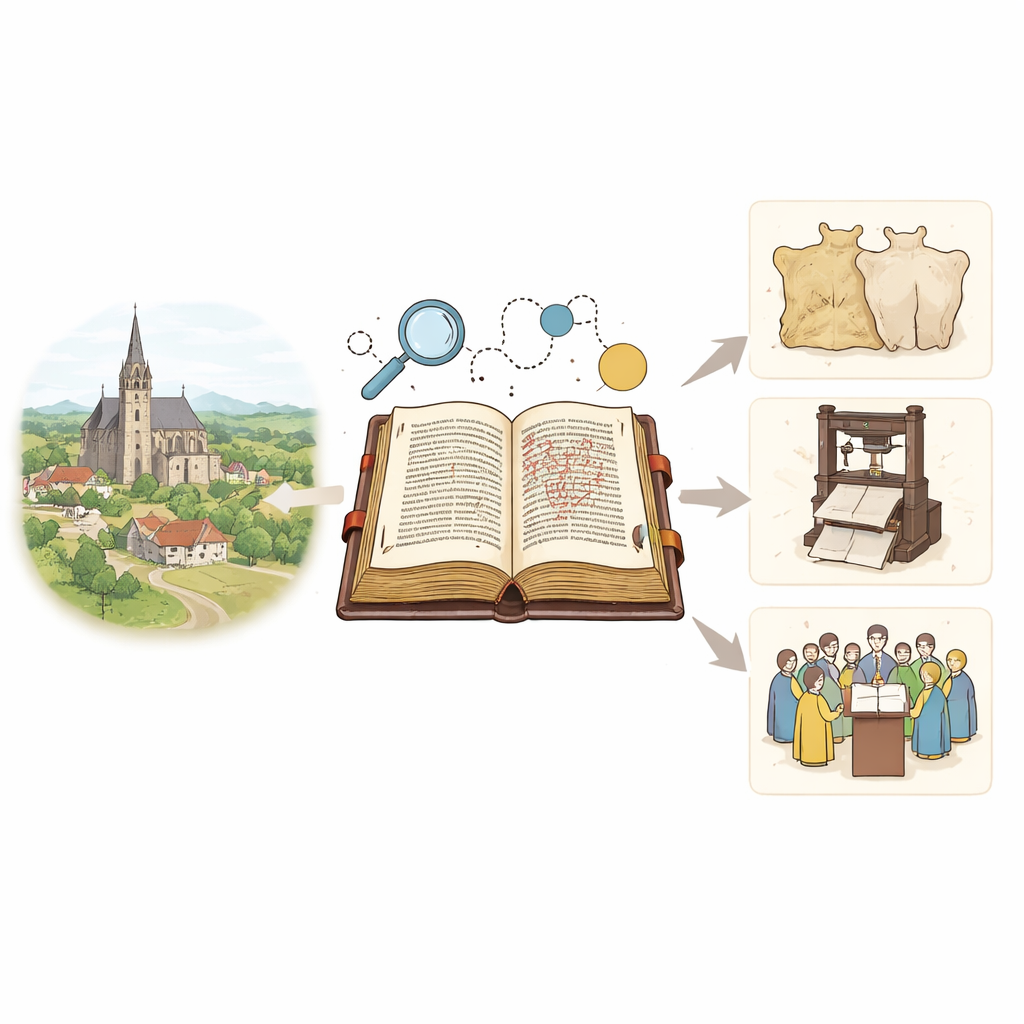
Long before ebooks and paperbacks, the people of late medieval Finland relied on a single hefty volume to coordinate their most important religious ceremony: the Mass. That book was the Missale Aboense, printed in 1488 for the Diocese of Turku. For centuries it has been treated mainly as a historical treasure, but what it is made of, how it was produced and how it was actually used have remained largely hidden. This study treats the book almost like an archaeological site, using tools from history, chemistry, biology and imaging to reconstruct its "biography"—from the animals whose skins became its pages to the priests whose hands soiled its corners.
Why This Book Mattered
The Missale Aboense was the first printed book commissioned for use in the area of present-day Finland. At the time, most church books were still copied by hand, which meant each parish might follow slightly different wordings and orders of service. Printing changed that. By ordering a printed missal from the German printer Bartholomeus Ghotan in Lübeck, the Bishop of Turku was buying into the newest information technology, hoping to standardize worship across roughly a hundred parishes. The book itself followed familiar medieval design: dense Gothic lettering in black, key instructions in red, woodcut pictures of saints and the crucifixion, and a solid wooden-and-leather binding with ornate blind-tooled floral patterns and metal fittings.
Taking the Book Apart Without Damaging It
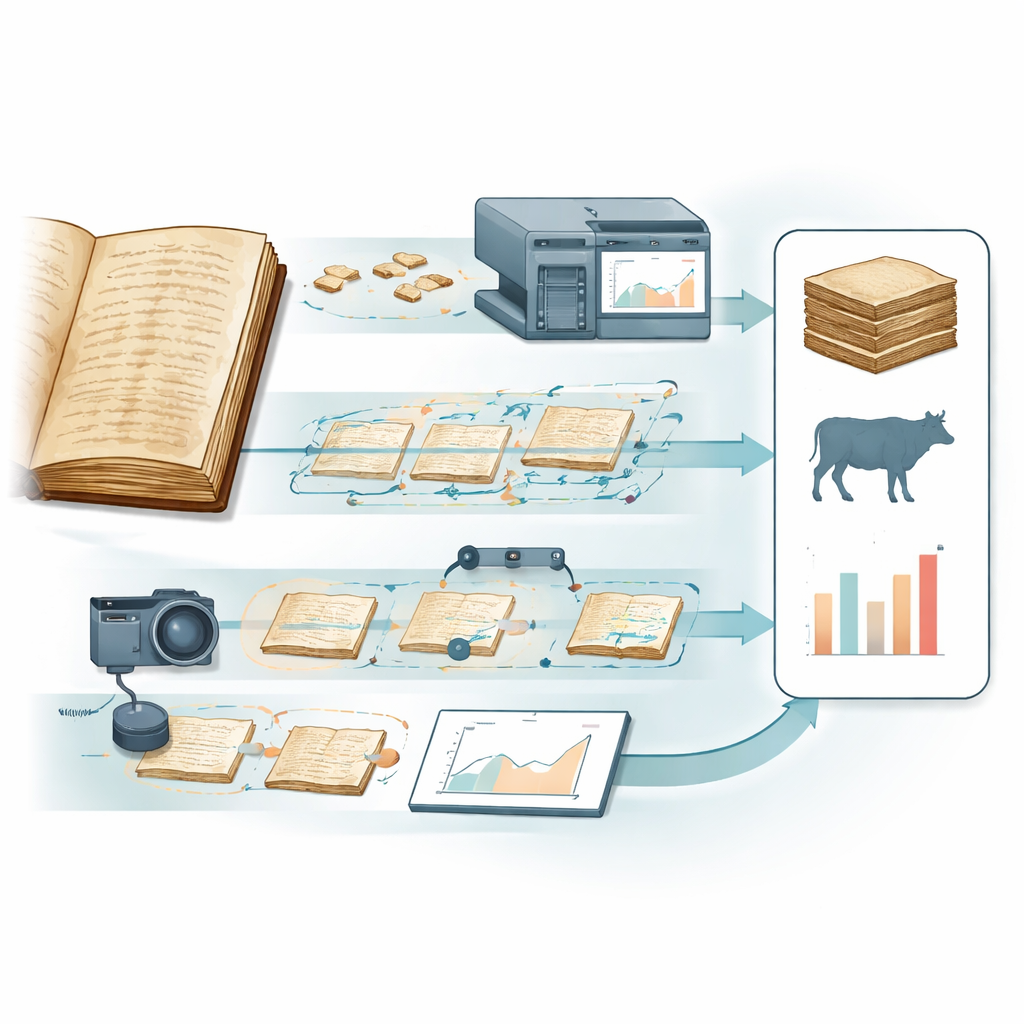
Because the Copenhagen copy of the Missale Aboense is the only nearly complete parchment copy to survive, the researchers had to work almost entirely non‑invasively. They examined the cover and sewing structure, measured the thickness of pages at many points, and used a digital microscope and infrared light to study inks and pigments. X‑ray fluorescence helped identify the elements in the colored paints, while a gentle eraser technique collected tiny traces of collagen and DNA from the surface of selected pages. These traces revealed which animals provided the skins and how the parchment was processed. High‑resolution photographs of every page were then analysed with specialised software to measure how dirty different areas were, turning thumb-smudges and greyed corners into numerical data about how often certain pages were handled.
What the Materials Reveal
The team found that all the pages were made from calfskin, prepared to be unusually even, thin and white—ideal for feeding smoothly through a press. The leather covers, by contrast, were sheepskin. Microscopic and chemical work showed standard late fifteenth‑century inks and pigments: carbon black for most text, iron‑gall ink for corrections, azurite for blues, vermilion for reds, and copper‑based greens such as verdigris, sometimes laid over red preparatory layers and gold or silver leaf. The parchment sheets had highly uniform thickness, suggesting a carefully controlled, almost factory‑like production geared for printing rather than the individual choices of a hand‑copying scribe. Occasional stitched repairs in the skins were intentionally printed over, favouring patched parchment over open holes that would have destroyed words. Protein chemistry (the PQI index) showed that the main textblock was limed more aggressively and was of slightly lower “luxury” quality than a reused older parchment leaf glued inside the cover—evidence that printers preferred robust, standardized skins over the finest writing material.
Traces of Animals and People
DNA analysis confirmed that multiple calves, both male and female, went into the book’s pages, reflecting everyday medieval livestock practices rather than any special selection. The microbes living on the parchment form another layer of history. Many belong to salt‑loving bacteria often found on cured skins, hinting at the salting steps used in parchment production; some species may even help break down collagen over centuries. Others, such as bacteria typical of human skin, point to repeated touching by readers long ago. Combining this with the dirt measurements, the team could map patterns of use: the most heavily soiled pages sit in the first half of the book, especially the core seasonal texts and, above all, the unchanging parts of the Mass that priests used at every service. Recto pages—the ones you first see when you turn a leaf—are consistently dirtier, matching how a thumb naturally rests on the lower outer corner when turning pages.
What We Learn from a Single Old Book
Seen through this interdisciplinary lens, the Missale Aboense is more than the “oldest Finnish book.” It becomes evidence for how early printers organized materials at scale, how animal products were turned into standardized, print‑ready parchment, and how medieval clergy actually handled their central service book. The study shows that even a single surviving volume can preserve the fingerprints of entire systems—technological, economic and devotional—that shaped the shift from handwritten to printed culture in Northern Europe.
Citation: Kasso, T., Vnouček, J., Sacristán, L. et al. Text, tradition, and technology: rediscovering the first printed book for Finland, Missale Aboense, through interdisciplinary analysis. npj Herit. Sci. 14, 202 (2026). https://doi.org/10.1038/s40494-026-02471-1
Keywords: Missale Aboense, medieval printing, parchment analysis, book history, biocodicology